Hoisted onto the operating table by a nurse, Aminata Conteh, a spunky 8-year old, crossed her skinny ankles jauntily and held stock-still as doctors numbed her eye and then pierced it with a needle to withdraw a sample of fluid.
Two years ago, Ebola nearly took Aminata’s life. Now, complications from it are threatening her sight. She came with her mother to an eye hospital here in late July, hoping for surgery to remove a dense cataract that had clouded the lens of her right eye, erasing most of its vision.
Cataracts usually afflict the old, not the young, but doctors have been shocked to find them in Ebola survivors as young as 5. And for reasons that no one understands, some of those children have the toughest, thickest cataracts that eye surgeons have encountered, along with scarring deep inside the eye. Before the Ebola epidemic in West Africa from 2013 to 2016, doctors did not realize how much damage the disease could leave in its wake, because previous outbreaks were small and survivors few. Eye disease, with the specter of blindness, has become a dreaded complication.
Ebola survivors at the Kissy hospital had their bandages removed after cataract surgery. Doctors are just beginning to understand the link between Ebola and eye disease. Credit Jane Hahn for The New York Times
There are about 17,000 Ebola survivors in West Africa, and researchers estimate that 20 percent of them have had a severe inflammation inside the eye, uveitis. It can cause blindness, but even if it resolves and sight returns, cataracts can quickly follow. Usually, just one eye is affected.

Are Surgeons at Risk?
Until recently, surgeons have hesitated to remove cataracts from Ebola survivors, for fear that the insides of their eyes might still harbor the virus.
But physicians from Emory University have made a series of visits to West Africa to study eye problems in survivors, treat them and find ways to prevent blindness if more Ebola outbreaks occur. One goal has been to look for the virus in the eyes of survivors with cataracts, to let local surgeons know whether it is safe to operate.
“Hopefully, more patients will get access to cataract surgery, and practitioners will feel safe,” said Dr. Jessica Shantha, an ophthalmologist from Emory.
Dr. Jessica Shantha, left, examined Isatu Tholley’s eye a day after a cataract was removed. Until recently, some eye surgeons, including Dr. Moges Teshome, right, were reluctant to operate on the eyes of Ebola survivors, for fear that the insides of the eyes might still harbor the virus. Credit Jane Hahn for The New York Times
Photo
On a Monday morning, Aminata and her mother joined about 20 other Ebola survivors of all ages at the Kissy/Lowell and Ruth Gess United Methodist Church Eye Hospital, listening as the Emory doctors explained the tests and treatments they would receive. The patients, with their hazy eyes, looked grim and fatigued, old beyond their years.
The team included two more ophthalmologists, Dr. Steven Yeh and Dr. Brent Hayek, and Dr. Ian Crozier, an infectious disease specialist who contracted Ebola while treating patients in Sierra Leone in 2014 and who recently joined the National Institutes of Health.
“I’m also an Ebola survivor in whom my eye went blind,” Dr. Crozier told the group. “The same things you go through today, I went through for the past two years, even with the same doctors.”
A translator repeated his message in Krio, the country’s most widely spoken language.
Gesturing to Dr. Yeh, Dr. Crozier said, “Dr. Steve put the needle in my eye. So in a sense we are getting the same care.”
The West African epidemic was the world’s largest, infecting more than 28,600 people and killing more than 11,300 in Guinea, Liberia and Sierra Leone. There are about 4,000 survivors in Sierra Leone. The disease has left deep scars: thousands of orphaned children, worsening poverty for survivors who could not work, families shattered by multiple deaths.
Dr. Ian Crozier, left, explained to Ebola survivors a procedure to extract fluid from their eyes to test for live virus. Dr. Crozier himself had undergone the procedure after recovering from Ebola, with the “tap” performed by Dr. Steven Yeh. Credit Jane Hahn for The New York Times
Photo
Dr. Crozier, right, organizes samples while Dr. Teshome, left, removes a cataract from a patient’s eye, visible on the monitor above the window at left. Credit Jane Hahn for The New York Times
Aminata lost her father and a grandmother, an aunt and several cousins. Other patients at the eye hospital said their immediate families had been wiped out.
Many survivors suffer from “post-Ebola syndrome” — debilitating muscle and joint pain, headaches, fatigue, hearing loss and other lingering ills, sometimes even seizures.
A Virus That Lurks in the Eye
Like the patients he is now trying to help, Dr. Crozier was blinded in one eye by uveitis and recovered — but then lost his sight a second time, to a cataract. He had surgery in March.
His eye disease, described on May 7, 2015 in The New England Journal of Medicine, put the world on alert. Nearly two months after he had seemingly recovered from Ebola, and after his blood was free of it, severe uveitis suddenly developed — and Dr. Yeh was stunned to find that the fluid inside Dr. Crozier’s eye was teeming with active virus. At that time, uveitis was also emerging in West Africa.
Even though the virus may still lurk inside the eye in survivors with uveitis, it is not on the surface or in tears, so patients cannot spread Ebola through casual contact. But operating on them might pose a risk to surgeons who open the eye.
Eventually, the immune system seems to eliminate the virus, but no one knows how long that takes. Eighteen months after the virus was first found inside Dr. Crozier’s eye, a repeat test was negative. But when the virus level actually dropped is not known.
Sierra Leone’s Ministry of Health and Sanitation was eager for Emory’s help, according to Dr. Kwame Oneill , who manages its Comprehensive Program for Ebola Survivors.
“After Ian became ill and had complications, he became a pioneer, a rallying point,” Dr. Oneill said. “Ian’s story was the turning point for survivors.”
The eye hospital in Freetown also welcomed the researchers. Dr. Lowell Gess, who founded the hospital in 1982, had recognized that uveitis was a severe problem in many patients. In 2015, during the epidemic, Dr. Gess, who was 94, began alerting Ebola treatment centers to the condition and recommending medications for it.
How many survivors have eye trouble is not known. Many live in far-flung provinces and have lost touch with health authorities. But a volunteer group, the Sierra Leone Association of Ebola Survivors, has tried to find patients who need help, and has helped pay for travel and lodging so they could consult the doctors from Emory. By this past summer, the Emory team had seen about 50 Ebola survivors with cataracts, from 5-year-olds to people in their 60s.
The team has been “tapping” patients’ eyes, as Dr. Yeh did with Dr. Crozier — sticking a fine needle into a space called the anterior chamber, and drawing out a few drops of fluid to test for the virus. If the test is negative, it is considered safe to operate.
So far, 50 taps have been performed in Sierra Leone, all negative. The results have made it possible for many patients to have cataracts removed. Eventually, taps may no longer be needed, and patients who have been well for a certain amount of time will be able to just go ahead and have surgery.
“But we’re not there yet,” Dr. Crozier said, adding that the team needs to collect more data to be sure.
Going Ahead With Surgery
The findings have been invaluable to Dr. Moges Teshome, an eye surgeon from the Christian Blind Mission who works at the Kissy hospital.
Before the testing, he said, he was afraid to operate on Ebola survivors.
“But the idea of studying the samples before the operation changed my mind,” Dr. Teshome said. “My decision would have been different if the laboratory results were positive. If the results were positive, I would not have operated at all.”
By DENISE GRADYOCT. 19, 2017
NYTimes
ABUJA: Training Schedule for Basic Life Support BLS, Pediatric Advanced Life Support (PALS), Advanced Cardiovascular Life Support ACLS, First Aid, CPR, AED
PORTHARCOURT: Training Schedule for Basic Life Support BLS, Pediatric Advanced Life Support (PALS), Advanced Cardiovascular Life Support ACLS, First Aid, CPR, AED
LAGOS: Training Schedule for Basic Life Support BLS, Pediatric Advanced Life Support (PALS), Advanced Cardiovascular Life Support ACLS, First Aid, CPR, AED
STOP paying for airtime and electricity, Let your phone pay its bills with ScreenT
You may also like

FG Supports Robotic Surgery Expansion to Reduce Medical Tourism
Nigeria is taking another step toward strengthening specialised healthcare …
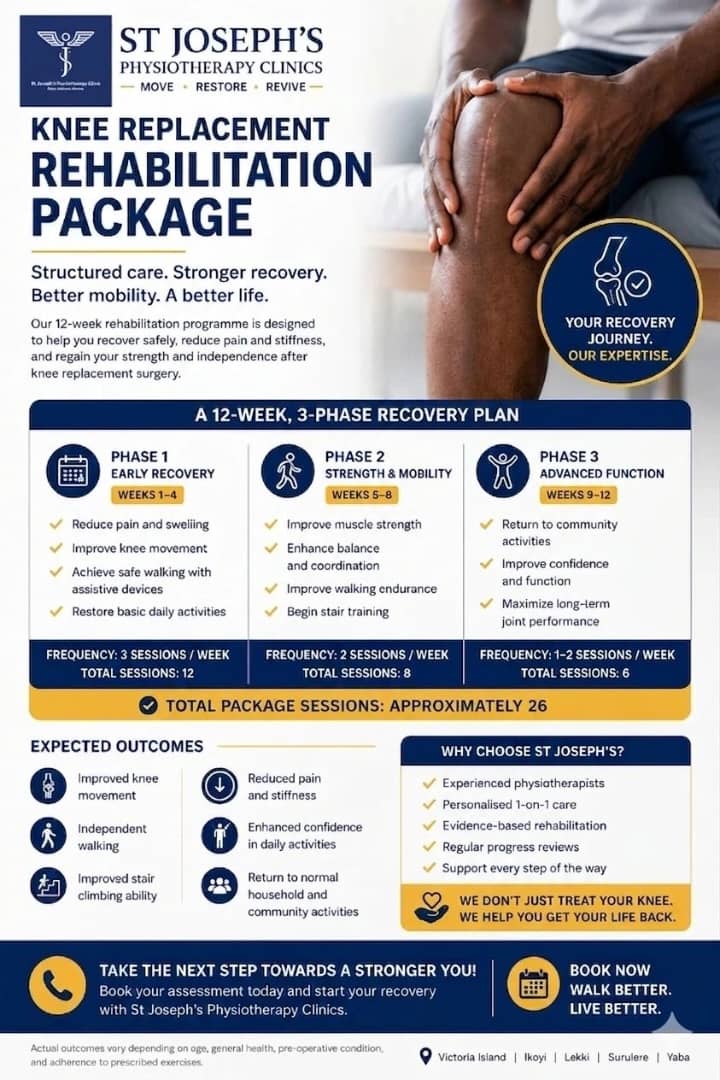
Complete Knee Replacement Rehabilitation Package in Lagos
Knee replacement surgery is a major step toward pain relief and improved mo…
NAMDA threatens strike over unpaid medical lecturers’ allowances
The Nigerian Association of Medical and Dental Academics (NAMDA) has warned…
Resident Doctors Signal End to Strike Threat After High-Level Talks with Gbajabiamila
The threat of a nationwide indefinite strike by the Nigerian Association of…
AMLSN Issues Strong Rejoinder to NAMDA on Public Service Establishment Matters
The Association of Medical Laboratory Scientists of Nigeria (AMLSN) has rel…