The new statement also makes a number of recommendations for pharmacy organisations and pharmacists, including that the former should ensure that rural communities have access to pharmacies, and that the latter should develop and adopt standard operating procedures for quality management of self-care services (such as proper documentation of medicines reconciliation, adherence support and medication management).
 The statement follows the release in March 2017 of a 68-page report by FIP entitled “Pharmacy as a gateway to care: Helping people towards better health”. This report presents a collection of evidence of pharmacy services related to self-care and the value that pharmacists bring to health care systems in this respect.
 “In an increasing number of countries, pharmacies are now seen as a formal point of entry to the primary health care system. Notable examples include a minor ailments scheme in Scotland and a triage scheme in Switzerland. But more recognition of the many benefits delivered by pharmacy self-care services is needed.
Through this statement of policy, FIP also commits to support its member organisations to develop quality standards for these services in a national context and to continue to advocate this important aspect of health care,” said Mr Paul Sinclair, president of FIP’s Community Pharmacy Section.
Press Release
ABUJA: Training Schedule for Basic Life Support BLS, Pediatric Advanced Life Support (PALS), Advanced Cardiovascular Life Support ACLS, First Aid, CPR, AED
PORTHARCOURT: Training Schedule for Basic Life Support BLS, Pediatric Advanced Life Support (PALS), Advanced Cardiovascular Life Support ACLS, First Aid, CPR, AED
LAGOS: Training Schedule for Basic Life Support BLS, Pediatric Advanced Life Support (PALS), Advanced Cardiovascular Life Support ACLS, First Aid, CPR, AED
STOP paying for airtime and electricity, Let your phone pay its bills with ScreenT
You may also like

FG Supports Robotic Surgery Expansion to Reduce Medical Tourism
Nigeria is taking another step toward strengthening specialised healthcare …
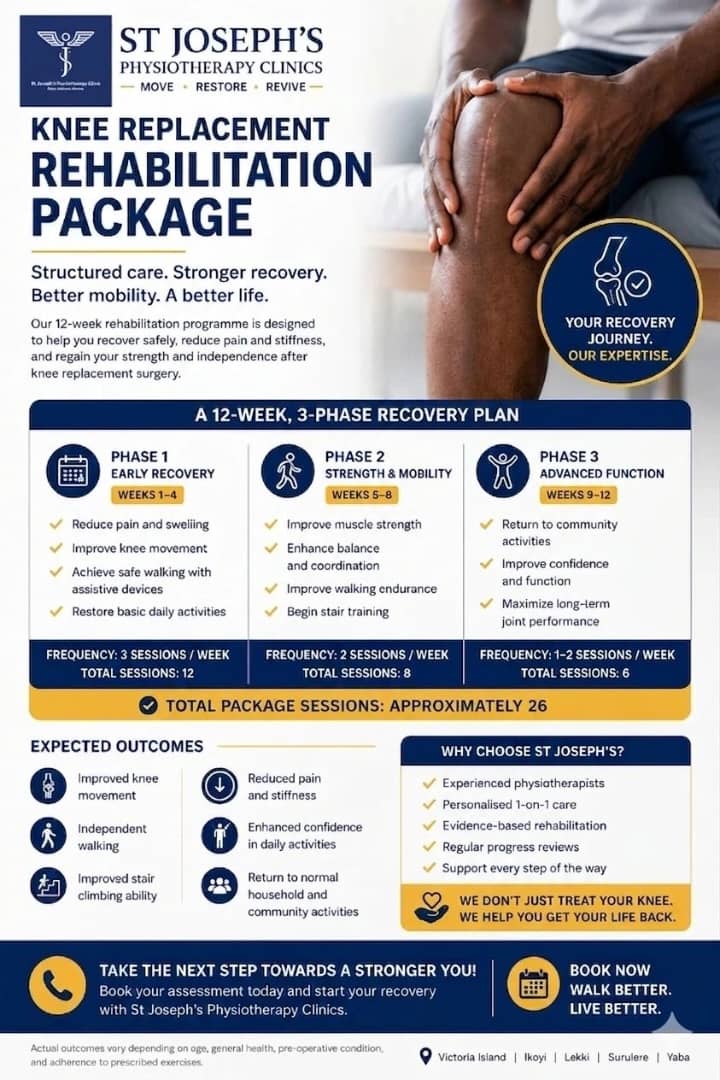
Complete Knee Replacement Rehabilitation Package in Lagos
Knee replacement surgery is a major step toward pain relief and improved mo…

NAMDA threatens strike over unpaid medical lecturers’ allowances
The Nigerian Association of Medical and Dental Academics (NAMDA) has warned…

Resident Doctors Signal End to Strike Threat After High-Level Talks with Gbajabiamila
The threat of a nationwide indefinite strike by the Nigerian Association of…
AMLSN Issues Strong Rejoinder to NAMDA on Public Service Establishment Matters
The Association of Medical Laboratory Scientists of Nigeria (AMLSN) has rel…
