The National Health Act, the doctor’s Hippocratic Oath, the nation’s constitutional provisions on human rights and medical ethics are being breached by physicians/medical institutions to keep functioning.
Historically, the Hippocratic Oath is taken by physicians. It is one of the most widely known of Greek medical texts. In its original form, it requires a new physician to swear, by a number of healing gods, to uphold specific ethical standards. The oath is the earliest expression of medical ethics in the Western world, establishing several principles of medical ethics which remain of paramount significance today. The oath, among other things, requires the doctor to swear that, “I will use treatment to help the sick according to my ability and judgement, but never with a view to injury and wrong-doing.”
Recently, an Enugu-based medical practitioner, Dr. Ike, was arraigned before an Enugu Chief Magistrates’ Court for detaining a young mother and her new born baby for 16 months in his hospital.
Her offence was that she comes from a poor family and therefore unable to pay huge medical bills. The young mother, Chinyere, who got pregnant out of wedlock, was delivered of a baby boy through caesarean session (CS).
The police arraigned the medical doctor and owner of the private hospital for unlawful detention and confinement of the teenage mother and her baby for one year and four months.

The one-count charge also accused Ike of holding the mother and her new born child against “her will or otherwise unlawfully, depriving them of their personal liberty and thereby committed an offence punishable under Section 316 of the Criminal Code 30 Volume II, Law of Enugu State of Nigeria, 2014”.
The arrest and prosecution of the doctor followed the intervention of two non-governmental and human rights organisatons – Human Rights Volunteer Corps (HRVC) and Campaign for Democracy (CD).
The police had to storm the hospital on July 8 to rescue Chinyere, the young mother with her baby from the makeshift cell in the hospital.
“I lost my father in the process of the detention thereby compounding my family’s financial challenge. Every appeal made to the doctor to even allow me to go and see the corpse of my late father before his interment fell on deaf ears,” the victim told our correspondent.
The lady enumerated other inhuman treatments meted on her and her child while in detention, including abandoning her treatment and allowing the wound from the surgical operation to decay and denying her new born baby the needed immunisation. She also alleged attempted sexual harassment. The doctor is currently standing trial.
Chinyere’s case is just one out of a thousand cases where the hospitals detain indigent patients.
In more recent cases, the hospitals have gone beyond detaining patients to detaining their relations as well. The ugly development cuts across government, missionary and privately owned medical institutions across the country.
Not too long ago, one of Nigeria’s online news media reported that the Warri Area Command of the police had arrested the Administrative Head of Royal Clinic, Dr. Walter, and another person over the alleged seven months’ detention of two minors, Kareen Ehikioya and Great Favour Ehikioya, against their wish over unpaid N400,000 medical bills.
The online newspaper reported that the suspects’ arrest was based on a petition instituted by the Nigerian Child Welfare Fund led by Mr. Joshua Omorere.
Omorere claimed that Walter almost beat up the Chairperson of the Delta State branch of the International Federation of Women Lawyers (IFWL or FIDA) (Litigation Committee) Mrs. Mary Akujobi, and other female lawyers for arguing that the girls were held against their wish during their visit to the hospital’s management to find a way out of the matter on October 4.
A visit to Enugu State University Teaching Hospital, Parklane, Enugu and the University of Nigeria Teaching Hospital (UNTH), Ituku/Ozalla, Enugu, shows that the case is not limited to missionary or private hospitals.
According to a hospital official at Parklane Hospital, who pleaded anonymity, indigent patients, who are unable to pay their hospital bills, abound in the maternity, orthopaedic and surgical wards of the hospital. He blamed poor funding of most hospitals as the reason they insist on payment before discharged patients can leave.
The source also alleged that sometimes patients abscond after treatment thereby compounding the financial burden of the hospital.
He said: “We are dealing with issue of abscondment. We are facing a tough challenge. Some of the patients have wealthy relations but all of a sudden they abscond. Some of patients claim to be indigent whereas they are not.
“Government needs a policy or fund on this. If there is provision it will help.
“Sometimes public spirited individuals and organisations do come to pay for indigent patients.
“Nigeria has the resources to give free medical treatment to every citizen but for corruption and bad leadership.”
But the spokesperson of UNTH, Cyril Keleze, emphatically denied that the hospital has a detention centre for indigent patients.
Keleze told our correspondent that although issue of unpaid medical bills is huge a burden to all tertiary institutions, UNTH has a standard procedure of handling the challenge which often ends up in waiving the bill.
He said: “We don’t have detention camp in this hospital, we don’t have that space.
“Instead of keeping them in the hospital without food and occupying space, the Medical Social Works Department is instructed to investigate their status and if they are found indigent, it is waived.”
However, a source in the hospital insisted that the situation is not as the spokesperson painted, as there are still cases where patients are held back to force them or their elations to pay their bills.
Another hospital administrator in one of the mission hospitals in Enugu, who also pleaded anonymity, said that hospitals are run against many odds. According to her, said that the hospitals provide their water, electricity and of course procure drugs in the market.
She said: “There was a time our hospital owed N27 million to drug suppliers, so it has not been easy.”
Only recently, Enugu State Governor, Ifeanyi Ugwuanyi, visited Parklane Hospital to see a patient. Confronted with a large number of indigent patients, who were discharged but were unable to pay their medical bills, the governor had to cough up millions of naira to settle some of the bills.
A similar scenario played out recently, as widely reported in the media, when his Ebonyi State counterpart, Chief David Umah, visited the Federal Teaching Hospital Abakaliki (FETHA 1 and 2) and had to pay the medical bills of several stranded indigent patients.
It has therefore become a norm for many people, including highly placed members of the society, to think that detaining patients after treatment on account of their inability to pay medical bills is normal.
But the National Coordinator, HRVC, Mr. Larry Oguego, thinks otherwise. Oguego and the South-East Chairman of Campaign for Democracy (CD), Mazi Uzor Dede Uzor, have been working round the clock on cases involving illegal detention of patients by the hospitals. And this they do at great personal risks and threats from doctors and hospitals. They led the police to rescue Chinyere and her baby and other cases.
Oguego told our correspondent that it was wrong and unlawful for doctors/hospitals to detain patients. He said there were options for the doctors/hospitals.
Oguego narrated how his organisation, in collaboration with other organisations, Human Rights Legal Aides Initiative (HRLAI) based in Imo State, and Institute of Human Rights and Humanitarian Law Report (HRHLR) based in Port-Harcourt, similarly freed two women from hospital detention in Enugu.
According to him, what makes that particular case intriguing is that the two women were merely looking after their relations who were also in detention over inability to pay medical bills.
Two officials of HRLAI and HRHLR, Messrs Igwe Chukwunedum and Duru Christian, also spoke on their roles in releasing the two women, and also visited the popular Mission Hospital at Emene, Enugu to see things for themselves.
“So the issue is no longer about detaining patients, their relations are now being detained,” Oguego said.
“And you are not aware of the doctor that was arrested at Nnewi (Anambra State) recently, who detained a patient who reported to our office; we wrote him a letter and asked him that the patient wanted to pay by instalment, he said no. In fact we asked the patient to make him an offer, the patient did, he said no. We now wrote, he tore the letter and threw it away and we reported the matter to the police. Police arrested him and in the course of going to arrest him and release that person, five other patients who were locked in a room were released, so six women entered the bus to the police station. The man is standing trial now at Nnewi now.”
The immediate past Chairman of Nigerian Medical Association (NMA), Enugu State branch, Dr. George Ugwu, while admitting that it’s inappropriate for doctors/hospitals to detain patients, explained that the hospitals were facing difficult times too.
According to him, there is need to strike a balance; those who go to hospitals should make arrangements to pay their medical bills.
He said: “That is why we are talking of health financing through insurance. Communities, churches and even professional groups can organise health insurance scheme.
“If we continue shouting detention of patients, look, it’s a symptom, the truth is that many Nigerians cannot afford health care without appropriate health insurance scheme, that’s how developed countries handle such issues.
“We can’t get adequate health care if we pay out of packets.”
The former NMA boss, however, advised doctors to always try to have good arrangement with patients before commencing treatment.
When reminded that the National Health Act makes it mandatory for doctors to treat patients on emergency, he said that doctors could also reject patients who were not on emergency.
He added: “There are two sides to this. If health institutions begin to insist on making substantial payments (before treatment) it will mean many people will not be attended to or admitted in the first place. Doctors have a right to reject patients not on an emergency.”
But Oguego disagreed. He said: “If it’s not an emergency, you can play games, but then it’s the patient who actually decides what an emergency is. If I come to the emergency unit and I’m screaming that I’m feeling pain, it’s an emergency.
“A doctor cannot tell me it’s not an emergency. If a case needs urgent attention it’s an emergency, if I come to a hospital bleeding profusely it’s an emergency. Now if a doctor thinks it’s not and I think it is, I will take action to punish him.
“So the issue of whether a medical situation is an emergency depends on the severity and what will happen to the patient if that person is not treated. So if I, as a patient, think it’s an emergency and I deserve to be treated and you say you won’t treat me because you think it is not an emergency because I don’t have deposit, people don’t understand the processes, you take the doctor up just as we are arresting doctors now.
“So it has become traditional to detain patients, but I think the society should fight back. Now some people ask me questions like what if doctors stop helping patients in emergency. And I said it’s not help, the National Health Act makes it clear that if you have a patient brought into your hospital as an emergency case you must treat the patient, underline MUST.
“Must means must, if you don’t treat the person you are also liable. Like if I take a patient to the hospital and the doctor says I won’t treat the person because there is no deposit, I will tell the doctor that if you don’t treat this person you will spend money; people are ignorant that’s the problem. If you want to be a doctor in Nigeria you should go and check the National Health Act and see the relevant laws; if you don’t want to be a doctor under those laws you can go and become a carpenter or some other thing.”
A legal practitioner, Olu Omotayo, who doubles as the president, Civil Rights Realisation and Advancement Network (CRRAN), agreed that it is not proper for hospitals to detain patients.
He said: “At worst they can make the patient/family enter into a bond and arrive at how they will be paying.
“Detaining a patient is denying him/her freedom of movement and liberty which are guaranteed under the law.
“For somebody to owe is not criminal but civil offence, so you now use criminal sanction to settle civil offence, its unjustifiable under the constitution. Civil transactions should not attract criminal sanctions. Even the court, when they give order and you cannot pay; they take your property, not to detain you.”
Oguego suggests way out for doctors and hospitals.
He said: “If a doctor has a patient who is not able to pay, there are several options. Option number one; get into an agreement that is enforceable in law with the patient to pay. So the patient enters into an agreement, gets a surety and all that, so if the patient does not pay you take the agreement to court under the undefended list and get the court to order that they should pay.
“Now doctors will tell you that it’s a long road but then going to court is a longer route because they were doing it before when people were ignorant, people are now arresting doctors.
“The second option which is also very, very portent is to consider the option of taking group insurance that will enable the insurance company to indemnify the doctor and go after the patient.
“The third option is to write off the bill if it is minimal, which is a real option; because doctors insist that they must get every Fadden, it is not possible, they are doing business mind you. I do business, sometimes I lose money, every person who does business loses money once in a while, it’s only doctors who assume that they can do business and never lose money, it doesn’t make sense.
“The profit and loss column is supposed to be used for profit and loss. Doctors think that its profit and profit column they are running, it doesn’t work that way.
“So there are several options open to the doctors. Doctors can also encourage the government to set up a fund but the problem is that they may abuse it.
Already the doctors are abusing the National Health Insurance Scheme, they manipulate all kinds of things, and somebody called us on radio the other day and said that a mission hospital insisted on billing him N43, 000 and they had issues about the N43,000 which is illegal. Eventually he went to National Health Insurance Scheme, they told him to pay. After he paid he lodged a formal complaint and they had a meeting in the hospital and the hospital refunded the money, which means that they would have defrauded that man of N43,000.”
Investigations further revealed that government at various levels is not helping matters as funding of healthcare system in the country has become a serious challenge. Most public officers fly abroad for major and minor treatments thereby leaving the nation’s healthcare system in parlous state. The average citizen bears the brunt. There is short supply of quality drugs and facilities as even major health institutions have become mere consulting clinics.
The case of the recent lamentation of the First Lady, Hajia Aisha Buhari, over the state of State House Clinic is just a tip of the iceberg. The nation loses billions of naira annually on medical tourism while the poor masses die in droves.
Those who manage to stay alive after visiting the hospitals are saddled with exorbitant medical bills which they more often than not are unable to pay hence they are made prisoners in the hospitals.
Some patients, especially most accident victims, as witnessed by our correspondent, are held on hospital beds for weeks without treatment while waiting for their relations to come and make deposits before treatment can commence. Of course many die painfully and needlessly due to such negligence and abandonment.
BY: KENNETH OFOMA
New Telegraph News
ABUJA: Training Schedule for Basic Life Support BLS, Pediatric Advanced Life Support (PALS), Advanced Cardiovascular Life Support ACLS, First Aid, CPR, AED
PORTHARCOURT: Training Schedule for Basic Life Support BLS, Pediatric Advanced Life Support (PALS), Advanced Cardiovascular Life Support ACLS, First Aid, CPR, AED
LAGOS: Training Schedule for Basic Life Support BLS, Pediatric Advanced Life Support (PALS), Advanced Cardiovascular Life Support ACLS, First Aid, CPR, AED
STOP paying for airtime and electricity, Let your phone pay its bills with ScreenT
You may also like

FG Supports Robotic Surgery Expansion to Reduce Medical Tourism
Nigeria is taking another step toward strengthening specialised healthcare …
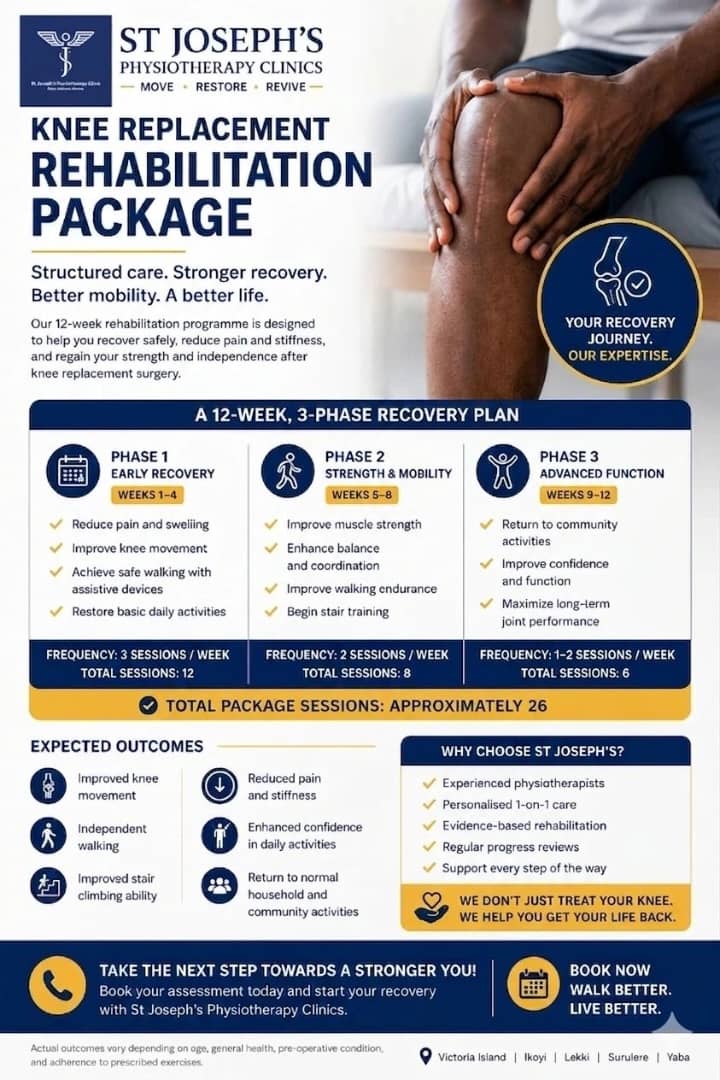
Complete Knee Replacement Rehabilitation Package in Lagos
Knee replacement surgery is a major step toward pain relief and improved mo…

NAMDA threatens strike over unpaid medical lecturers’ allowances
The Nigerian Association of Medical and Dental Academics (NAMDA) has warned…

Resident Doctors Signal End to Strike Threat After High-Level Talks with Gbajabiamila
The threat of a nationwide indefinite strike by the Nigerian Association of…
AMLSN Issues Strong Rejoinder to NAMDA on Public Service Establishment Matters
The Association of Medical Laboratory Scientists of Nigeria (AMLSN) has rel…