These disturbing pictures show a baby who was born in India with an additional head attached to its stomach. As well as the separate appendage, which has no ears and eyes due to being partly developed, the infant also has a third hand.
Doctors fully expect to remove the extra limbs in an operation at the Ram Snehi Hospital, in Jahazpur, 'very soon'.
An unnamed 21-year-old woman presented herself to doctors after experiencing pain during her pregnancy. She was immediately referred for a sonography scan and an ultrasound to check the health of her unborn child. Tests revealed that the child would be born with extra limbs, which could be a sign of a parasitic twin.
Dr Vijiyeta Garg, a gynaecologist who looked after the woman, assured the family that both mother and child could be saved.
However, her 24-year-old husband insisted that her life was a priority and the baby should come second. After a successful Caesarean section, the family were relieved that both managed to survive.
The baby was their first child. A local source said: 'The parents of child are happy to accept the girl with her extra head and hand. They are also thankful to doctors for saving them both. The mother is discharged from the hospital.'
Parasitic twins are usually a result of a delay in the separation of embryos during conception. They are formed when one embryo maintains a dominant development at the expense of the other. Unlike conjoined twins, one is incompletely formed or wholly dependent on some bodily functions of the complete fetus. Cases of parasitic twins are rare and believed to account for just one per one million live births.

WHAT ARE PARASITIC TWINS?
Parasitic twins are usually a result of a delay in the separation of embryos during conception. They are formed when one embryo maintains a dominant development at the expense of the other. Unlike conjoined twins, one is incompletely formed or wholly dependent on some bodily functions of the complete fetus. Cases of parasitic twins are rare and believed to account for just one per one million live births.
By Stephen Matthews
Mailonline
ABUJA: Training Schedule for Basic Life Support BLS, Pediatric Advanced Life Support (PALS), Advanced Cardiovascular Life Support ACLS, First Aid, CPR, AED
PORTHARCOURT: Training Schedule for Basic Life Support BLS, Pediatric Advanced Life Support (PALS), Advanced Cardiovascular Life Support ACLS, First Aid, CPR, AED
LAGOS: Training Schedule for Basic Life Support BLS, Pediatric Advanced Life Support (PALS), Advanced Cardiovascular Life Support ACLS, First Aid, CPR, AED
STOP paying for airtime and electricity, Let your phone pay its bills with ScreenT
You may also like

FG Supports Robotic Surgery Expansion to Reduce Medical Tourism
Nigeria is taking another step toward strengthening specialised healthcare …
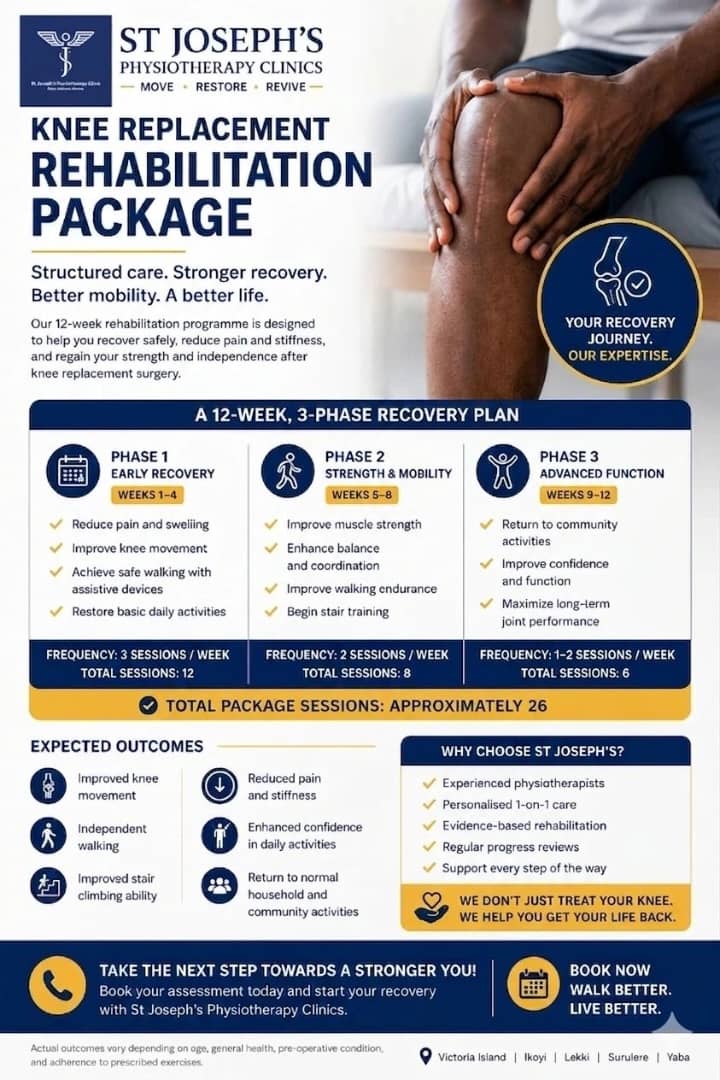
Complete Knee Replacement Rehabilitation Package in Lagos
Knee replacement surgery is a major step toward pain relief and improved mo…

NAMDA threatens strike over unpaid medical lecturers’ allowances
The Nigerian Association of Medical and Dental Academics (NAMDA) has warned…

Resident Doctors Signal End to Strike Threat After High-Level Talks with Gbajabiamila
The threat of a nationwide indefinite strike by the Nigerian Association of…
AMLSN Issues Strong Rejoinder to NAMDA on Public Service Establishment Matters
The Association of Medical Laboratory Scientists of Nigeria (AMLSN) has rel…