The National Malaria Elimination Programme (NMEP) has disclosed that about 191 million Nigerians representing 97 per cent of the total population, were still at risk of malaria.
National Coordinator NMEP, Mr. Audu Mohammed who made this known during a media parley at the 2018 NMEP 4th Quarter Media Chat in Abuja, noted that for the fight against malaria to be won, both federal, state and local governments need to increase its level of funding malaria targeted programmes.
Represented by the Head of Advocacy Communication and Social Mobilisation (ACSM), Chukwu Okoronkwo, he lamented that malaria remains an important public health issue in Nigeria as it accounted for 30 per cent of childhood mortality and 11 per cent of maternal mortality.
Quoting the World Malaria Report, he revealed that both the 2017 and 2018 showed that the world was off track to meet the 2020 milestone as reflected in the global technical strategy for malaria 2016-2030, as global progress against malaria has stalled. Mohammed added that the report indicated that around 70 per cent of all deaths in 2017 was concentrated in 10 African countries and India.
Also, cases in the African countries, which include the 10 African countries, especially Nigeria and Burkina Faso, rose by 3.5 million in 2017, compared to the previous year, while new cases fell steadily until 2016, the number rose from 217 million to 219 million in 2017.
Mohammed urged government at all levels to redouble efforts to make an appreciable impact in the malaria landscape, even as he called on the citizenry to maintain environmental sanitation in and around the places they live and work.
“We need the government to give more resources for malaria control activities in the country. This is not limited to the Federal Government, local or state government alone. The private sectors can also be a major contributor to this fight.
“Private sector does not need to give NMEP money, but just to do something within their environment. One critical area about domestic funding is the issue of subsidy of malaria commodity. Commodities in the private sector cannot be accessed because they are too expensive.”
“These commodities are already subsidised at the government health facilities because donors are bringing them in at subsidised rates. That also has to happen for all health facilities, whether government or private,” he said.
The Head, Integrated Vector Management (IVM) Branch of NMEP, Okoko Oyale, advised the citizenry to pay more attention to making use of malaria preventive measures such as long-lasting insecticidal nets (LLINs), Indoor Residual Spray (IRS) and larval source management, uptake of sulphadoxin pyremethamine (SP) by pregnant women for prevention of malaria, as well as environmental management.
By: Regina Otokpa Abuja
New Telegraph News
ABUJA: Training Schedule for Basic Life Support BLS, Pediatric Advanced Life Support (PALS), Advanced Cardiovascular Life Support ACLS, First Aid, CPR, AED
PORTHARCOURT: Training Schedule for Basic Life Support BLS, Pediatric Advanced Life Support (PALS), Advanced Cardiovascular Life Support ACLS, First Aid, CPR, AED
LAGOS: Training Schedule for Basic Life Support BLS, Pediatric Advanced Life Support (PALS), Advanced Cardiovascular Life Support ACLS, First Aid, CPR, AED
STOP paying for airtime and electricity, Let your phone pay its bills with ScreenT
You may also like

FG Supports Robotic Surgery Expansion to Reduce Medical Tourism
Nigeria is taking another step toward strengthening specialised healthcare …
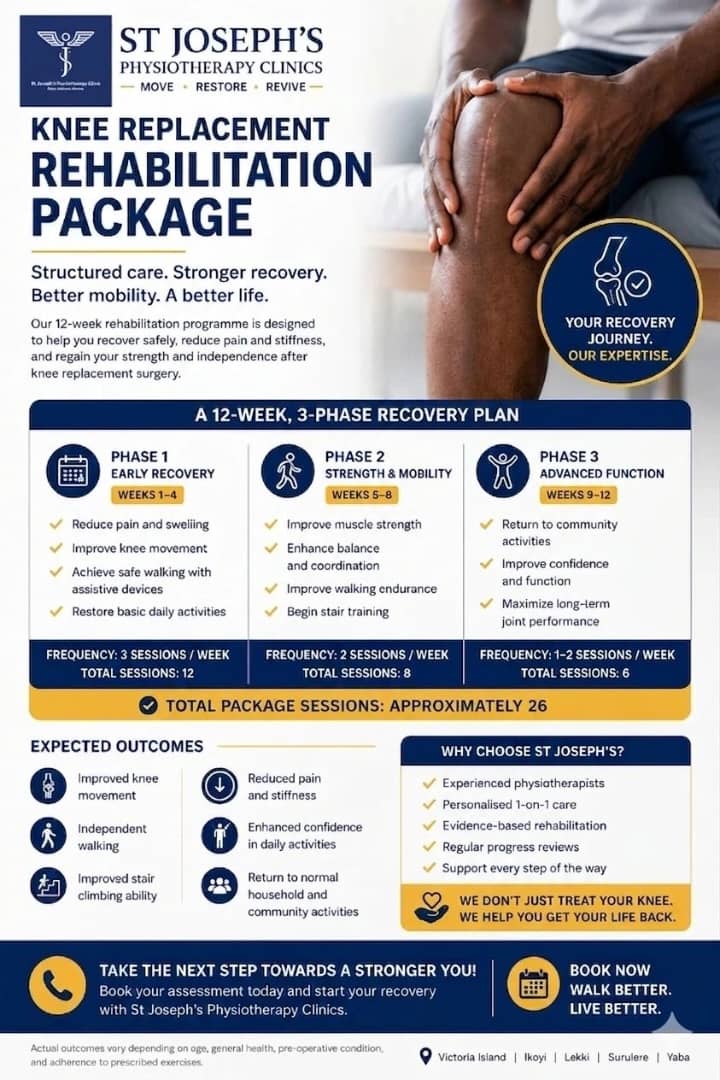
Complete Knee Replacement Rehabilitation Package in Lagos
Knee replacement surgery is a major step toward pain relief and improved mo…

NAMDA threatens strike over unpaid medical lecturers’ allowances
The Nigerian Association of Medical and Dental Academics (NAMDA) has warned…

Resident Doctors Signal End to Strike Threat After High-Level Talks with Gbajabiamila
The threat of a nationwide indefinite strike by the Nigerian Association of…
AMLSN Issues Strong Rejoinder to NAMDA on Public Service Establishment Matters
The Association of Medical Laboratory Scientists of Nigeria (AMLSN) has rel…