It gives me great pleasure to be part of this august gathering of nurses and midwives from the West African sub-region; a gathering of providers of selfless humanitarian, clinical and psychological support to individuals, families and communities. I welcome you to Abuja, the Federal Capital Territory.
The theme for this 14th Biennial General Meeting, 23rd Scientific Session and 37th Council meeting in Abuja, Nigeria ‘Emerging Health Emergencies: Community and Health Workforce Response in the sub-Region’, is quite apt and relevant due to the major transformations that are taking place in the health sector all across the sub-region. ‘The last half of the decade has witnessed emerging health challenges such as the bird flu, Ebola Virus Disease (EVD) and recently the outbreak of Neisseria meningitis in Nigeria, challenges that have tested our resilience as a sub-region and exhibited our ability to deal efficiently and effectively with the problems that confront us as a region.
In addition to these outbreaks, the sub-region has been faced with reoccurring violence, which has resulted in the displacement of people from their homes creating emergency situations, particularly in the care of internally displaced persons (IDPs).

These incidences have further brought to the forefront the immense importance of Nurses and Midwives as frontline health workers, who are strategically placed to render health care at the community level. Nurses and Midwives are key to the healthcare delivery system and their contributions are crucial in improving health outcomes of individuals, families, communities, the nation and the West African Sub region as a whole.
The health care system is in the midst of great change as care providers discover new ways to provide patient-centered care; to deliver more primary care in the community rather than the acute care setting. In the most affected regions of sub-Saharan Africa the responsibilities of Nurses have increased in line with expanding health services to meet local, national and global health targets, including the United Nations Sustainable Development Goals (SDGs).
The government of Nigeria has set up the Nigeria Centre for Disease Control (NCDC) since 2011 to respond to the challenges of public health emergencies and to enhance Nigerian’s preparedness and response to epidemics through prevention, detection and control of communicable and non-communicable diseases of national and international public health importance. The NCDC has earned global respect and recognition through recent effective response to emergency health situation.
Furthermore, the government has established and is running a two-year Master of Public Health programme in Field Epidemiology to regularly produce a crop of epidemiologists that would readily go to the field in response to emergency outbreak of diseases.
To complement the efforts of the government, the role Nurses and Midwives in the health systems would need to be reviewed, delineated and recognized for better impact and optimum contribution to positive health. For example, the Federal Government of Nigeria is putting Nigerian nurses and midwives at the forefront of Revitalisation of Primary Healthcare services in the country, this is the flagship intervention for our health agenda. We will soon roll out mass engagement of nurses and community health extension workers in all our PHCs for effective and efficient 24-hour coverage of healthcare services.
We shall also increase community awareness and ensure acceptance of conventional health care programmes that will fast track the achievement of universal health coverage and the sustainable development goals (SDGs).
We are all aware that reduced workforce leads to higher morbidity and mortality. With better funding there will be more recruitment and retention, better remunerations and also positive practice environments. However, the caring nature of the profession epitomized by the works of Florence Nightingale “the Lady with the Lamp” should be rekindled within the profession. Individuals, families and the communities all have the right to receive quality care from nurses and midwives.
I therefore urge you to deliberate on issues confronting the profession objectively and come out with measures that can address emerging health challenges in the Sub region.
Thank you all and enjoy your stay in Abuja.
ABUJA: Training Schedule for Basic Life Support BLS, Pediatric Advanced Life Support (PALS), Advanced Cardiovascular Life Support ACLS, First Aid, CPR, AED
PORTHARCOURT: Training Schedule for Basic Life Support BLS, Pediatric Advanced Life Support (PALS), Advanced Cardiovascular Life Support ACLS, First Aid, CPR, AED
LAGOS: Training Schedule for Basic Life Support BLS, Pediatric Advanced Life Support (PALS), Advanced Cardiovascular Life Support ACLS, First Aid, CPR, AED
STOP paying for airtime and electricity, Let your phone pay its bills with ScreenT
You may also like

FG Supports Robotic Surgery Expansion to Reduce Medical Tourism
Nigeria is taking another step toward strengthening specialised healthcare …
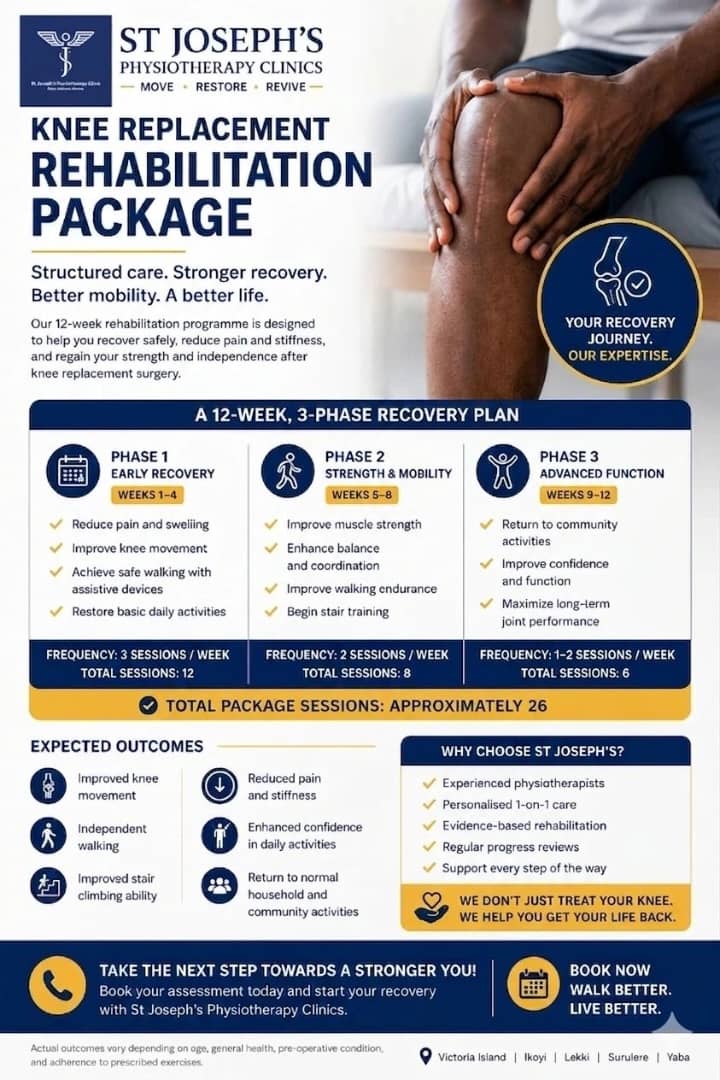
Complete Knee Replacement Rehabilitation Package in Lagos
Knee replacement surgery is a major step toward pain relief and improved mo…
NAMDA threatens strike over unpaid medical lecturers’ allowances
The Nigerian Association of Medical and Dental Academics (NAMDA) has warned…
Resident Doctors Signal End to Strike Threat After High-Level Talks with Gbajabiamila
The threat of a nationwide indefinite strike by the Nigerian Association of…
AMLSN Issues Strong Rejoinder to NAMDA on Public Service Establishment Matters
The Association of Medical Laboratory Scientists of Nigeria (AMLSN) has rel…