Paul Obi and Kasim Sumaina write on the steps by Rotary International and other stakeholders to improve obstetrics in Nigeria
The quality of care given to mothers and new born has over the years become a source of concern. It is in that light that stakeholders believed that improved obstetric services remains the key to unlocking the challenges confronting care associated with newborn babies and mothers in the nation's healthcare system.
Thus, in its quest to ensure improved quality obstetric care and to integrate quality assurance model into health systems, Rotary Clubs from Germany, Austria and Nigeria between 2008 and 2010 substantially improved the quality of obstetric care in 10 hospitals in the states of Kaduna and Kano with a comprehensive approach including quality assurance in obstetrics (OQA).
This intervention, according to observers has scaled up healthcare service delivery in many fronts. The programme brought together Rotarians from Nigeria, Austria and Germany with the Rotarian Action Group for Population and Development (RFPD) to work with state governments in Kano, Kaduna, FCT-Abuja and Enugu since 2008 to establish a system of quality assurance in obstetric (OQA).
The project which is a pragmatic involvement of key health facility personnel to track maternal and fetal mortality within the facility, determine causative factors (especially structured & functional) and addressing them, especially through capacity building and structures improvements. This effort has gone ahead to reduce maternal and fetal mortality in the hospitals involved.
From November until April 2015, this innovative pilot project was successfully scaled up to 20 hospitals: 10 hospitals of Ondo State and FCT Abuja in addition to the 10 hospitals in the states of Kaduna and Kano. This initiative compiled, analysed and studied data on maternal and feta/newborn deaths in these hospitals, identified the contributory gaps in quality of care and responded by building staff capacity and equipment provision to reduce the deaths. Improvements made are reviewed in an ongoing benchmarking process and monitored through regular visits to the hospitals. With community dialogues conducted in the villages in the neighbourhood of the hospitals, facility-based deliveries increased. Over the years, tens of thousands of mothers and newborns have already benefited from this improvement in healthcare.
The project jointly sponsored by Rotary International in Conjunction with Ministries of Health (MoHs) of Kaduna, Kano, Ondo and FCT-Abuja at the Final Prenatal Review Meeting of the 1st Rotary MCH Scaling up Project for Commissioners of Health of the MoHs for Doctors and Midwives is expected to streamline various healthcare interventions related to obstetric services and general care for new born. The Ministries of Health in the participating states have committed themselves to integrate this quality assurance model into their state health systems.
The integration process will began with an autonomous continuation of OQA in the project hospitals and its expansion to all state hospitals and health centres in the states. The MoHs will provide their public hospitals with additionally required medical equipment. Rotary will- in the transition period -supply necessary training for health personnel and provide consultancy to the statistical offices of the MoHs.
Chief Executive Officer, Rotarian Action Group for Population and Development (RFPD), Prof. Robert Zinser, in his address said, the objective of the proposed project are to sustainably reduce maternal and newborn mortality, improved the quality of (obstetric) care and strengthen the health systems in the five states of Nigeria. “This shall be achieved through the inclusion of a system of quality assurance in obstetrics (OQA) into the states’ health policies and its implementation in health facilities’ obstetric departments. The OQA system has already been successfully introduced in 25 selected hospitals within the Rotary Maternal and Child Health (MCH) scaling up projects.
The QOA systems proved to bring forth documented reductions in maternal and perinatal morbidity and mortality and to be scalable. Therefore, the QOA system shall be integrated into Nigeria Maternal and Perinatal Death Surveillance (MPDS) program as an effective response mechanism for improving the quality of (obstetric) care, and then be introduced in additional health centres in the five states of Kano, Kaduna, FCT-Abuja Ondo and Enugu. The ultimate goal is the integration of the MPDS/QOA system into the national system and a nationwide implementation.”

Speaking further, he said: “In order to extend the application of the MDSR program and improve its outputs, it shall be complement /improved with perinatal death surveillance as well as a system of QA in obstetrics, resulting in harmonised Maternal and Perinatal Death Surveillance and Obstetric Quality Assurance (MPDS/QOA) policy and guidelines. This paper/methodology will be developed by consultants and medical advisors of the Rotary projects, and discussed with the Ministries of Health (MoHs) of the five participating states for approval and adoption.
“In collaboration with the MoHs all the necessary steps will be taken to build up the necessary capacities for a continuous data collection, monitoring and analysis in the five states. Capacity building and training will be done for two groups: health personnel in obstetric department and MoH staff including statisticians. The MoH staff including statistician will be trained by the BAQ (Bavarian Expert Group for Quality Assurance)" Zinser maintained. He further contended that "health personnel will be trained by medical advisors from Nigeria and Germany, who already participated in the Rotary MCH scaling up projects and know the QOA system as well as obstetric care by heart. All trainings are conducted according to the train-the-trainer principle in order to secure sustainability of the future capacity building and knowledge transfer,” he said.
Speaking on the same issue, Chairman, Rotary Maternal/Child Improvement Project, Dr. Kolawole Owoka, said, “This project is by Rotarians in Nigeria, in Germany and in Austria. We are trying to improve maternal health so that our women will not die. We are also trying to ensure that our children do not die very early in life. We have adopted five hospitals in Kano, Kaduna, Abuja and Ondo State. In these five hospitals, we will make sure that we do quality assurance while delivering healthcare to mother and children. That is, we look at the hospital to see that they have good structures and good equipment. And if we find out that they do not have the required equipment to run the hospitals, we provide them with that and equally look at the processing, the protocols, the operations and everything they involves in."
According to Owoka, "we will ensure that they follow the necessary guidelines and train those necessary. We ensure that both the process and structures leads to good outcome so that the results from these hospitals will be good and accurate. From the results we have already gathered from these five hospitals, we have been able to reduce Maternal Mortality by 60% and 15% of Infant Mortality. This is only applicable to those five hospitals and not for the whole country.
“Therefore, having achieved this, we are now happy to present the results to the Permanent Secretaries, State Commissioners and some officials of the different state Ministry of Health here so that they can in turn integrate this into their health systems so that it can be permanent which is the essence of the meeting. Owoka also stated that Rotary International did not use criteria in selecting the states that, “we started our project in Kano and Kaduna. When we saw that it was good, it was recommended by Rotary International and that we should scale it up.
We scaled it up to Ondo and FCT-Abuja, and when the saw that it was still good, they now said that we should scale it up for the second time and we scaled it up to Enugu. So, we added Enugu this year making five and now, we have done five making it 25 hospitals. We now published results that we can show people and therefore recommends that Government can now look at it and put it in their health systems to improve quality of services they offer the public.
On his part, Executive Secretary, Ondo State Primary Health Care Development Board (OSPHCDB), DR. Olugbenga O. Osunmakinwa, said, “Ondo State has been part of the program for a while now and I want to say that we appreciate the efforts and support of Rotary International in contributing to health care delivery in the state and what they are bringing on board fit into the state government programme as regards to what we have been doing in the health sector, particularly in the area of quality assurance and strengthening community involvement in Primary Health delivery."
Further, the anticipation to scale up obstetric services in the country is borne out of the need to ensure challenges of maternal and child health is tackled early enough. The most important aspect of the project is that the pilot project has already started in 10 states.
Participating states are expected to embrace the programme so as to expand the frontiers of community health and reducing the poor indexes that have characterised maternal and child health in their local domains. The project itself is a critical step to addressing inadequacies found with primary healthcare policies in Nigeria.
By: This Day
ABUJA: Training Schedule for Basic Life Support BLS, Pediatric Advanced Life Support (PALS), Advanced Cardiovascular Life Support ACLS, First Aid, CPR, AED
PORTHARCOURT: Training Schedule for Basic Life Support BLS, Pediatric Advanced Life Support (PALS), Advanced Cardiovascular Life Support ACLS, First Aid, CPR, AED
LAGOS: Training Schedule for Basic Life Support BLS, Pediatric Advanced Life Support (PALS), Advanced Cardiovascular Life Support ACLS, First Aid, CPR, AED
STOP paying for airtime and electricity, Let your phone pay its bills with ScreenT
You may also like
Comrade Lemii Christian Emerges Chairman of NANNM Rivers State Branch in Historic Victory
PORT HARCOURT, NIGERIA Following the long awaited National Association of N…

FG Supports Robotic Surgery Expansion to Reduce Medical Tourism
Nigeria is taking another step toward strengthening specialised healthcare …
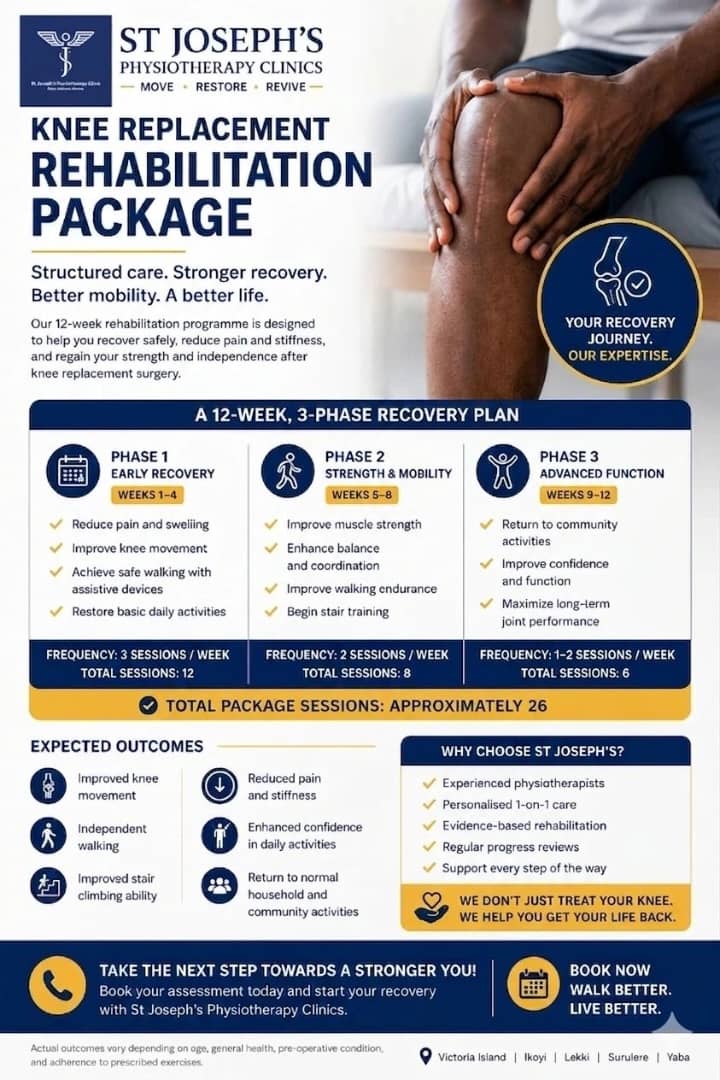
Complete Knee Replacement Rehabilitation Package in Lagos
Knee replacement surgery is a major step toward pain relief and improved mo…

NAMDA threatens strike over unpaid medical lecturers’ allowances
The Nigerian Association of Medical and Dental Academics (NAMDA) has warned…

Resident Doctors Signal End to Strike Threat After High-Level Talks with Gbajabiamila
The threat of a nationwide indefinite strike by the Nigerian Association of…