The next time you feel a sneeze coming on, raise your elbow to cover up that multiphase turbulent buoyant cloud you’re about to expel.
That’s right: A novel study by MIT researchers shows that coughs and sneezes have associated gas clouds that keep their potentially infectious droplets aloft over much greater distances than previously realised.
“When you cough or sneeze, you see the droplets, or feel them if someone sneezes on you,” says John Bush, a professor of applied mathematics at MIT, and co-author of a new paper on the subject. “But you don’t see the cloud, the invisible gas phase. The influence of this gas cloud is to extend the range of the individual droplets, particularly the small ones.”
Indeed, the study finds, the smaller droplets that emerge in a cough or sneeze may travel five to 200 times further than they would if those droplets simply moved as groups of unconnected particles — which is what previous estimates had assumed. The tendency of these droplets to stay airborne, resuspended by gas clouds, means that ventilation systems may be more prone to transmitting potentially infectious particles than had been suspected.
With this in mind, architects and engineers may want to re-examine the design of workplaces and hospitals, or air circulation on airplanes, to reduce the chances of airborne pathogens being transmitted among people.
“You can have ventilation contamination in a much more direct way than we would have expected originally,” says Lydia Bourouiba, an assistant professor in MIT’s Department of Civil and Environmental Engineering, and another co-author of the study.
The paper, “Violent expiratory events: on coughing and sneezing,” was published in the Journal of Fluid Mechanics. It is co-written by Bourouiba, Bush, and Eline Dehandschoewercker, a graduate student at ESPCI ParisTech, a French technical university, who previously was a visiting summer student at MIT, supported by the MIT-France program.
Smaller drops, longer distances
The researchers used high-speed imaging of coughs and sneezes, as well as laboratory simulations and mathematical modeling, to produce a new analysis of coughs and sneezes from a fluid-mechanics perspective. Their conclusions upend some prior thinking on the subject. For instance: Researchers had previously assumed that larger mucus droplets fly farther than smaller ones, because they have more momentum, classically defined as mass times velocity.
That would be true if the trajectory of each droplet were unconnected to those around it. But close observations show this is not the case; the interactions of the droplets with the gas cloud make all the difference in their trajectories. Indeed, the cough or sneeze resembles, say, a puff emerging from a smokestack.
“If you ignored the presence of the gas cloud, your first guess would be that larger drops go farther than the smaller ones, and travel at most a couple of meters,” Bush says. “But by elucidating the dynamics of the gas cloud, we have shown that there’s a circulation within the cloud � the smaller drops can be swept around and resuspended by the eddies within a cloud, and so settle more slowly. Basically, small drops can be carried a great distance by this gas cloud while the larger drops fall out. So you have a reversal in the dependence of range on size.”
Specifically, the study finds that droplets 100 micrometers ½ or millionths of a meter ½ in diameter travel five times farther than previously estimated, while droplets 10 micrometers in diameter travel 200 times farther. Droplets less than 50 micrometers in size can frequently remain airborne long enough to reach ceiling ventilation units.
Source: sciencedaily.com
ABUJA: Training Schedule for Basic Life Support BLS, Pediatric Advanced Life Support (PALS), Advanced Cardiovascular Life Support ACLS, First Aid, CPR, AED
PORTHARCOURT: Training Schedule for Basic Life Support BLS, Pediatric Advanced Life Support (PALS), Advanced Cardiovascular Life Support ACLS, First Aid, CPR, AED
LAGOS: Training Schedule for Basic Life Support BLS, Pediatric Advanced Life Support (PALS), Advanced Cardiovascular Life Support ACLS, First Aid, CPR, AED
STOP paying for airtime and electricity, Let your phone pay its bills with ScreenT
You may also like

FG Supports Robotic Surgery Expansion to Reduce Medical Tourism
Nigeria is taking another step toward strengthening specialised healthcare …
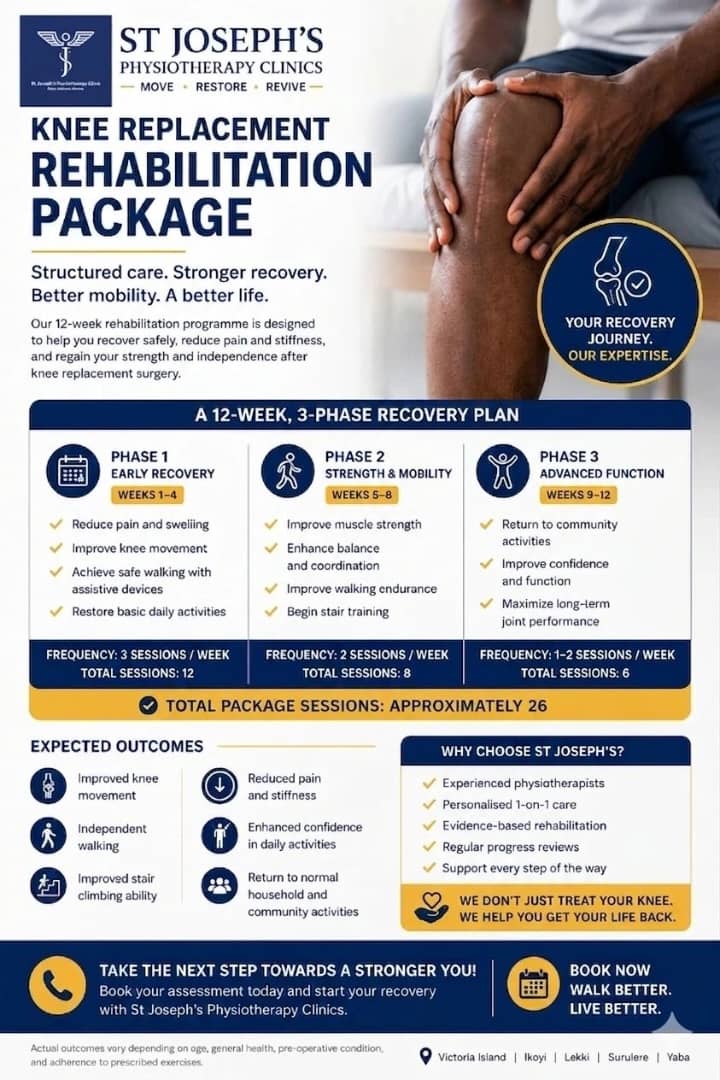
Complete Knee Replacement Rehabilitation Package in Lagos
Knee replacement surgery is a major step toward pain relief and improved mo…

NAMDA threatens strike over unpaid medical lecturers’ allowances
The Nigerian Association of Medical and Dental Academics (NAMDA) has warned…

Resident Doctors Signal End to Strike Threat After High-Level Talks with Gbajabiamila
The threat of a nationwide indefinite strike by the Nigerian Association of…
AMLSN Issues Strong Rejoinder to NAMDA on Public Service Establishment Matters
The Association of Medical Laboratory Scientists of Nigeria (AMLSN) has rel…