Dr Casmir Ifeanyi is the chairman, Association of Medical Laboratory Scientists of Nigeria (AMLSN) FCT chapter. This interview with DAVID ADUGE-ANI he speaks on the challenges facing the Nigerian health sector at the moment and also proffers solutions on how to end the crisis in the sector.
The Nigerian Medical Association (NMA) has been on strike for about a month now. What is the opinion of laboratory scientists on these frequent strikes by doctors?
Our take on the demands of NMA, which resulted to about two months strike is that firstly, the 24-point demand of the NMA is anti-people. They are all illegal and they border on the constitution of the Federal Republic of Nigeria. Very many of their demands will require an enactment of a bill or an amendment of an existing act. Also they will require constitutional amendment to be captured.
When that happens, you will throw up several other issues that may not only exacerbate the condition in the health sector, but affect other sectors of the Nigerian economy. So, summarily put, the strike is illegal because the NMA is a professional association and not a trade union. Therefore it lacks the locus standi to call off members on strike.
They also lack locus standi to engage government in all forms of negotiations on the condition of service, because it is only a trade union that is enabled to do that.
Can you mention one of such demands by the NMA, which you view as illegal and anti-people?
One of such an illegal demand is the demand for the office of deputy Chairman, Medical Advisory Committee (CMAC). The tertiary health institution act (U16, LSN, 2014) didn’t provide for the office of deputy a CMAC. It is a cardinal demand in their 24-piont demands. If you are asking for the provision of an office that is not encapsulated in the enabling act, you are asking for an illegality. And if government approves such a demand, government will be perpetuating illegality.
What do you think is the best way to prevent these frequent strikes by the association?
For me, the best way to go is for the federal government to proscribe the NMA, because it is not a trade union. Also, before now I had expected that we would have upgraded the health services of the Nigeria Police, the Nigerian Customs and Nigeria Air force and of course the entire military medical core to provide medical services when such strike action occurs.
Government also need to explore our expatriate content in the health care workforce. For instance we have expatriates in the aviation industry, oil industry, construction industry and also in the power industry. The question is what has actually happened to the expatriates’ quota in the health sector. That will put an end to one of the 24-point demand of an overseas experience, because we will be able to bring the expatriates here, to teach the doctors those things that they want to go and learn overseas. This will provide fulcrum for technological transfer and capacity building. That is one way of solving these frequent strikes by the Nigerian doctors.
Again, governmnent should henceforth stop doctors from being administrators of hospitals. The day government adopts global best practices of health care administration, as it is done in other countries such as, Dubai, UK and America we will have sanity in the health sector.
Recently the National Assembly passed the National Health Bill into law. Do you think that act, if assented to by the President would take care of the challenges facing the Nigerian health sector?
We were told that different versions of the bill were passed by the different chambers of the National Assembly.
I want to say categorically that the version passed by the Senate is anti-people. We believe that the version passed by the House of Representatives will bequeath to Nigerians a wonderful health bill. So it is our belief that if the version passed by the House of Representatives is assented to, then the Nigerian people have no cause to worry, because it a piece of legislation that will guarantee quality health care service in the country.
ABUJA: Training Schedule for Basic Life Support BLS, Pediatric Advanced Life Support (PALS), Advanced Cardiovascular Life Support ACLS, First Aid, CPR, AED
PORTHARCOURT: Training Schedule for Basic Life Support BLS, Pediatric Advanced Life Support (PALS), Advanced Cardiovascular Life Support ACLS, First Aid, CPR, AED
LAGOS: Training Schedule for Basic Life Support BLS, Pediatric Advanced Life Support (PALS), Advanced Cardiovascular Life Support ACLS, First Aid, CPR, AED
STOP paying for airtime and electricity, Let your phone pay its bills with ScreenT
You may also like

FG Supports Robotic Surgery Expansion to Reduce Medical Tourism
Nigeria is taking another step toward strengthening specialised healthcare …
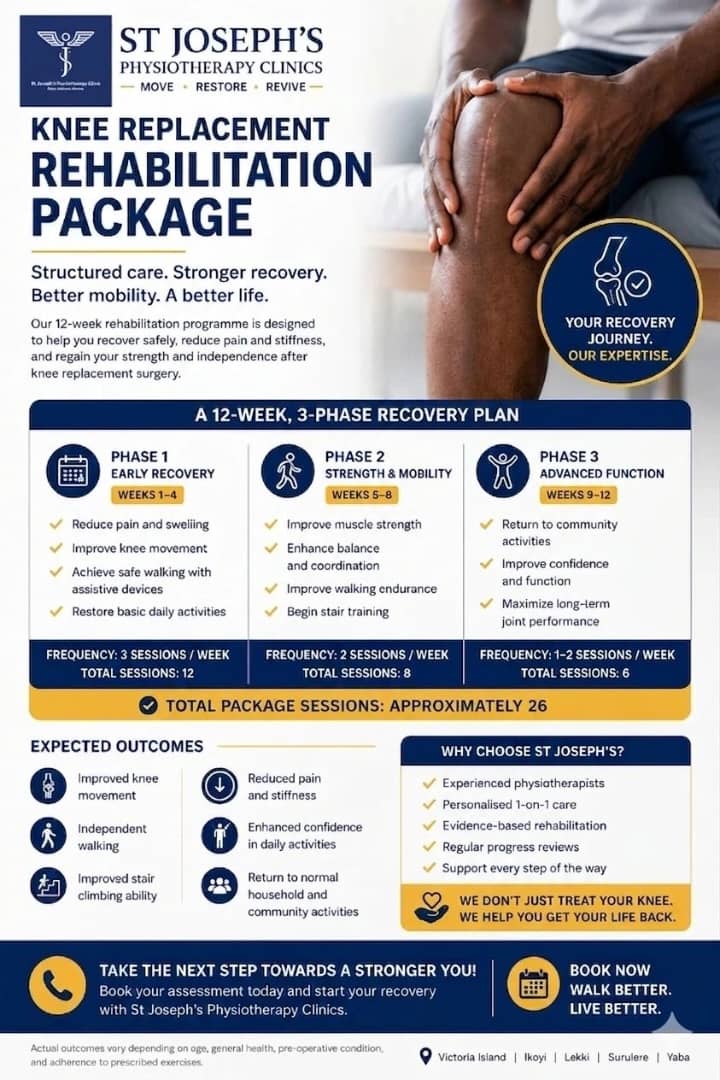
Complete Knee Replacement Rehabilitation Package in Lagos
Knee replacement surgery is a major step toward pain relief and improved mo…

NAMDA threatens strike over unpaid medical lecturers’ allowances
The Nigerian Association of Medical and Dental Academics (NAMDA) has warned…

Resident Doctors Signal End to Strike Threat After High-Level Talks with Gbajabiamila
The threat of a nationwide indefinite strike by the Nigerian Association of…
AMLSN Issues Strong Rejoinder to NAMDA on Public Service Establishment Matters
The Association of Medical Laboratory Scientists of Nigeria (AMLSN) has rel…