PROFESSIONALS under the aegis of Health Records Officers Registration Board of Nigeria (HRORBN) have lamented the dearth of qualified health record personnel in Nigerian hospitals.
Registrar of HRORBN, Mr. Mohammed Ibrahim, who decried the situation at a press conference in Abuja, said that despite the avalanche of health record officers in the country, many government and private hospitals continue to employ quacks as their record officers.
“If the people designated to manage patients’ information don’t have the pre-requisite qualification, they may continue to give the wrong information, and if record personnel mislead the doctor even on a common itch of the patient, with the pressure of work, the clinician is unable to verify the information and ends up prescribing drugs meant for adults to an underage. It could result to loss of life of the patient. That is why anybody that would do this job must have acquired the minimum qualification,” he said.
Bemoaning that despite the law promulgated by the government to ensure that qualified personnel are employed as record officers, he said most people employed in the hospitals as record officers do not have a background knowledge of health information management system.
Ibrahim noted the situation has made it difficult to get the accurate health data of Nigeria as the country mostly depends on information received from international agencies.
He added that the council is also faced the challenge of advancement of knowledge, as the Higher National Diploma (HND) remains the highest qualification. The Guardian learnt that some Nigerians have to travel as far as Benin Republic and Cotonou to get additional qualifications.
Noting that apart from the University of Ibadan which recently commenced a Post Graduate Diploma in Health Information Management, Ibrahim stressed the need to have a degree awarding institutions to train people on health information management.
The registrar called on government agencies such as the Primary Health Care Development Agency and the Nigerian Health Insurance Scheme (NHIS) to involve some record personnel in their activities so as to ensure accuracy in the record keeping.
“For instance, a community health care officer is not trained to collect data. He is doing it as a additional responsibility as it may affect his primary job which is to care for patients,” he said.
ABUJA: Training Schedule for Basic Life Support BLS, Pediatric Advanced Life Support (PALS), Advanced Cardiovascular Life Support ACLS, First Aid, CPR, AED
PORTHARCOURT: Training Schedule for Basic Life Support BLS, Pediatric Advanced Life Support (PALS), Advanced Cardiovascular Life Support ACLS, First Aid, CPR, AED
LAGOS: Training Schedule for Basic Life Support BLS, Pediatric Advanced Life Support (PALS), Advanced Cardiovascular Life Support ACLS, First Aid, CPR, AED
STOP paying for airtime and electricity, Let your phone pay its bills with ScreenT
You may also like

FG Supports Robotic Surgery Expansion to Reduce Medical Tourism
Nigeria is taking another step toward strengthening specialised healthcare …
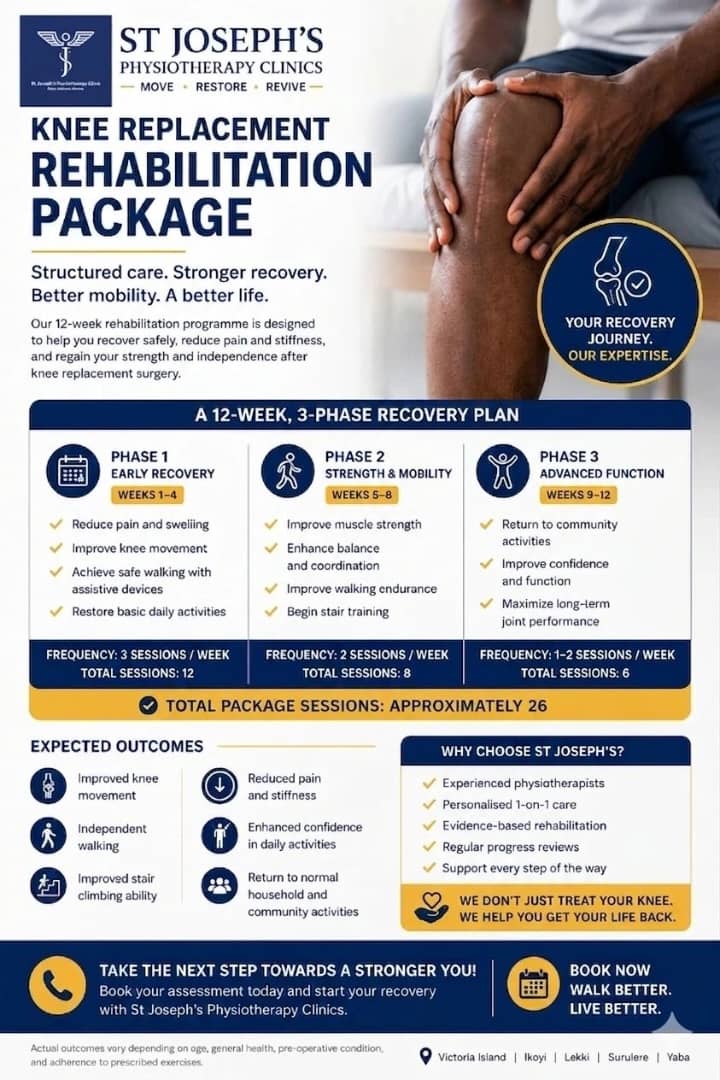
Complete Knee Replacement Rehabilitation Package in Lagos
Knee replacement surgery is a major step toward pain relief and improved mo…

NAMDA threatens strike over unpaid medical lecturers’ allowances
The Nigerian Association of Medical and Dental Academics (NAMDA) has warned…

Resident Doctors Signal End to Strike Threat After High-Level Talks with Gbajabiamila
The threat of a nationwide indefinite strike by the Nigerian Association of…
AMLSN Issues Strong Rejoinder to NAMDA on Public Service Establishment Matters
The Association of Medical Laboratory Scientists of Nigeria (AMLSN) has rel…