Throughout his adolescence, José Ramirez Jr., now a clinical social worker in Houston, had a shifting array of bewildering symptoms.
Sometimes, he was feverish; at other times, nauseated. He’d find swellings on his hands and his feet and open sores that wouldn’t heal.
He’d grow hypersensitive to touch, unable to bear even the slightest rustle of a bedsheet. Or his forearms would turn numb, a complication he gamely sought to exploit.
“I’d insert safety pins into my skin,” he said, “to try to impress girls.”
Dermatologists were baffled. Eczema? Lupus? Varicose veins?
Spiritualists spoke of demonic possession.
Finally, Ramirez’s sister, who worked at the local hospital, persuaded two doctors there to take on her brother’s medical mystery. They did every possible test. They sent biopsied tissue to federal researchers in Atlanta.
“Within 24 hours, the director of the Texas Health Department came to see me,” Ramirez said.
“He told me I had leprosy.”
It was 1968, Ramirez had just turned 20, and he would spend the next seven years at the National Leprosarium in Carville, Louisiana.
Today, Ramirez, 66, is considered cured of the disorder, and he has no visible signs of it — no facial scarring or disfigurement, no loss of digits or clawing in of the hands and feet.
“I’m very fortunate,” he said, “that the experimental medications they gave me prevented a lot of that.”
Emotional scarring is another matter. The “stigma, guilt and shame” that dog the disorder defy belief, Ramirez said, and public ignorance about it remains profound.
That is why he has given talks around the world, with the essential message that everything you think you know about Hansen’s disease, about leprosy, is probably wrong.
That message resonates with researchers as well, who say that, for all the antiquity and notoriety of the disease, leprosy continues to surprise and confound them.
The illness can now readily be cured through a sustained course of antibiotics, yet the basic nature of the microbial culprit – a waxy, rod-shaped character called Mycobacterium leprae — is still being sketched out.
New research suggests that the leprosy parasite is a paradox encapsulated — at once rugged and feeble, exacting and inept.
One research group recently proposed that leprosy may be the oldest infectious disease to go specifically for human beings, with origins dating back millions of years, certainly suggesting a pathogen of formidable persistence.
A slow-growing pathogen
Yet scientists have also found that the leprosy bacillus is remarkably poor at migrating between human hosts. It dies quickly outside the body — a couple of hours on a lab slide, and that’s it — and about 95 percent of people appear immune to it.
“I refer to it as a wimp of a pathogen,” said Richard Truman, the chief of the laboratory research branch at the National Hansen’s Disease Program, a federal program dedicated to the treatment and study of leprosy.
And a flabby one, too. Whereas the genomes in most bacteria are streamlined sets of chemical instructions for spurring the fastest possible replication, recent studies have found that nearly half the DNA in M. leprae consists of so-called pseudogenes, inert genetic sequences that once encoded proteins but are now so much nucleic dead weight.
That proportion of defunct code is among the highest detected in a micro-organism and helps explain why the leprosy pathogen has one of the slowest generation times of its unicellular kind, dividing just once every 12 to 14 days, against 20 minutes for the ubiquitous E. coli.
Some researchers attribute the microbe’s decayed genome to its prolonged and virtually exclusive relationship with its human host.
“It’s reductive evolution,” said Erwin Schurr, a molecular geneticist at McGill University — a swapping of plasticity in favor of specialisation and a degree of complacency.
Dr. Xiang Y. Han of the University of Texas M.D. Anderson Cancer Center said the pseudogenes were a result of a “chase-hide” game, with the microbial “mouse” gradually shedding as many surface proteins as possible to elude our prowling cat of an immune system.
Slow-growing though the bacteria may be, if left untreated, they will multiply into the many trillions, forming thick, scaly nodules on the face and extremities — “lepra” is the Greek word for scaly — and destroying the Schwann cells that sheathe and protect the nerves of the peripheral nervous system.
Reporting recently in the journal PLOS Neglected Tropical Diseases, Han and Francisco J. Silva of the University of Valencia in Spain sought to trace the antiquity of leprosy by comparing the genomes of M. leprae and a closely related pathogen named Mycobacterium lepromatosis, which Han recently discovered.
ABUJA: Training Schedule for Basic Life Support BLS, Pediatric Advanced Life Support (PALS), Advanced Cardiovascular Life Support ACLS, First Aid, CPR, AED
PORTHARCOURT: Training Schedule for Basic Life Support BLS, Pediatric Advanced Life Support (PALS), Advanced Cardiovascular Life Support ACLS, First Aid, CPR, AED
LAGOS: Training Schedule for Basic Life Support BLS, Pediatric Advanced Life Support (PALS), Advanced Cardiovascular Life Support ACLS, First Aid, CPR, AED
STOP paying for airtime and electricity, Let your phone pay its bills with ScreenT
You may also like

FG Supports Robotic Surgery Expansion to Reduce Medical Tourism
Nigeria is taking another step toward strengthening specialised healthcare …
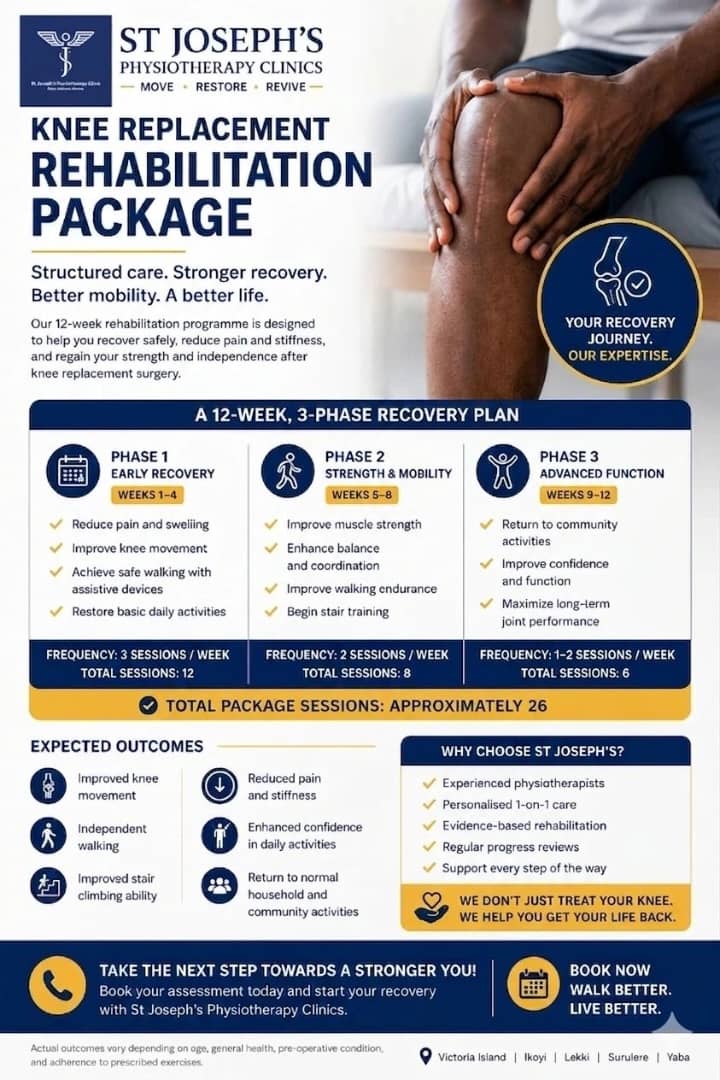
Complete Knee Replacement Rehabilitation Package in Lagos
Knee replacement surgery is a major step toward pain relief and improved mo…

NAMDA threatens strike over unpaid medical lecturers’ allowances
The Nigerian Association of Medical and Dental Academics (NAMDA) has warned…

Resident Doctors Signal End to Strike Threat After High-Level Talks with Gbajabiamila
The threat of a nationwide indefinite strike by the Nigerian Association of…

AMLSN Issues Strong Rejoinder to NAMDA on Public Service Establishment Matters
The Association of Medical Laboratory Scientists of Nigeria (AMLSN) has rel…