The National Assembly has said it would not set aside one percent of consolidated revenue for the health sector as statutorily required, until it is sure of judicious and transparent disbursement of the fund.
The Executive Director of the National Primary Health Care Development Agency (NPHCDA), Faisal Shuaib, disclosed this on Thursday while explaining why the fund was not included in the 2017 budget.
The National Health Act, which was signed into law in 2014, stipulates that one per cent of the consolidated federal revenue be set aside for the health sector with effect from 2017.
But the fund, which this year would have been about N40 billion, was not included in the 2017 budget.
Mr. Shuaibu said the lawmakers want to ensure that the fund will be used judiciously before they start appropriating it.
Speaking at the inaugural quarterly media interactive forum #OpenNPHCDA in Abuja, he said the Ministry of Health was working very hard to institute transparency in the running of its affairs.
He assured that going by the steps already taken under this administration, the fund would be made available in the 2018 budget.
“The health law took a long time, passed through several stages before people like you helped to make it a reality and I think one of the cornerstones of the health law is around how one percent of the consolidated revenue fund will be dedicated to primary health care and the National Health Insurance Scheme (NHIS).
“There have been a lot of advocacy to the National Assembly. Our understanding is that if we are able to provide a transparent means of disbursing this fund to the states, which is what we are piloting, then it is very likely that the fund will be made available in the 2018 budget,” he said.
While agreeing with the concerns over misappropriation of health funds, Mr. Shuaib said “we don’t want the situation where funds are made available and they disappear into thin air.
 “Primary health care centres are not working very well, so what we are doing in collaboration with NHIS and the Federal Ministry of Health and the NPHCDA is to prioritize and see how these funds can be transferred from the national level to the health facilities.
 “We are working with the Bill and Melinda Gates and the the World Bank to see how this can be done in a very efficient manner,” he said.
Mr. Shuaibu, who also lamented the state of immunization in the country, said the agency was setting up emergency centres for routine immunization as part of the efforts to address the gap.
“We are setting up a national emergency centre to focus on routine immunization,” he said.
The centre, he explained, will involve experts and government officials who will be studying data and analysing them to find out what the challenges are.
He also revealed that the agency was still awaiting the audit report from KPMG.
He acknowledged that the agency had challenges in recent past around accountability and on how to do a better job.
This, he said, necessitated the hiring of the auditing firm to look at the books of the agency as part of the efforts to restore donors’ confidence, as the country seeks for alternatives to fund immunization.
“The firm is expected to turn in its report in the next few months,” Mr. Shuaib said.
Meanwhile, the speaker of the House of Representatives, Yakubu Dogara, has called on the NHIS to extend its coverage to poor and unemployed Nigerians.
Mr. Dogara spoke on Wednesday while declaring open an investigative hearing by the House into alleged misuse of NHIS contributions and inhuman treatment of enrollers in the scheme.
The Speaker lamented that a huge number of Nigerians who cannot afford the cost of treatment even in public health facilities are left to their own devices.
“Regrettably, there is no mechanism to protect vulnerable families from the catastrophic effects of the exorbitant cost of healthcare services in Nigeria.
“Poor families, who constitute over 67% of our population, (well in excess of 100 million Nigerians), cannot afford to pay hospital bills even for treatment of malaria in public health facilities, nor for routine ante-natal services.
“If we must achieve desired outcomes and changes, there is a compelling need to expand the coverage levels of NHIS, currently estimated to be about 4-5% of Nigerians, mostly in the formal sector.
“A scenario where even this abysmally low coverage is attributable to those in paid employment and other types of formal sector creates suspicion of lack of creativity and innovation on the part of key actors in the Health insurance industry in Nigeria, especially Health Maintenance Organizations, HMOs.” Mr. Dogara said.
He stressed the importance of the NHIS, which was established in 1999 to secure universal coverage and access to adequate and affordable health care for Nigerians, saying no nation can achieve a healthy milestone in the health sector without a health finance scheme mandated to check health emergency and reduce out-of-pocket spending for health services.
Calling for repositioning of the scheme, he noted that the NHIS and the delivery partners had faced criticisms, challenges and complaints ranging from untimely payment by healthcare providers from the HMOs to unsatisfactory health services to enrollers.
He said selection of adequate and efficient methods of financing, in addition to organisational delivery structure for health services, is essential to achieve the national health objective of providing health for all.
“Health care in Nigeria is financed by tax revenue, out-of-pocket payments, donor funding, and health insurance (social and community),” he said,
He called on relevant stakeholders to make contributions towards achieving the goal of the National Assembly to address the challenges, and proffer ideas towards resolving areas of concern so that drastic changes can be made for a better healthcare delivery system in Nigeria.
Source: The Premium Times News
ABUJA: Training Schedule for Basic Life Support BLS, Pediatric Advanced Life Support (PALS), Advanced Cardiovascular Life Support ACLS, First Aid, CPR, AED
PORTHARCOURT: Training Schedule for Basic Life Support BLS, Pediatric Advanced Life Support (PALS), Advanced Cardiovascular Life Support ACLS, First Aid, CPR, AED
LAGOS: Training Schedule for Basic Life Support BLS, Pediatric Advanced Life Support (PALS), Advanced Cardiovascular Life Support ACLS, First Aid, CPR, AED
STOP paying for airtime and electricity, Let your phone pay its bills with ScreenT
You may also like

FG Supports Robotic Surgery Expansion to Reduce Medical Tourism
Nigeria is taking another step toward strengthening specialised healthcare …
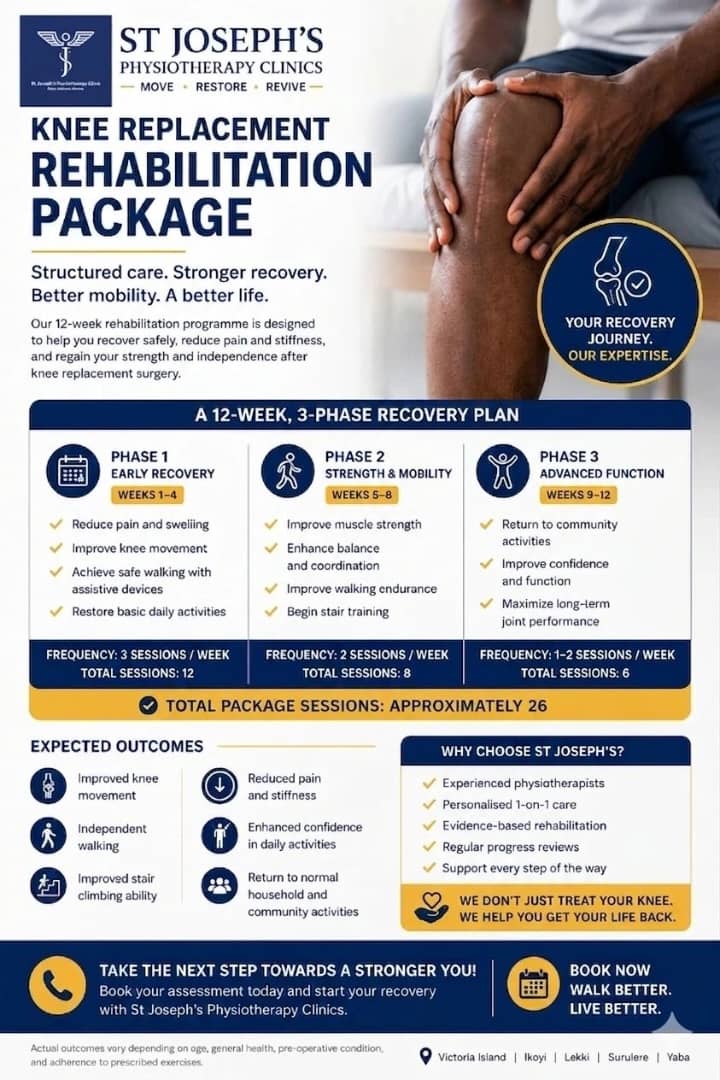
Complete Knee Replacement Rehabilitation Package in Lagos
Knee replacement surgery is a major step toward pain relief and improved mo…

NAMDA threatens strike over unpaid medical lecturers’ allowances
The Nigerian Association of Medical and Dental Academics (NAMDA) has warned…

Resident Doctors Signal End to Strike Threat After High-Level Talks with Gbajabiamila
The threat of a nationwide indefinite strike by the Nigerian Association of…
AMLSN Issues Strong Rejoinder to NAMDA on Public Service Establishment Matters
The Association of Medical Laboratory Scientists of Nigeria (AMLSN) has rel…