Hospitals record low patronage, Self-medication, complications, quackery order of the day
Nigerians are in dire straits as far as access to healthcare services is concerned. Millions are reeling under the onslaught of the economic downturneven as cost of healthcare has shot up above average means, forcing most to resort to preventive health. Findings in hospitals across the country, show that the cost of healthcare services have tripled in the last one year.
These are indeed trying times and would be ill advised to fall ill. The increase in cost is all encompassing. From needles and syringes, drugs, medical equipment, hospital consumables, and so on, everything has increased by a marging of 300 percent, leaving practitioners with increase in complicated birth deliveries and low patronage. Worried by this development, it is of the view that even as Federal government is battling to stop overseas medical tourism, it must contend with the challenge of ensuring that the few Nigerians that still have confidence in the country’s health sector have unhindered access to quality care.
Practitioners fear that that the increase in the operational costs at health facilities may worsen the country’s health indices without exemption of the already bad maternal and child mortality rates in the country. “The current recession has affected healthcare delivery in so many ways because it has greatly affected the purchasing power of people and because they don’t have money, they would shun qualitative healthcare,” says Dr. Akeem Agboola, the Medical Director, Life Fountain Hospital, Anthony Lagos.
 A visit to most of the private and public hospitals in Lagos revealed astronomical increase in not only the operational cost but in services. Astronomicalincrease Prices of medical equipment, drugs and other consumables used in healthcare service delivery have jumped up in varying percentages. There are instances the increase is between 50 -300 per cent. For instance, a 100 pack of needles and syringes that sold for N650 previously now goes for N3,500. The price of oxygen which increased by 50 per cent last year in public hospitals has now gone up by 100 per cent. Currently, although, the absolute value for surgery or Caesarean Section remain same in public hospitals, the people’s spending power has reduced and some patients are now cancelling their surgeries because they can no longer afford it.
 Bed space: The situation also does not spare bed space. In a public hospital in Lagos, in 2016, bed space cost N17, 000 per week, it is now N24, 000. Normal delivery still hovers between N50, 000 and N100, 000 in public hospitals. Caesarean Section, CS, also is around 100,000. In private hospital, before now CS cost between N150, 000 and N200 now cost N250, 000 and N350, 000. Investigation shows the situation has resulted to more cases of runaway mothers or fathers and abandonment of babies in the hospitals. Cost of drugs such as antimalarials in private hospitals have hit the roof. Popular brands like Lonart which in the past cost N700 is now N1200 -N1, 400 depending on the area of purchase.
Low patronage in hospitals: At the private and public hospitals, patronage have reduced. Findings show that most Nigerians have resorted to self medication while some patronise quacks. A doctor who spoke at the Lagos University Teaching Hospital, LUTH, observed that the hospital is witnessing more complicated cases. According to the doctor, who is a senior Consultant, most of the patients with complications were brought from home after being mismanaged by quacks. As it is now, the consequences of falling ill in Nigeria have worsened, unfortunately, over 70 per cent of Nigerians pay out of pockets.
Medicalworld Nigeria Treating a patient with bad infection: In the views of the Medical Director, Life Fountain Hospital, Anthony, Lagos, Dr Akeem Agboola said balancing operational cost of hospital services has become difficult and profit margin reduced. “For instance, diesel now goes for N260 per litre and you need 24-hour power to run a hospital effectively,” he said. Comparing services in 2016 and now, Agboola explained that to treat a patient with bad infection using antibiotic like Rocephin that will quickly take the patient out of that health problem, which use to cost N2, 000 now goes for N4,400 and there is a limit to which you can add as for your services, otherwise, the patients would go. He said most practitioners are facing serious challenges maintaining services and not allow patients to die. Lamenting the effect of recession, he said: “If in those days you were buying a drug for N2, 000 and you give it out at N3500, now, if you are getting it for N4, 400, you cannot go beyond N4,800 because it is not only one that will be given to the patient, you will give like 10 of it, before you get a profit of about N1,500 but now see the difference.”
Unpaid bills: Cases abound of patients who can no longer pay their hospitals. Findings revealed that most patients no longer come to the clinic. Even those already on clinic are no longer coming due to their inability to pay their transport fare to the hospitals. For Agboola, patients with good records that cannot afford full payment of their hospital bills are allowed to go home after they have been able to make at least 60 per cent of the payment while the remaining 40 per cent will be spread out. “Unlike someone that is coming for the first time, if it is an emergency, the primary thing is to save life, stabilize the patient, then you start discussing.
Blood transfusion “For example, last Saturday I had a patient who was brought in and needed blood and the person was coming for the first time, not minding whether they have paid I already ordered for them to bring blood before the family now came and told us how much are they paying, we told them to make deposit of N50,000 but they said they couldn’t afford it and wanted to take the patient away, so we obliged. The person was very sick. “It is not that we cannot go and get blood and start transfusing but we would not want to run into loss. So the general economic situation, inflation, recession, has affected the whole services because we also buy from the market. “So each time our drug reps come, they will tell us the price of this one or that one has increased again. So in a way it has really affected our relationship with some Healthcare Management Organisations, HMOs severely now because we cannot really cope with the tariff they gave us.” Agboola decried the high reduction on profit margin, but said despite the high cost of treatment, practitioners will continue to treat Nigerians. “This is what we do for a living, secondly, we are hoping that someday it will be better since it is the general economic challenges that has affected everybody and has also affected the practice as a business. “Everybody is hoping that things will improve so also are we hoping. We can’t close up because things are like this now, if we do that, what then do we know how to do? he queried. Implication of high duty tariff on drugs and medical equipment cannot be overemphasized. Agboola called on the Federal government to allow importers to get Forex from the Central Bank of Nigeria, directly.
Declaring that it has not been easy with his colleagues, he said: “The government should also take off some duties, levies on medical products and equipment when they are being brought in. The tax on the products should also be reduced since the government is not giving us any incentives and these monies come from our clients. Government should rescue us: “So everything depends on the government, they need to really excuse medical profession from some levy and allow the genuine importers of drugs to access their Forex from CBN, that will also relieve the pressure on the cost of drugs.”
Corroborating his views, a private practitioner, Dr. Umar Oluwole Sanda said that the cost of consumables and others have gone up with wide margin. “For instance, a 100 pack of needle and syringe that use to be about N650 before now goes for N3,500. Paracetamol has gone up along with antimalarials. This has threatened healthcare delivery, a lot of hypertensive patients cannot continue with their drugs. Hypertensive patients Sanda, who is also the President, Healthcare Providers’ Association of Nigeria, said despite the current economic recession, they still manage to keep the cost of service delivery within range, adding that the only way they can meet healthcare needs of people is through health insurance.
“People have to contribute something but government have to subsidize it.” Sanda said with the present economic situation, hospitals cannot make much profit because for that to happen, such hospital requires patient volume. “So if they increase the charges it will further reduce the number of patients that are coming, so most of them are presently running at a lost except those that are subsidised by government. He however beckon on government to encourage health insurance. “The good thing about health insurance is that you contribute little over a period of time, so that when people now need healthcare service they can access it. The health insurance coverage in Nigeria is very poor that is why many patients are suffering; the government can collaborate with telecommunication companies, or community health insurance, also multinational company to assist because in this recession time, government cannot do it alone.
. Vanguard
ABUJA: Training Schedule for Basic Life Support BLS, Pediatric Advanced Life Support (PALS), Advanced Cardiovascular Life Support ACLS, First Aid, CPR, AED
PORTHARCOURT: Training Schedule for Basic Life Support BLS, Pediatric Advanced Life Support (PALS), Advanced Cardiovascular Life Support ACLS, First Aid, CPR, AED
LAGOS: Training Schedule for Basic Life Support BLS, Pediatric Advanced Life Support (PALS), Advanced Cardiovascular Life Support ACLS, First Aid, CPR, AED
STOP paying for airtime and electricity, Let your phone pay its bills with ScreenT
You may also like

FG Supports Robotic Surgery Expansion to Reduce Medical Tourism
Nigeria is taking another step toward strengthening specialised healthcare …
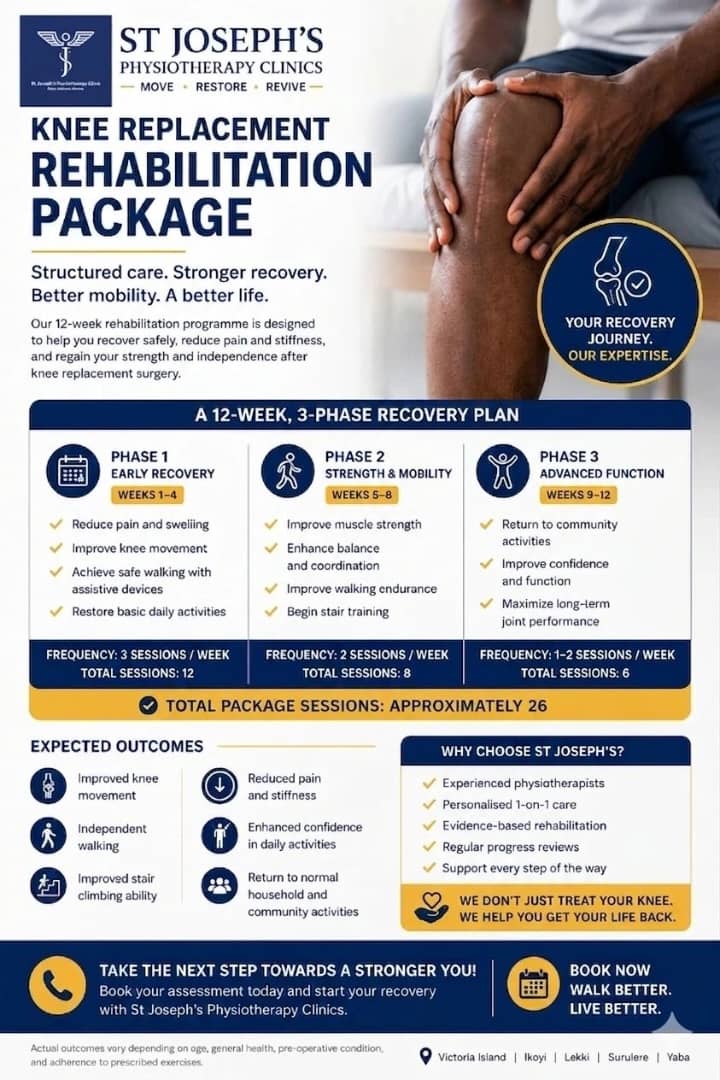
Complete Knee Replacement Rehabilitation Package in Lagos
Knee replacement surgery is a major step toward pain relief and improved mo…

NAMDA threatens strike over unpaid medical lecturers’ allowances
The Nigerian Association of Medical and Dental Academics (NAMDA) has warned…

Resident Doctors Signal End to Strike Threat After High-Level Talks with Gbajabiamila
The threat of a nationwide indefinite strike by the Nigerian Association of…
AMLSN Issues Strong Rejoinder to NAMDA on Public Service Establishment Matters
The Association of Medical Laboratory Scientists of Nigeria (AMLSN) has rel…
