As a woman, if getting pregnant the first time around was easy, it is natural to expect that you would get pregnant the second time just as easily.
For many couples, however, this is not always the case. Secondary infertility which is this inability to become pregnant or carry a pregnancy to term after already having one or more a babies is more common than expected.
Not achieving pregnancy despite frequent, unprotected sex — for at least a year in women under age 35 or six months in women age 35 and older — by a couple who have previously had a pregnancy is as worrisome as primary infertility and shares many of the same causes of primary infertility.
This type of infertility accounts for 60 per cent of infertility cases, and is especially common in women who wait to have their second babies until their late 30s or even 40s, when fertility drops.
If you’re experiencing secondary infertility, depending on the circumstances, both you and your partner might need medical evaluations. A gynecologist can help determine whether there’s an issue that requires a specialist or treatment at a fertility clinic.
Among the possible causes of secondary infertility is impaired sperm production, function or delivery in men, Fallopian tube damage, ovulation disorders, endometriosis and uterine conditions in women.
Before you assume that you need some intervention just because it’s taking a while to get a positive sign of pregnancy, do not forget that even in the healthiest of couples, there is just 20-25 percent chance of conceiving each cycle. To find out whether you should redouble your efforts or admit you need help and head to the fertility specialist, there are certain factors to keep in mind.
First take stock of your age and how long you’ve been trying to get pregnant after the first one. If you’re younger than 35, it’s normal for it to take six months to a year to conceive. If, after a year, you haven’t accomplished this goal, then you’ll need to talk to your practitioner or get a referral to a fertility specialist.
 If you’re older than 35, it is recommend that you begin to seek help after three to six months. If you’re 38 or older, it’s advised you consider getting help no later than after three months. If you’re over 40, you may even want to begin the quest for a second pregnancy by talking to a fertility expert.
 Don’t think it’s your entire fault anyway, especially if your partner is over 40. An estimated 35 to 40 per cent of fertility problems can be traced back to the man, and his age affects the quality of his sperm. So it’s a good idea to get him to see a specialist as well.
Another thing you’ll need to do is take stock of your personal health habits. For instance, has your diet taken a downturn since your first baby was born? Has your weight or BMI reached an unhealthy level post-baby? Are you overdosing on coffee, teas, and colas? Have you been drinking and smoking lately?
Have your menstrual cycle changed noticeably in recent times? Are there issues with your spouse’s health or personal habits too?
If you answered yes to one or more of these questions, your health (or your husband’s) probably requires some fine-tuning. That isn’t to say that you need a vigorous fertility workup just yet.
Begin with something as simple as reducing or stopping drinking or smoking (if you do), eat well and get enough sleep. Skimping on good diet or sleep can hinder fertility and make it harder to achieve a second pregnancy. The same thing goes for your spouse’s health.
Too many beers or hot drinks each night could be affecting his sperm quality, so make efforts to get his health back on track before you rush to a specialist to treat secondary infertility.
However, if you can’t see any obvious reasons for a fertility malfunction in you or your spouse, assuming you’re both under 35 and healthy, and you’ve been keeping track of your cycle and having regular intercourse, then you may want to turn to your ob-gyn or midwife.
Mention any changes in your body or cycle that have cropped up since your last pregnancy and ask if they could be affecting your chances of a second pregnancy. For instance, have you started taking any medications since your last pregnancy that could be affecting your cycle?
Did you develop any complications during pregnancy or delivery that may have damaged your uterus? Ask your practitioner to outline potential problems. Perhaps there is an easy way around it (like changing medication) that doesn’t involve extensive fertility help.
Your practitioner would likely suggest that you may need a little help from a fertility expert to test for secondary infertility. You could begin with fertility testing. It involves tests that can measure the concentration of your husband’s motile sperm, and blood tests that measure your level of FSH (follicle-stimulating hormone) on the third day of your period. High FSH levels signal that your body is working harder to get your ovaries moving, probably because your egg supply is low.
While these tests aren’t 100 percent accurate and they can’t test for every possible secondary infertility problem, they are more than 90 percent accurate and they can give you a glimpse into what might be wrong or what you may want to discuss with a fertility expert eventually.
No matter what path you decide to take, keep in mind that a little help can often go a long way — and ideally, it will bring you that much closer to your next pregnancy.
Secondary infertility can be surprising and stressful so don’t try to cope alone. Seek support from your partner, family and friends as you talk to a specialist health care provider about the next steps.
Dr: Abayomi Ajayi
Leadership News
ABUJA: Training Schedule for Basic Life Support BLS, Pediatric Advanced Life Support (PALS), Advanced Cardiovascular Life Support ACLS, First Aid, CPR, AED
PORTHARCOURT: Training Schedule for Basic Life Support BLS, Pediatric Advanced Life Support (PALS), Advanced Cardiovascular Life Support ACLS, First Aid, CPR, AED
LAGOS: Training Schedule for Basic Life Support BLS, Pediatric Advanced Life Support (PALS), Advanced Cardiovascular Life Support ACLS, First Aid, CPR, AED
STOP paying for airtime and electricity, Let your phone pay its bills with ScreenT
You may also like

FG Supports Robotic Surgery Expansion to Reduce Medical Tourism
Nigeria is taking another step toward strengthening specialised healthcare …
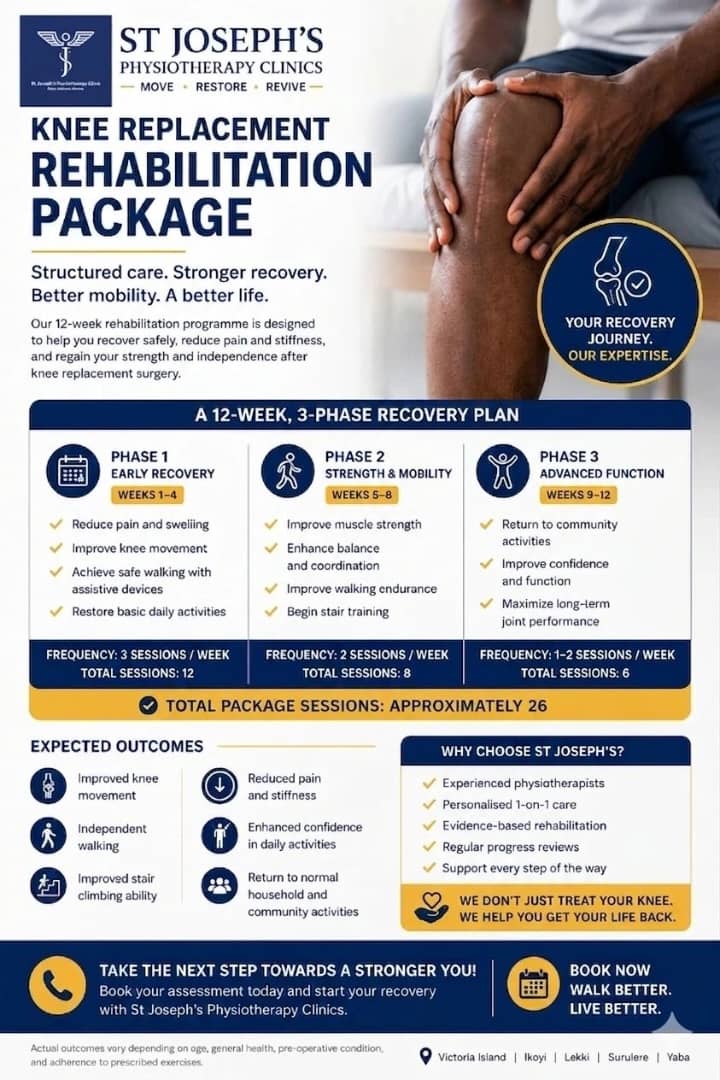
Complete Knee Replacement Rehabilitation Package in Lagos
Knee replacement surgery is a major step toward pain relief and improved mo…

NAMDA threatens strike over unpaid medical lecturers’ allowances
The Nigerian Association of Medical and Dental Academics (NAMDA) has warned…

Resident Doctors Signal End to Strike Threat After High-Level Talks with Gbajabiamila
The threat of a nationwide indefinite strike by the Nigerian Association of…

AMLSN Issues Strong Rejoinder to NAMDA on Public Service Establishment Matters
The Association of Medical Laboratory Scientists of Nigeria (AMLSN) has rel…
