What's the difference between HIV and AIDS? What are PrEP and PEP? Here are 30 questions, answered, for the 30th anniversary of World AIDS Day. People around the world on Saturday will observe the 30th annual World AIDS Day, an event aimed at spreading awareness of the HIV/AIDS epidemic.
To mark the 30th anniversary of the world's first global health day, here are 30 frequently asked questions, myths, facts and figures surrounding HIV and AIDS throughout the world.
1. What do HIV and AIDS stand for?
HIV stands for human immunodeficiency virus. AIDS stands for acquired immunodeficiency syndrome.
2. What's the difference between HIV and AIDS?
HIV is a virus that can lead to AIDS. AIDS is the last of the three stages of HIV infection. According to the Centers for Disease Control and Prevention, people in the first stage, acute HIV infection, experience a flu-like illness within 2 to 4 weeks after infection. It can last a few weeks. People in this stage have large amounts of the virus in their blood, and so are more likely to transmit the infection.
The second stage, clinical latency, marks a period where the virus is active but reproduces only at low levels, HIV.gov says. People in this stage might not experience symptoms, but can still transmit HIV to others. This stage can last decades, depending on treatment, but can also be shorter.
AIDS, the third stage, leads to the most severe illnesses because the virus damages the immune system over time, the CDC says. On average, people with AIDS who don't get treatment survive three years, according to the CDC.
Treatment at all three stages can prevent or slow symptoms and reduce the risk of transmission, the CDC says.
3. How do you know if you have HIV or AIDS?
Testing is the best way to determine whether you have HIV, but symptoms can occur before HIV shows up on a test. Some experience flu-like symptoms – including fever, chills, rash, night sweats, muscle aches, sore throat, fatigue, swollen lymph nodes or mouth ulcers – within two weeks of infection.
4. How does HIV make you sick?
HIV attacks your immune system by reducing CD4 cells, or T cells, making it harder to fight other infections."Over time, HIV can destroy so many of these cells that the body can’t fight off infections and disease," according to HIV.gov.
According to HIV.gov, the condition becomes AIDS when T cell counts drop below 200 cells per cubic millimeter of blood, or certain AIDS-related complications such as severe infections appear.
.jpg)
5. How is the virus transmitted?
A person can become infected with HIV only through certain activities in which they come into contact with certain bodily fluids.
Blood, semen, pre-seminal fluid, rectal fluids, vaginal fluids and breast milk can transmit HIV, according to the CDC.
"These fluids must come in contact with a mucous membrane or damaged tissue or be directly injected into the bloodstream (from a needle or syringe) for transmission to occur," the CDC says.
Unprotected anal or vaginal sex with someone who has HIV is one of two main ways the virus is spread in the United States, according to HIV.gov. Use of a contaminated needle or syringe is the other.
A mother may pass the virus on to her child during pregnancy, birth or breastfeeding. It can also be contracted by being struck by an item contaminated with HIV. Other rare but possible ways to spread HIV can be found here.
6. Can saliva or mosquitoes spread HIV?
No. HIV cannot be passed on through saliva, sweat or tears unless blood from a person with HIV is mixed in. That means touching, sharing bathrooms, kissing and other activities won't spread the virus. Bugs such as mosquitoes and ticks also can't spread it.
7. Can HIV be transmitted by giving blood?
The CDC says contracting HIV in a health care setting is "extremely rare." During the early years of the HIV crisis in the 1980s, cases of infection by blood transfusion were more common, according to HIV.gov, but "rigorous testing" today has greatly reduced the risk.
The National Heart, Lung and Blood Institute says the risk of HIV transmission through a blood transfusion is lower than that of being killed by lightning.
You can't get HIV by giving blood, either, the CDC says.
8. Can you get HIV again if you already have HIV?
Yes. HIV superinfection occurs when a person with HIV is infected with a different strain of the virus, according to the CDC. Effects vary, and some people can contract a strain that is resistant to the treatment they're already taking, the CDC says, but "a hard-to-treat superinfection is rare."
9. How many people around the world have HIV?
According to the United Nations, 36.9 million people were living with HIV around the world in 2017. Of those, 35.1 million were adults and 1.8 million were children. The CDC estimates that 1.1 million people in the United States were living with HIV by the end of 2015. Fifteen percent didn't know they were infected.
10. How many people were newly infected with HIV in 2017?
Worldwide, 1.8 million people, according to the United Nations. In the United States, 38,739 people were diagnosed with HIV, according to the CDC.
USAToday
ABUJA: Training Schedule for Basic Life Support BLS, Pediatric Advanced Life Support (PALS), Advanced Cardiovascular Life Support ACLS, First Aid, CPR, AED
PORTHARCOURT: Training Schedule for Basic Life Support BLS, Pediatric Advanced Life Support (PALS), Advanced Cardiovascular Life Support ACLS, First Aid, CPR, AED
LAGOS: Training Schedule for Basic Life Support BLS, Pediatric Advanced Life Support (PALS), Advanced Cardiovascular Life Support ACLS, First Aid, CPR, AED
STOP paying for airtime and electricity, Let your phone pay its bills with ScreenT
You may also like

FG Supports Robotic Surgery Expansion to Reduce Medical Tourism
Nigeria is taking another step toward strengthening specialised healthcare …
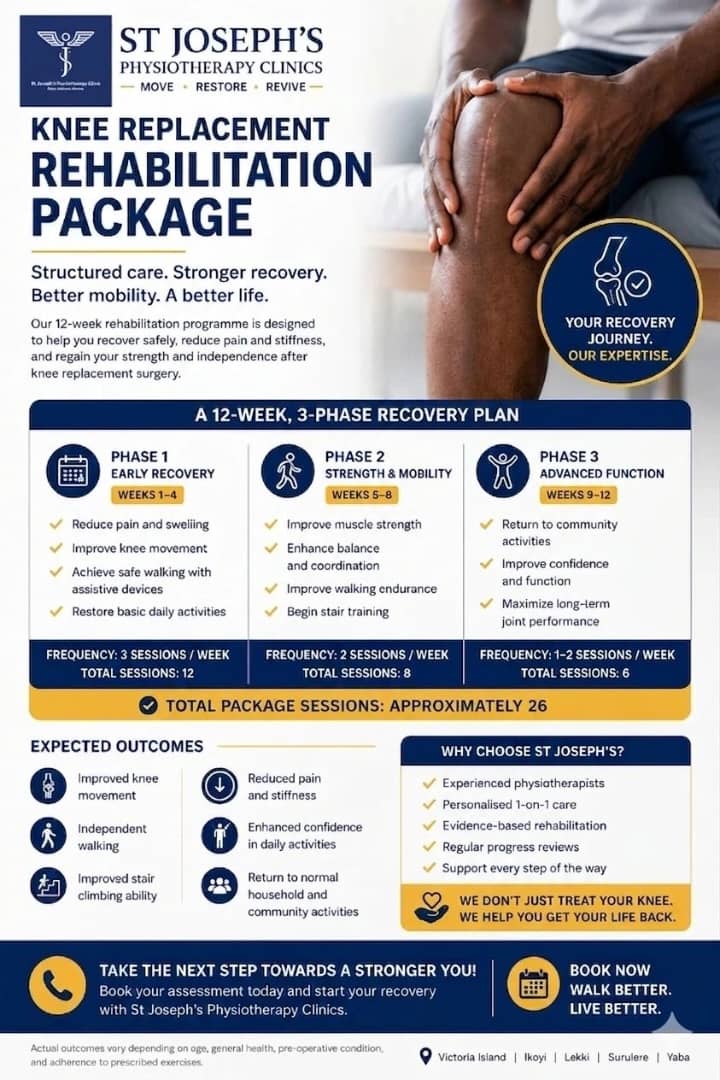
Complete Knee Replacement Rehabilitation Package in Lagos
Knee replacement surgery is a major step toward pain relief and improved mo…

NAMDA threatens strike over unpaid medical lecturers’ allowances
The Nigerian Association of Medical and Dental Academics (NAMDA) has warned…

Resident Doctors Signal End to Strike Threat After High-Level Talks with Gbajabiamila
The threat of a nationwide indefinite strike by the Nigerian Association of…
AMLSN Issues Strong Rejoinder to NAMDA on Public Service Establishment Matters
The Association of Medical Laboratory Scientists of Nigeria (AMLSN) has rel…