I am delighted to be present at this important occasion to finally complete the commemorative activities of the Government of Nigeria on the 64th WORLD LEPROSY DAY in 2017 at Yangoji Leprosy Community in Kwali Area Council of the FCT. This community is one of the destitute management project initiated by the FCT Administration for people affected by leprosy in Abuja. I am told that it has about 45 housing units with over 1000 people affected by leprosy (50% children, 30% women and 20% men) living there. The visit is a follow up to my national press briefing on the 27th January 2017 in Umahia, Abia state during the 59th National Council on Health.
I am reliably informed of other events organized earlier in this month in Abuja to mark the 64th World Leprosy Day in the country. I am told that there was a school quiz competition on leprosy, which was conducted among four secondary schools in Abuja namely; Army Day Secondary School Maitama which emerged overall winner, Government Secondary School Wuse Zone 3, Government Secondary School Garki and Government Day Secondary School Wuse, on 1st of February 2017. There was also a mass mobilisation campaign against leprosy from Wuse Market through Julius Berger roundabout on February 4th. Officials of the Federal Ministry of Health, The Leprosy Mission Nigeria, the Lions Club and members of the National Youth Service Corps participated. These events were carried out in order to intensify public awareness about leprosy, reduce stigma, sensitize school children while encouraging them to imbibe a good reading culture, and to mobilize support for Leprosy Control in the country. The theme for this year’s World Leprosy Day Celebration is “Zero Disability among children affected by Leprosy”.
.jpg) Distinguished Ladies and Gentlemen, Leprosy is a mild, chronic, infectious disease that mainly affects the skin, peripheral nerves and mucous membrane of the upper respiratory tract. It is caused by a germ called Mycobacterium leprae and is most common in conditions of extreme poverty, dirty environment and poor nutrition. Leprosy affects all age groups and both sexes but more common among males. The first outward sign is a hypo pigmented patch on the skin, associated with loss of feeling, peripheral nerves enlargement with/without damage. Leprosy is completely curable with antibiotics called Multi-Drug Therapy (MDT) which can be taken for between 6 to 12 months. If left untreated it can lead to loss of feeling, recurring injuries and deformities or disabilities.
Distinguished Ladies and Gentlemen, Leprosy is a mild, chronic, infectious disease that mainly affects the skin, peripheral nerves and mucous membrane of the upper respiratory tract. It is caused by a germ called Mycobacterium leprae and is most common in conditions of extreme poverty, dirty environment and poor nutrition. Leprosy affects all age groups and both sexes but more common among males. The first outward sign is a hypo pigmented patch on the skin, associated with loss of feeling, peripheral nerves enlargement with/without damage. Leprosy is completely curable with antibiotics called Multi-Drug Therapy (MDT) which can be taken for between 6 to 12 months. If left untreated it can lead to loss of feeling, recurring injuries and deformities or disabilities. Leprosy has remained a disease of public health importance in Nigeria and the world. Since 1989, confronted by the increasing prevalence of leprosy, the Federal Government of Nigeria launched the National TB and Leprosy Control Programme (NTBLCP) to coordinate government response to the burden of leprosy and its socio-economic consequences. In 1998, after the introduction of MDT, Nigeria achieved the World Health Organization’s (WHO) elimination target of less than 1 case per 10,000 populations at the National Level.
Over 600 MDT Clinics that provides free diagnosis and treatment of patients with Leprosy have been established in Nigeria. The target is to establish at least one focal MDT Clinic per Local Government Area (LGA) in the Country. Over 28 referral/rehabilitation centres also exist across the country and these clinics provide specialized care for Leprosy patients with disabilities. Capacity building of healthcare workers on the diagnosis and treatment of Leprosy and its complications has also received considerable attention over the years.
Nigeria’s leprosy control efforts have been hampered by low public awareness of the disease, inadequate and late case reporting leading to complications like deformities and disabilities; stigma and discrimination against persons affected by the disease; and extreme poverty and societal exclusion. There were many mistaken beliefs about the disease — that it was highly contagious, hereditary, heaven’s punishment and these have negatively affected persons with leprosy even after they are cured.
In Nigeria, states that have pockets of endemicity include Jigawa, Kano, Kaduna, Katsina, Kebbi, Bauchi, Taraba, Niger, Kogi, Ebonyi, Abia, Cross River, Edo, Ogun, Osun and Lagos. Of utmost concern is the existence of new Leprosy cases that are reported each year among the general population including children and those with grade 2 disability. In 2015, a total of 2,892 new Leprosy cases were notified, among which 9% were children and 15% have grade 2 disabilities because of late presentation at the health care facilities. The over 28 referral/rehabilitation centres and the over 100 leprosy settlements in the country are in state of disrepair and in dire need of social amenities. I wish you to use this opportunity to call on stakeholders and our development partners to support upgrade of facilities and other social amenities. Let me assure you that the Federal Government of Nigeria will do her best in mobilising resources to improve the standard on living of the in-mates.
Ladies and gentlemen, as part of the efforts of Government to eliminate Leprosy in the endemic states, the Federal Ministry of Health launched a five year National Leprosy and Buruli Ulcer Strategic Plan (2016–2020) in 2016. This document facilitates the implementation of appropriate strategies to increase case detection, improve treatment outcome, prevent disabilities and provide physical and socio-economic rehabilitation services to affected persons.
Let me use the occasion of this visit to extend my sincere greetings and solidarity to all those affected by leprosy and to re-affirm the Federal Ministry of Health’s commitment to continue working assiduously with other government agencies and partners to ensure effective and sustained leprosy control in line with the Bangkok Declaration of July 2013. The 2013 Bangkok declaration emphasised the importance of improving access to healthcare and social empowerment of persons and communities affected by Leprosy to reduce stigma and discrimination.
The Federal Government of Nigeria will also ensure robust integration of leprosy control activities into basic health care services through the revitalised primary health care system that we are pursuing across the nation. We will continue to provide opportunity for capacity building and institute mechanisms for a renewed focus on preventing disability and promote socio-economic rehabilitation as well as promoting community development in partnership with people affected with leprosy. We will also continue to collaborate with World Health Organization (WHO) to ensure free supply of MDT to our patients.
Before I end my speech, may I express profound gratitude to The Leprosy Mission Nigeria, World Health Organization, Damian Foundation of Belgium, German leprosy & TB relief Association, Netherland Leprosy Relief (NLR), Lions Club, the hardworking staff of the Federal Ministry of Health and of the National TB & Leprosy Control Programme and other organizations for actively working together for a Leprosy free Nigeria.
I also appreciate the support of The American Leprosy Mission through the Accelerating Integrated Management Initiative in mapping of case management of Neglected Tropical Diseases (CM — NTD) in Nigeria which is “a first of its kind” in Africa. Our appreciation also goes to Nippon Foundation of Japan for their support to intensify leprosy case finding and management activities in fifteen states of the federation.
Let me use this opportunity to implore the media, public spirited individuals, corporate organizations, developmental partners and our esteemed civil society organizations to support the Federal and State Governments in the fight against leprosy disease and its consequences in our beloved Nation.
Lastly, it is important to note that “leprosy is curable and Treatment is free”. Persons and communities affected with leprosy need our love, understanding and our support.
Thank you for listening and God bless the Federal Republic of Nigeria.
Professor Isaac Adewole, FAS, FSPSP, FRCOG, DSc (Hons)
Honourable Minister of Health
Federal Ministry of Health
Abuja.
February 2017
ABUJA: Training Schedule for Basic Life Support BLS, Pediatric Advanced Life Support (PALS), Advanced Cardiovascular Life Support ACLS, First Aid, CPR, AED
PORTHARCOURT: Training Schedule for Basic Life Support BLS, Pediatric Advanced Life Support (PALS), Advanced Cardiovascular Life Support ACLS, First Aid, CPR, AED
LAGOS: Training Schedule for Basic Life Support BLS, Pediatric Advanced Life Support (PALS), Advanced Cardiovascular Life Support ACLS, First Aid, CPR, AED
STOP paying for airtime and electricity, Let your phone pay its bills with ScreenT
You may also like

FG Supports Robotic Surgery Expansion to Reduce Medical Tourism
Nigeria is taking another step toward strengthening specialised healthcare …
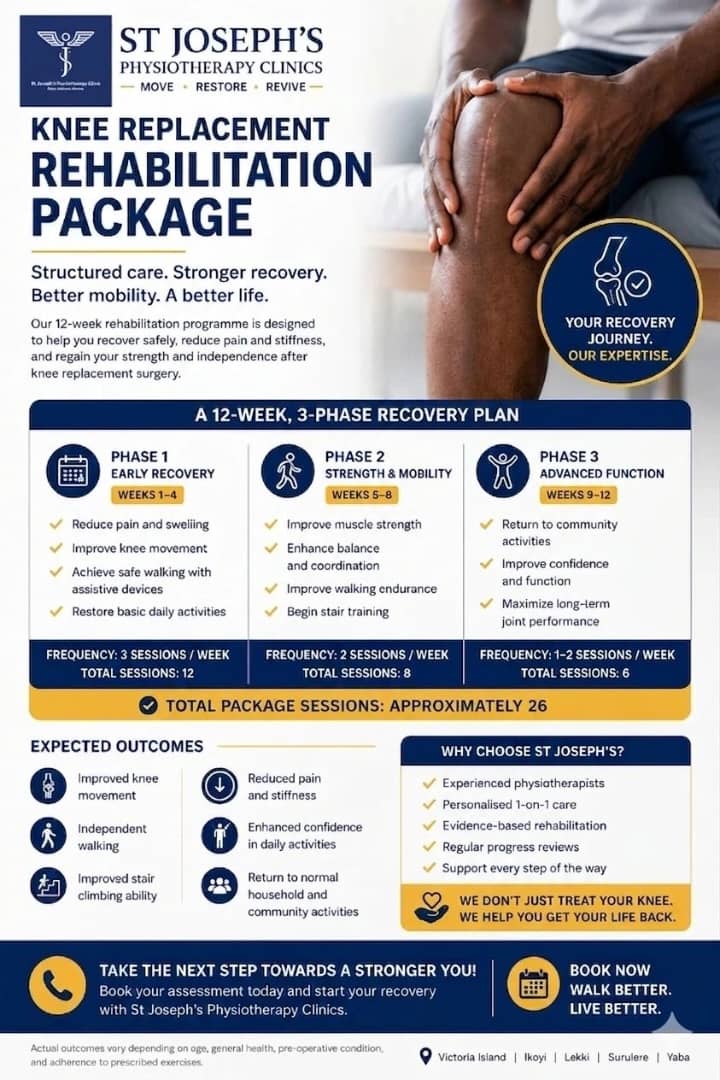
Complete Knee Replacement Rehabilitation Package in Lagos
Knee replacement surgery is a major step toward pain relief and improved mo…

NAMDA threatens strike over unpaid medical lecturers’ allowances
The Nigerian Association of Medical and Dental Academics (NAMDA) has warned…

Resident Doctors Signal End to Strike Threat After High-Level Talks with Gbajabiamila
The threat of a nationwide indefinite strike by the Nigerian Association of…
AMLSN Issues Strong Rejoinder to NAMDA on Public Service Establishment Matters
The Association of Medical Laboratory Scientists of Nigeria (AMLSN) has rel…