Centre for Social Justice (CSJ) has faulted the poor allocations meant for management of maternal, newborn and child health proposals in the 2016 federal budget.
CSJ noted that the preparation process of the 2016 budget was not backed by a Medium Term Sector Strategy (MTSS) but, on a Zero Base Budgeting (ZBB) framework.
Programme Officer, Centre for Social Justice, Mr. Victor Emejuiwu made this known recently while briefing newsmen in Abuja.
He disclosed that the budget proposals were not underpinned by a MTSS and as such, did not undergo a prioritisation process and may not reflect the best strategies and activities for the realisation of high level policy goals in Maternal Newborn and Child Health (MNCH). He explained that the process is in contravention of the provisions of the National Health Career Association (NHCA) and the Fiscal Responsibility Act (FRA).
According to him, “The central objective of this policy briefing is to review the estimates in the 2016 federal budget for maternal, new born and child health with a view to determining its adequacy for the task of protecting the rights to health and to life of persons who are to enjoy services to be provided from the budget.
“Ideally, the Zero Base Budgeting framework provides the opportunity to reconsider a lot of investment options and to determine the best way to spend available resources and to re-engineer the budget to deliver greater value, the NHA provides in section 2 (2) that the Federal Ministry of Health shall prepare strategic medium term health and human resources plans annually and ensure that the plan forms the basis of the annual budget proposal and any other government planning excise as may be required by any other law.”
Stressing further, he said, “The health budget as a percentage of the overall budget estimate is a miserly 4.23 per cent, which fails to meet the committee of African Heads of State to commit not less than 15 per cent of their budgets to healthcare. The percentage of health budget 2015 to the overall budget was N259.751 billion out of N4.493 trillion and amounts to 5.78 per cent.
 “The total investment on MNCH in the 2016 estimate is in the sum of N19.44 billion. Unlike the 2015 financial year when the budget of the Ministry of Health Headquarters contained investments for malaria programme, contraceptives and information dissemination, 2016 estimate is silent on these MNCH issues. There where also investments from Subsidy Reinvestment Programme (SURE-P) which is no longer available under the present dispensation.”
 He continued: “Lack of prioritisation ends SURE-P programmes, Maternal and Child Health Insurance Programme under the National Health Insurance Scheme provided in 2015 budget is also missing from the budget. Also, the Roll Back Malaria Programme seems to be missing from the budget.”
“We are greatly concerned that Nigeria still records high rates of maternal and child mortality and morbidity. As at 2012, the World Health Statistics rated Nigeria as the second largest country after India with the highest rate of under 5 mortality in the world. As a result, Nigeria loses 124 under 5 children in every 1000 live births. Maternal Mortality ratio according to the World Health Statistics report for year 2013 was put at 550/100,000 live births.
“The major reasons adduced for the deaths of mothers and children during and after birth have been traced to lack of proper funding. Hence, the need to improve funding and properly manage the funds allotted to primary health care services is the only way to mitigate this huge challenge.
Notwithstanding the poor funding of the sector by the government, CSJ urges various stakeholders to monitor and coordinate resources accruing to the primary health care in the country as these funds are required to provide support services for antenatal and postnatal care, basic vaccines, immunisations anti-malaria drugs, hospital beds, medical equipments, anti-retroviral drugs, HIV test kits and insecticide treated nets.
“Government must learn to prioritise. Because, if government prioritise effectively, issues of malaria which is still a significant problem in Nigeria that is affecting women and children should not be removed from what was obtainable in the previous budget.
“There is no justification for removing malaria from the budget. We can say SURE-P is no longer operational because it was a policy from the last administration but, then; there were interventions that SURE-P was carrying out like the medical outreach and the provisions of the treated nets and the rest of it. The components of those projects that SURE-P was implementing were not supposed to be taken out in the 2016 budget. So, that is why we strongly believe that it’s a case of lack of prioritisation of what should go into the maternal newborn and child health. There is need to revise the mistakes and properly correct them in the 2016 budget,” Emejuiwu said.
By: Kasim Sumaina and Eshun Bukola in Abuja
This Day News
ABUJA: Training Schedule for Basic Life Support BLS, Pediatric Advanced Life Support (PALS), Advanced Cardiovascular Life Support ACLS, First Aid, CPR, AED
PORTHARCOURT: Training Schedule for Basic Life Support BLS, Pediatric Advanced Life Support (PALS), Advanced Cardiovascular Life Support ACLS, First Aid, CPR, AED
LAGOS: Training Schedule for Basic Life Support BLS, Pediatric Advanced Life Support (PALS), Advanced Cardiovascular Life Support ACLS, First Aid, CPR, AED
STOP paying for airtime and electricity, Let your phone pay its bills with ScreenT
You may also like
Comrade Lemii Christian Emerges Chairman of NANNM Rivers State Branch in Historic Victory
PORT HARCOURT, NIGERIA Following the long awaited National Association of N…

FG Supports Robotic Surgery Expansion to Reduce Medical Tourism
Nigeria is taking another step toward strengthening specialised healthcare …
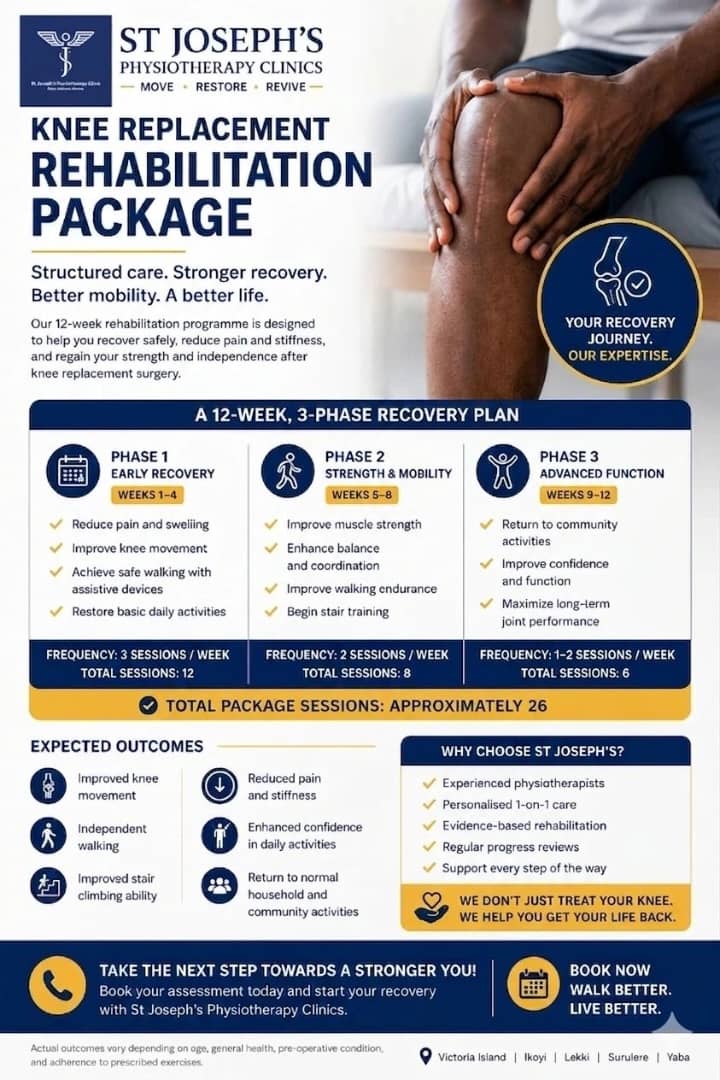
Complete Knee Replacement Rehabilitation Package in Lagos
Knee replacement surgery is a major step toward pain relief and improved mo…

NAMDA threatens strike over unpaid medical lecturers’ allowances
The Nigerian Association of Medical and Dental Academics (NAMDA) has warned…

Resident Doctors Signal End to Strike Threat After High-Level Talks with Gbajabiamila
The threat of a nationwide indefinite strike by the Nigerian Association of…