Malaria is regarded as the most common ailment in Africa, especially in Nigeria, as high body temperatures and periodic attacks of chills are associated with the parasite responsible for the diseases, which has often led to self medication and the use of ineffective and sometimes banned drugs. KUNI TYESSI in this report, looks at the feasibility of total malaria eradication from Nigeria by the year 2020 and beyond.
At a point, the whole world battled with malaria which is a serious disease that causes chills and fever and is passed from one person to another by the bite of mosquitoes, especially the anopheline specie. However, in 1970, Europe and America were able to defeat the parasite.
Economies like India and China, with populations of over a billion have been able to control theirs to an insignificant percentage. Nigeria, with a population of about 170 million and a fast growing economy is set to follow suit and has placed a bench mark. It is expected that if the parasite cannot be totally defeated by 2020 then it should be less than 5% prevalence.
 Dr Prepetua Uhomoibhi of the National Malaria Elimination programme says that strategies have been put in place to meet up with the date as it has led to the death of many, especially children. She enlightens on the use of treated mosquito nets and the acceptable and prescribed medication for pregnant women. She says current strategic plans are expected to lead us to pre-elimination period by the year 2020 and this means that the national prevalence will be less than 5% of malaria when the national survey is carried out. From there, we will begin to work towards a total malaria-free Nigeria.’
 The first stratedy is the universal use of treated mosquito nets and everybody is encouraged to make use of it. Our aim is that two people per household have access to at least one net and that is the universal coverage. So if there is a household of six people, it is expected that three nets should be given to them.’
’The other strategy is test before treatment. So every symptom of malaria should be tested and confirmed that it is malaria and the proper treatment which are the ACTs must be given. Those are two of the strategies and then we also have the one of the prevention of malaria in pregnant women which is the use of IPTP which is the using of Intermitent Preventive Treatment of malaria which is used for pregnant women and there are many others as well.\’
Dr. Godwin Ntadom, Head, case management, National Malaria Elimination programme is also optimistic that the parasite can be eradicated at the given time. He says \’malaria elimination in 2020 is possible. When you do the right thing, you will get the right result. Several other countries were able to crash down their malaria challenges within a spate of five years and Nigeria can do it. If we work religiously with what we have put down in the 2014- 2020 strategy and with availability of funds and workmanship, we can achieve it.’
Malaria mono-therapy ban
The ban was suppose to be from November 2014 after the National Council for Health meeting the guideline says artemisilin based combination therapy should be used and that is what works. Using the mono-therapy does not work for malaria and it creats resistance when the ACT is used. The national Council on Health has approved that last year during the Council’s meeting. A memo was made to the council and it was approved that there should be a ban on the use of mono-therapy for the treatment of malaria because it is not effective. Now the guideline is that we should use the combination therapy and that is the ACT.
Artemisilin based combination therapy- the approved treatment of malaria in Nigeria
In pregnant women, it is recommended that they use quinnine because the first trimester of pregnancy, the effects of the ACT might not be very suitable for them and they can use it only when there is no suitable alternative, if not, they are advised to use quinnine. But from the second trimester, it works very well and has less harmful effect on the unborn child and so it\’s quite good to make use of it. However, some times, it may be necessary to use it in the first trimester if there’s no alternative and life of the mother must be saved.
2 strategies in use to achieve this-
The first is the universal use of treated mosquito net that everybody make use of it. Our aim is that two people per household have access to at least one net and that is the universal coverage. So in a country of about 170 million, we are aiming to have about 165… it is expected that everyone in the population is expected to have. So if there is a household of six people, it is expected that three nets should be given to them.
The other strategy is test before treatment. So every symptom of malaria should be tested and confirmed that it is malaria and the proper treatment which are the ACTs must be given. Those are two of the strategies and then we also have the one of the prevention of malaria in pregnant women which is the use of IPTP which is the using of Intermitent Preventive Treatment of malaria which is used for pregnant women with the use of SP and there are many others as well.
Is the ban workable and are people complying with it?
The issue is that the national programme is not an enforcement agency. We work by education, awareness creation and sensitising the people on what has happened.
It is one of the reasons we are going to the field to make people know and understand that the medicine is no longer in use. You don’t need to use chloro quinne for the treatment of malaria. It is non effective and will not give good result. You don’t use hafan. It has been linked to several heart conditions and so it is also not recommended for the treatment of malaria. Also, Phansider is for pregnant women alone and not for the treatment of malaria anymore. It is not for individual associated malaria.
Medicines like malarech, amalar, and many of them are for pregnant women and not for the treatment of uncomplicated malaria. Some of the pregnant women might react to the drugs but it is a very small percentage. We advise that if one has reacted to it in the past, it should not be taken anymore and if there are cases of such reaction in ones family, we advise such people to stay away from it.
RDT for now is one of the best diagnostic tool available for community and family use and it is a one step procedure where you just take blood using a pin prick to take little blood where you apply it to the casset and it gives you a positive result. When you have one line, it is negative and when there are two, it is positive and anybody can buy and use. It is a point of care diagnosis. What this means is that when you feel that a person is sick, at that point, it could be a doctor or a nurse, but the person must be trained to use it.
Recommended medicine for anti- malaria–
Medicine recommended for malaria is are ACTs. They could be Artemoter Lumefantrin, they could be Artesunate and moder quinne and there are several others.
There are many other factors that can be responsible for fever and not just malaria because it is just one of the many conditions that would lead to fever in an individual. So you need to do a test as every individual that presents symptoms of malaria or fever must be tested before they will be given anti malaria medicine when they test positive.
Patient medicine vendors and community pharmacists and to tell them that this is the new position of the country and so you don’t need to stock mono-therapies or one that will have just Artesunate which is not recommended.
Any medicine you want to use in the treatment of malaria must have a combination which must include an Artemisulin product. So only one medicine to treat malaria is not recommended. Mother quinne is not recommended and chloroquine has been banned.
Malaria programmes are evidenced-based. There is nothing that is adopted that is not based on evidence. Artemisunin itself is a herbal product. It is a leaf and it\’s a product we encourage. Until one is able to bring it to fore and studies done on them and it\’s found that it can work in Nigeria and can work anywhere. It is not about somebody going into the room and concocting something and present to the world with claims that it treats malaria. It must be proven by using international standards before we can say this medicine is good enough. The malaria-curing leaf was a herb that was used by the Chinese over several years. It was tested and found to be good as a treatment for malaria and has been adopted globally.
Malaria elimination in 2020 is possible. When you do the right thing, you will get the right result. Several other countries were able to crash down their malaria challenges within a spate of five years and Nigeria can do it. If we work religiously with what we have put down in the 2014- 2020 strategy and with availability of funds and workmanship, we can achieve it.
By: Kuni Tyessi
Leadership News
ABUJA: Training Schedule for Basic Life Support BLS, Pediatric Advanced Life Support (PALS), Advanced Cardiovascular Life Support ACLS, First Aid, CPR, AED
PORTHARCOURT: Training Schedule for Basic Life Support BLS, Pediatric Advanced Life Support (PALS), Advanced Cardiovascular Life Support ACLS, First Aid, CPR, AED
LAGOS: Training Schedule for Basic Life Support BLS, Pediatric Advanced Life Support (PALS), Advanced Cardiovascular Life Support ACLS, First Aid, CPR, AED
STOP paying for airtime and electricity, Let your phone pay its bills with ScreenT
You may also like
Comrade Lemii Christian Emerges Chairman of NANNM Rivers State Branch in Historic Victory
PORT HARCOURT, NIGERIA Following the long awaited National Association of N…

FG Supports Robotic Surgery Expansion to Reduce Medical Tourism
Nigeria is taking another step toward strengthening specialised healthcare …
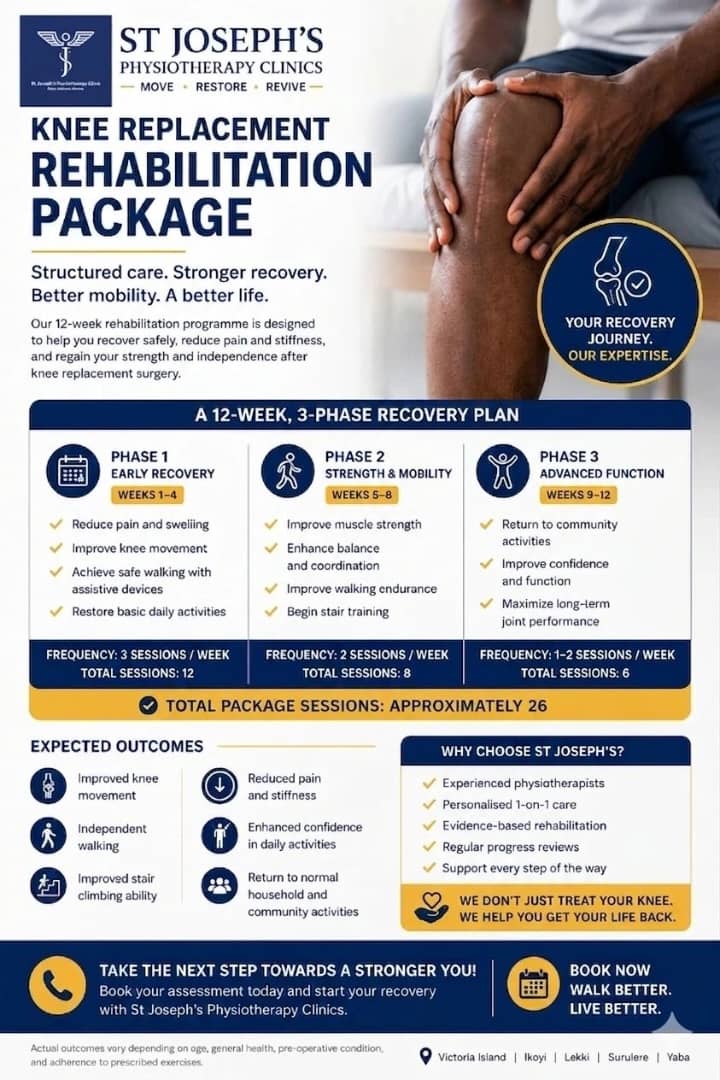
Complete Knee Replacement Rehabilitation Package in Lagos
Knee replacement surgery is a major step toward pain relief and improved mo…

NAMDA threatens strike over unpaid medical lecturers’ allowances
The Nigerian Association of Medical and Dental Academics (NAMDA) has warned…

Resident Doctors Signal End to Strike Threat After High-Level Talks with Gbajabiamila
The threat of a nationwide indefinite strike by the Nigerian Association of…
