Concerns over the continuity of reforms in Lagos’ public health system took center stage on Monday as the Medical Director and Chief Executive Officer of the General Hospital, Gbagada, Dr. Joseph Olusegun Babafemi, formally retired from service at 60.
At a valedictory service held at ShepherdHill Baptist Church, Lagos, senior government officials, health professionals and associates gathered to celebrate what many described as a defining era for one of the state’s busiest public hospitals.
“Progress Must Not Stall”
Reflecting on more than three decades in public service, Babafemi urged stakeholders to consolidate ongoing reforms and deepen investments in healthcare delivery.
“When health is lost, all is lost. We must continue to build systems that work for the people and inspire confidence,” he said.
Babafemi joined the Lagos State health service in 1992 and rose through the ranks to become a nephrologist before his appointment as Medical Director. He described his career as a product of institutional trust and personal dedication, noting that every elevation was “a vote of confidence” he worked hard to justify.
Reforms Amid Systemic Pressures
Reviewing his tenure, Babafemi acknowledged the complexities of managing a large public hospital, remarking that “the bigger the head, the bigger the headache.”
Despite the pressures of overseeing nearly 1,000 staff, he said the hospital achieved significant milestones, including its transformation into a training center for house officers, nurses, medical scientists and physiotherapists. Residency programmes in key specialties were also introduced under his leadership.
He highlighted the establishment of critical care units including a modern Intensive Care Unit, a stroke unit and a fast track system which he said have improved survival rates and raised standards of care.
Power and Staffing Crises Tested Leadership
Babafemi identified infrastructure deficits, especially erratic power supply, as one of the most persistent threats to healthcare delivery. He recalled a major electricity crisis that endangered patients in critical units, prompting the hospital to pursue emergency interventions.
“That challenge eventually led to the installation of solar power systems in key departments,” he said.
He also referenced a staffing related crisis that attracted public attention, noting that it triggered internal reforms and strengthened communication structures.
“Those difficult moments became stepping stones that strengthened the institution,” he added.
Positioning Lagos for Medical Tourism
Looking ahead, Babafemi called for strategic investments to position Lagos as a competitive hub for medical tourism.
“There is nothing we cannot do here if we put the right systems in place,” he said, expressing confidence that Nigerian hospitals can match global standards with sustained support.
Tributes and Recognition
Permanent Secretary of the Lagos State Health Service Commission, Mrs. Cecilia Abimbola Mabogunje, praised Babafemi as an exemplary administrator whose tenure delivered “remarkable developments,” particularly in critical care services.
She noted that one of the most functional ICUs in the state’s public health system emerged under his leadership.
The Lagos State First Lady, Dr. Claudiana Ibijoke Sanwo Olu, also commended Babafemi, describing him as a dedicated professional whose impact would outlive his tenure.
“This is not the end but the beginning of greater works,” she said, before presenting awards to outstanding staff of the hospital.
Colleagues and associates lauded Babafemi’s inclusive and result driven leadership style, crediting him with fostering innovation, teamwork and institutional stability.
Beyond Retirement
Although stepping down from public service, Babafemi said he intends to remain active in healthcare delivery and mentorship. He emphasized the need for collective responsibility in strengthening Nigeria’s health system.
“We must focus on solutions, not just criticism. Everyone has a role to play government, health workers, the media and the public,” he said.
You may also like
Comrade Lemii Christian Emerges Chairman of NANNM Rivers State Branch in Historic Victory
PORT HARCOURT, NIGERIA Following the long awaited National Association of N…

FG Supports Robotic Surgery Expansion to Reduce Medical Tourism
Nigeria is taking another step toward strengthening specialised healthcare …
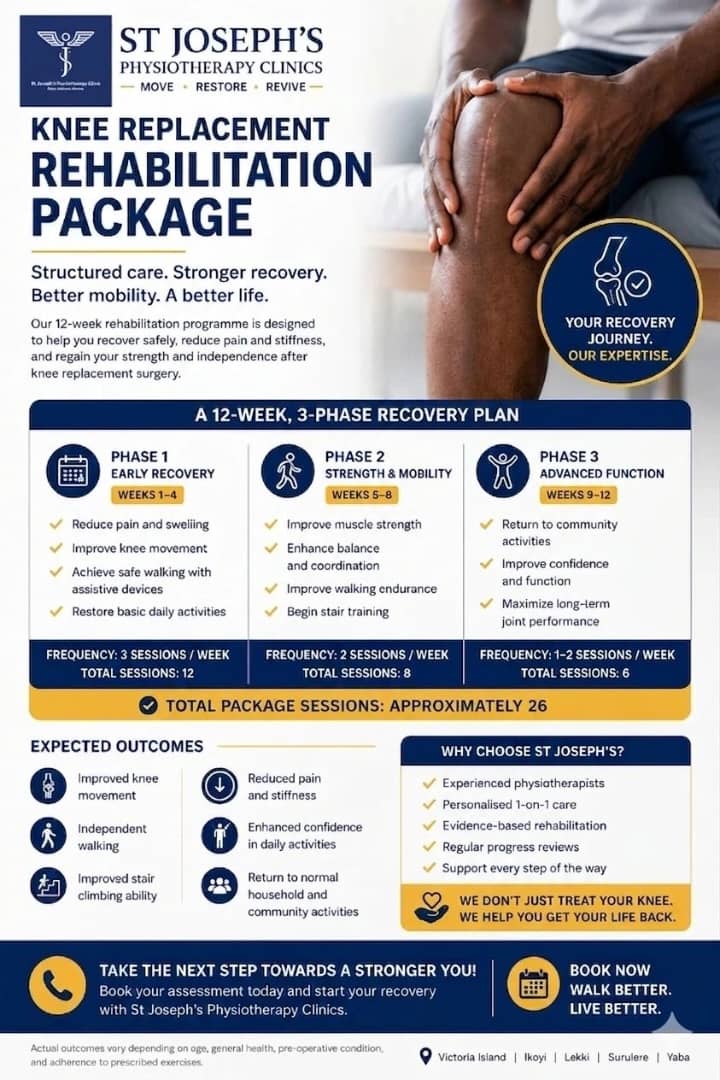
Complete Knee Replacement Rehabilitation Package in Lagos
Knee replacement surgery is a major step toward pain relief and improved mo…

NAMDA threatens strike over unpaid medical lecturers’ allowances
The Nigerian Association of Medical and Dental Academics (NAMDA) has warned…

Resident Doctors Signal End to Strike Threat After High-Level Talks with Gbajabiamila
The threat of a nationwide indefinite strike by the Nigerian Association of…
