Nigeria is witnessing yet another round of industrial action in her restive health sector. Industrial actions in the sector have turned a relay race between the Nigerian Medical Association (NMA) and the Health Sector Unions (JOHESU). Presently, it is JOHESU that is in the trenches, not quite long after the NMA suspended its seven-month strike. And as has always been the case, the costs in human lives are borne by no other than innocent patients. Reports say health care services are currently paralysed in all Federal Government-owned hospitals as a result of the industrial action JOHESU members embarked on between November 12 and 13 over FG’s failure to meet their demands.
The striking workers are, for instance, demanding from the FG the immediate release of a long overdue circular on salary adjustment and the payment of at least two months arrears; immediate and full payment of arrears of salaries of CONHESS 10; and the immediate release of FG’s circular on the extension of their retirement age to be back-dated to February 2014, among others. Another contentious issue the FG appears not to have fully resolved with JOHESU is the consultancy status of the latter’s members. It is not as if the FG has not been dialoguing with JOHESU and arriving at agreements with the group. But it is public knowledge that the government is never in a hurry to strictly keep to or implement agreements it reached with labour unions.
This struggle of allied health workers in the country for due recognition did not start today. Indeed, their present strike is a carry-over of previous strikes which were suspended based on agreements the union reached with the FG, but which the government repeatedly repudiated eventually. The FG has been accused of politicising and playing the divide-and-rule game with health sector unions, a development that is now being blamed for the acrimonious relationship currently existing between various categories of health workers. Former Minister of Health, Professor Onyebuchi Chukwu, was alleged to have cancelled the consultancy status earlier granted some members of JOHESU, and forced members of the union who were supposed to be promoted from grade level nine to 11 to move back to 10 instead, for example. The FG was said to have unfairly placed JOHESU members below their colleagues in the health sector, too.
Consequently, it is not improbable that long drawn, recurring wars in the health sector will continue to rage on two fronts namely: JOHESU pushing for similar status and pay as enjoyed by members of the NMA; and NMA confronting the government if it accedes to the demands of JOHESU. But in all of this, the sad story is that both the striking health workers and the FG seem not bothered about the cost incessant health sector strikes are inflicting on ordinary Nigerians who mainly patronize government hospitals. In virtually all matters that concern the welfare of ordinary Nigerians, such as education and health, etc., the FG had oftentimes approached them with cold feet. The government was perhaps very swift in tackling the Ebola scare because the virus would spare no one, privileged or not, had it been allowed to fester. But like an FG alarm suggested recently, the Ebola scourge may still not be ruled out; and government’s complacency in responding and dispassionately managing health sector disputes would be one of the major culprits.
We have said repeatedly that the government snores away and allows industrial disputes in critical sectors like health and education to linger due largely to the fact that leaders and senior government officials do not patronize public health and educational institutions in the country. With their out-ofthis- world salaries and allowances, they and whole members of their families shuttle abroad for medical and educational tourism. But the FG owes Nigerians the bounden duty of providing stable, quality and affordable health, educational and related services. Therefore, the FG should stop playing one health sector workers’ union against the other or creating divisions among them. It should seek out international best practices in the management of health sector workers and apply same to the Nigerian situation. For its part, JOHESU should demonstrate greater sense of responsibility and regard for patients, without which none of its members would have a place in any public health facility; and return to the negotiation table with the FG, notwithstanding the let-down it has suffered in the hands of the government and its negotiators.
By National Mirror
ABUJA: Training Schedule for Basic Life Support BLS, Pediatric Advanced Life Support (PALS), Advanced Cardiovascular Life Support ACLS, First Aid, CPR, AED
PORTHARCOURT: Training Schedule for Basic Life Support BLS, Pediatric Advanced Life Support (PALS), Advanced Cardiovascular Life Support ACLS, First Aid, CPR, AED
LAGOS: Training Schedule for Basic Life Support BLS, Pediatric Advanced Life Support (PALS), Advanced Cardiovascular Life Support ACLS, First Aid, CPR, AED
STOP paying for airtime and electricity, Let your phone pay its bills with ScreenT
You may also like
Comrade Lemii Christian Emerges Chairman of NANNM Rivers State Branch in Historic Victory
PORT HARCOURT, NIGERIA Following the long awaited National Association of N…

FG Supports Robotic Surgery Expansion to Reduce Medical Tourism
Nigeria is taking another step toward strengthening specialised healthcare …
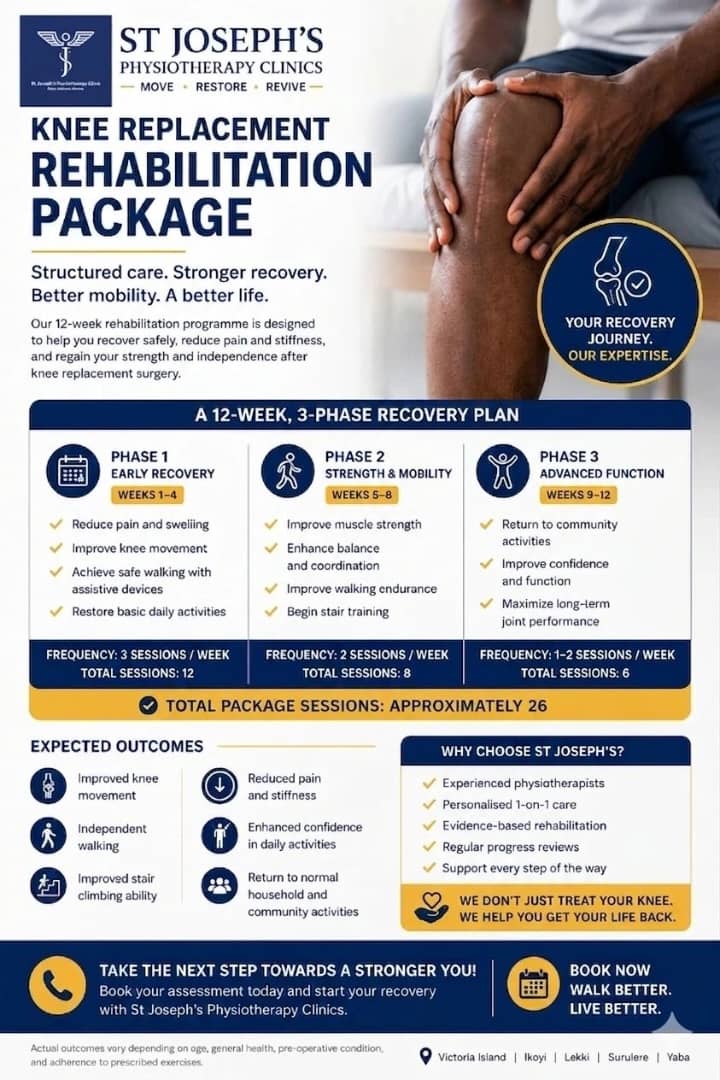
Complete Knee Replacement Rehabilitation Package in Lagos
Knee replacement surgery is a major step toward pain relief and improved mo…

NAMDA threatens strike over unpaid medical lecturers’ allowances
The Nigerian Association of Medical and Dental Academics (NAMDA) has warned…

Resident Doctors Signal End to Strike Threat After High-Level Talks with Gbajabiamila
The threat of a nationwide indefinite strike by the Nigerian Association of…