There is need to embark on public enlightenment, particularly in rural communities, on how to prevent snakebites and what to do as first aid to victims
The report by the member representing Pankshin, Kanke and Kanam Federal Constituency in the House of Representatives, Hon. Timothy Golu, that no fewer than 50 persons have been bitten by snakes in his domain in the past few weeks is alarming. The statistics he reeled out were equally horrifying. While some of the victims have died, 13 others are in critical conditions at Jos University Teaching Hospital (JUTH). With 20 victims currently in traditional snake-treating homes in the state while some others visit healing homes as out-patients for lack of bed space, the absence of proper healthcare makes the situation more tragic.
However, this is not an isolated incident. According to the World Health Organisation (WHO), snakebite is a neglected public health problem in Nigeria. The mortality rate is said to be as high as 12 per cent. Rural populations are frequent victims as they go about their daily food production and animal rearing activities and sometimes even in the comfort of their homes. Unfortunately, many of these snakebite cases go unreported and thus do not appear in official epidemiological statistics. That then explains why health workers often have little or no formal training in the management of snakebite while appropriate anti-venom is rarely available.
 Regardless, guidelines for the prevention and clinical management of snakebite in Africa have been developed by WHO/AFRO with contributions from technical experts. These guidelines developed at the request of the federal government in 2004 are meant to assist health workers to improve medical care for snakebite victims. They also serve as a source of information for the general public on issues related to snakes and snakebite which can be deadly if not treated quickly.
 While the right anti-venom can save a snakebite victim’s life, getting to an emergency room as quickly as possible is also very important. If properly treated, many snake bites will not have serious effects. But the cost seems prohibitive. This is therefore a good reason for the government to strengthen the nation’s clinics and hospitals as well as engage in health education as the main preventive measure.
According to medical practitioners, snake treatment and management are very expensive, putting the average cost of treating one case at N62,000. Since most of the victims are unable to afford this amount because they are mainly subsistence farmers, it is important for the government to subsidise the treatment or provide it for free and make the anti-venom available in primary healthcare facilities.
In 2011, the federal government said it would make available and affordable Anti-Snakebite Venoms (ASV), but insisted on the application of preventive strategies. Thus, the Nigeria/UK Echitab Study Group was established to research and develop ASV, as well as look into ways of providing free treatment for snakebite victims. Several years later, it developed three different brands of ASV, using venom extracted from local snakes purposely to address the Nigerian situation. The inauguration of the structure that houses the Echitab Snakebite Control and Research Centre in Kaltungo in Gombe State was part of the collaborative efforts aimed at finding lasting solutions to the menace of snakebite in the country.
The government’s idea was to increase research activities and prepare room for the development of ASV in the country. But more importantly, it also needs to embark on sustained public enlightenment, particularly among dwellers of rural communities. They should be told how to prevent snakebites and what to do as first aid when someone is bitten. Besides, to ensure the availability of the ASV before local production of the drugs begins, government should import large quantities. It is also important to train medical personnel to effectively manage cases of snakebite early since the venom usually worsens the health of victims by the minute and increases their likelihood of succumbing to death as a consequence of its potency.
Source: This Day News
ABUJA: Training Schedule for Basic Life Support BLS, Pediatric Advanced Life Support (PALS), Advanced Cardiovascular Life Support ACLS, First Aid, CPR, AED
PORTHARCOURT: Training Schedule for Basic Life Support BLS, Pediatric Advanced Life Support (PALS), Advanced Cardiovascular Life Support ACLS, First Aid, CPR, AED
LAGOS: Training Schedule for Basic Life Support BLS, Pediatric Advanced Life Support (PALS), Advanced Cardiovascular Life Support ACLS, First Aid, CPR, AED
STOP paying for airtime and electricity, Let your phone pay its bills with ScreenT
You may also like
Comrade Lemii Christian Emerges Chairman of NANNM Rivers State Branch in Historic Victory
PORT HARCOURT, NIGERIA Following the long awaited National Association of N…

FG Supports Robotic Surgery Expansion to Reduce Medical Tourism
Nigeria is taking another step toward strengthening specialised healthcare …
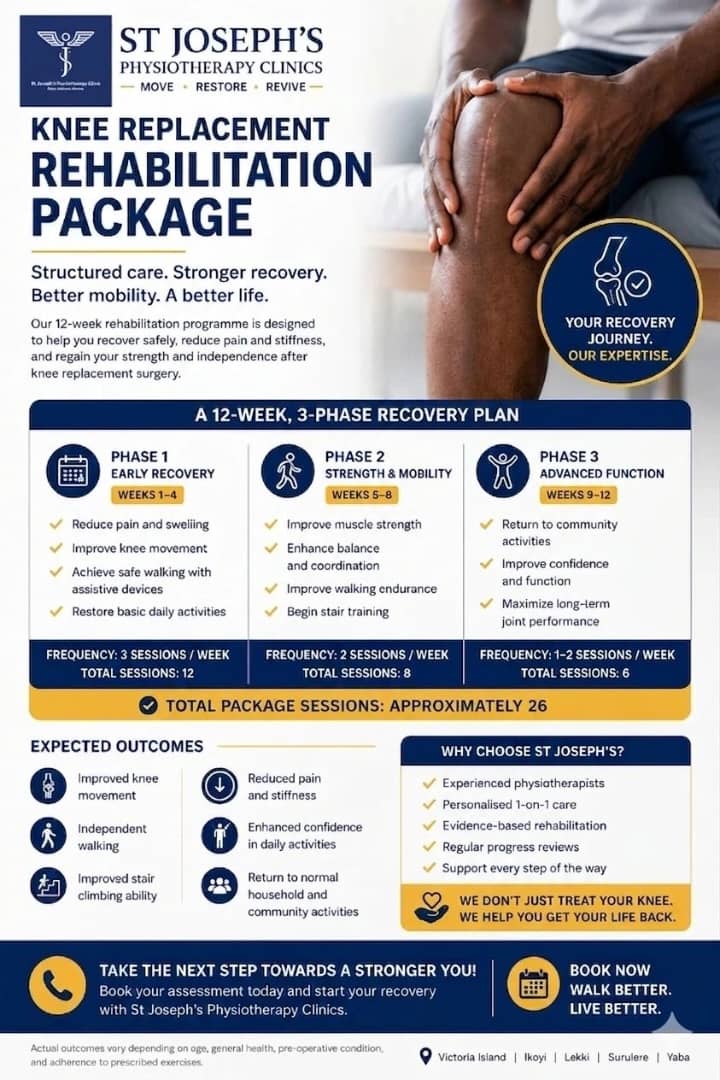
Complete Knee Replacement Rehabilitation Package in Lagos
Knee replacement surgery is a major step toward pain relief and improved mo…

NAMDA threatens strike over unpaid medical lecturers’ allowances
The Nigerian Association of Medical and Dental Academics (NAMDA) has warned…

Resident Doctors Signal End to Strike Threat After High-Level Talks with Gbajabiamila
The threat of a nationwide indefinite strike by the Nigerian Association of…