Thousands of Nigerians with end stage kidney and lung cancer now have hope of survival through a new immunotherapy drug ‘Nivolumab’ that stops cancer spreading by harnessing the body’s own immune system to fight the tumours. The drug ‘Nivolumab’, had reportedly saved the life of an European terminally ill cancer patient who had been given just two weeks to live. Merchant seaman Simon Lamont-Brown, 50, was bedridden in a hospice and near death from lung cancer before he was given the breakthrough treatment. Mr Lamont-Brown was diagnosed with lung cancer in February last year after visiting his GP with a hoarse voice.
Scans showed he had lung cancer that had spread, to his vocal cords and lymph nodes. He had five rounds of chemotherapy which stopped being effective last July. His health then went rapidly downhill. His specialist gave him two weeks to live and he was sent to a hospice. However, his specialist suggested he tried nivolumab. He had his first course on his 50th birthday last August. Within 10 days of taking nivolumab he began to feel better and was soon walking again. Days later he was well enough to go home and after 10 months regular scans showed his tumour had shrunk dramatically. The father-of-one is now feeling fine and living a normal life.
He said: “My oncologist called it ‘the Lazarus effect’ because I just rose from the dead.”
The drug which is said to have few side effects has had remarkable success fighting end-stage lung cancer in trials, experts say. It is also effective against melanoma skin, head and neck cancers. During a recent research called CheckMate 025 trial, Nivolumab showed its potential as a transformational treatment for advanced kidney cancer. Nivolumab is one of a new generation of antibody drugs that block “checkpoint” proteins used by many cancers to shield themselves from the immune system. In this case, the target molecule is a protein called PD-1. Prof Padmanee Sharma, of the MD Anderson Cancer Centre at the University of Texas, who led the CheckMate 025 trial, said: “It is exciting to see the outcome of this study, as the results are significant and clinically meaningful to patients and healthcare professionals alike. “They are likely to change the treatment of patients with advanced kidney cancer, whose disease has progressed on prior treatment.
 “We hope that this study will quickly lead to approval of nivolumab as a standard of care therapy for these patients.” In the trial involving 821 patients, the effectiveness of nivolumab was compared with that of the standard therapy, everolimus. Those patients given infusions of nivolumab typically survived 25 months, 5.4 months longer than those on the standard treatment.
 However, some showed a significantly better response. One trial patient, nurse and grandmother Patricia Rapp, 66, of Epsom, Surrey had cancer which had spread to her liver and continued to grow despite chemotherapy, She said: “Over the last 15 months my CT scans haven’t been able to detect anything on my liver – it’s like a miracle. I have been extremely lucky.” Dr James Larkin, of London’s Royal Marsden Hospital, who treated Ms Rapp, said:
“These nivolumab data are compelling and mark the first time that an immunotherapy treatment of this type has demonstrated a significant improvement in kidney cancer survival. “Once this disease has spread, the outlook for patients can be very poor. Newer and more effective, tolerable treatments are therefore sorely needed to address these unmet medical needs.”
The trial, also reported in the New England Journal of Medicine, was stopped early in July 2015 when the survival benefit for patients treated with nivolumab became clear. Based on the result, the European Commission granted approval for the use of nivolumab in adults with advanced renal cell carcinoma (RCC) after previous therapy, making it the first and only PD-1 inhibitor with this indication. This approval is based on results from the phase 3 Check- Mate-025 study, which is published in the New England Journal of Medicine.
This trial compared nivolumab with everolimus in patients with advanced clear-cell RCC who had received previous antiangiogenic therapy. Patients treated with nivolumab achieved a median overall survival of 25.0 months, compared with 19.6 months with everolimus, representing a greater than 5 month improvement over a current standard of care. “In addition to the clinical efficacy results, patients treated with nivolumab experienced an improvement in their health-related quality of life and had a significantly lower symptom burden throughout treatment, compared with patients receiving everolimus,” trial investigator Bernard Escudier, MD, chair of the Genitourinary Oncology Committee, Institut Gustave Roussy, in Villejuif, France, said in a press release.
By: Franka Osakwe
National Mirror News
ABUJA: Training Schedule for Basic Life Support BLS, Pediatric Advanced Life Support (PALS), Advanced Cardiovascular Life Support ACLS, First Aid, CPR, AED
PORTHARCOURT: Training Schedule for Basic Life Support BLS, Pediatric Advanced Life Support (PALS), Advanced Cardiovascular Life Support ACLS, First Aid, CPR, AED
LAGOS: Training Schedule for Basic Life Support BLS, Pediatric Advanced Life Support (PALS), Advanced Cardiovascular Life Support ACLS, First Aid, CPR, AED
STOP paying for airtime and electricity, Let your phone pay its bills with ScreenT
You may also like
Comrade Lemii Christian Emerges Chairman of NANNM Rivers State Branch in Historic Victory
PORT HARCOURT, NIGERIA Following the long awaited National Association of N…

FG Supports Robotic Surgery Expansion to Reduce Medical Tourism
Nigeria is taking another step toward strengthening specialised healthcare …
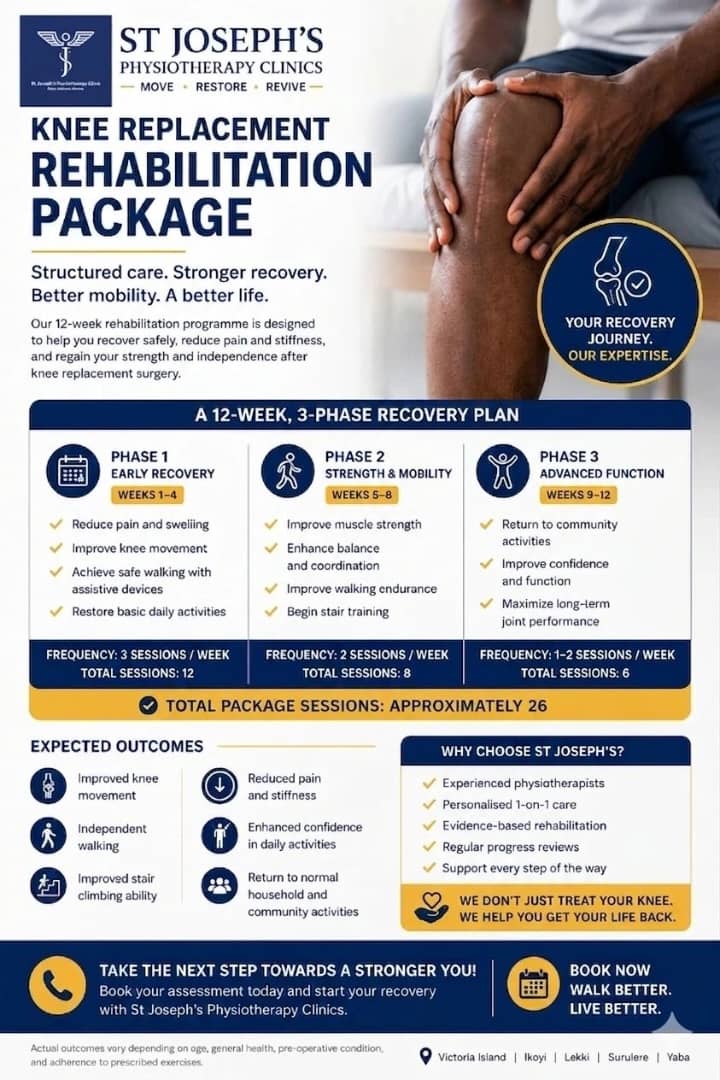
Complete Knee Replacement Rehabilitation Package in Lagos
Knee replacement surgery is a major step toward pain relief and improved mo…

NAMDA threatens strike over unpaid medical lecturers’ allowances
The Nigerian Association of Medical and Dental Academics (NAMDA) has warned…

Resident Doctors Signal End to Strike Threat After High-Level Talks with Gbajabiamila
The threat of a nationwide indefinite strike by the Nigerian Association of…