Since the commencement of food fortification in Nigeria in 1990s, the Nigerian government, the Global Alliance for Improved Nutrition (GAIN), food manufacturers, United Nations International Children’s Emergency Fund (UNICEF) and other development partners, have deployed considerable efforts to the programme towards achieving a nation-wide consumption of iodized salt, vitamin A-fortified flours, oil, and sugar in Nigeria.
With all the efforts put in place by stakeholders in the health sector, the issue of malnutrition and micronutrient deficiencies are still very pronounced in the country. For instance, the 2015 National Nutrition and Health Survey (NNHS) indicates that 19.4 percent of children under the age of five in Nigeria are underweight, 32.9 percent are stunted and 7.2 percent are wasted. These have far-reaching effects on individuals and impede the economic development of nations.
The Minister for health, Professor Isaac Adewole who was represented by pharmacist Abisola Akinbiseyin, at the national consultative summit on food fortification in Lagos, also confirmed the need for Nigeria to intensify its efforts by meeting up targets put in place by international organisations.
Adewole said, “The United Nations had earlier set targets for elimination of specific micronutrient deficiencies like the iodine deficiency by 2005, vitamin A deficiency by 2010 and a reduction of at least 30 per cent in the global prevalence of iron deficiency anaemia by 2010. These dates, according to the minister are in the past now and the targets were not met.”
The deficiency of malnutrition which includes under-nutrition and micronutrient deficiencies (Vitamin A deficiency, Iron deficiency, Iodine deficiency disorder and Zinc deficiency) can be effectively tackled through food fortification according to stakeholders.
At the stakeholders dialogue on food fortification hosted by GAIN and NAFDAC with the theme, “Sharing our Successes and Challenges: Align on the way forward, stakeholders came up with a roadmap on how to reduce the undesirable impact of malnutrition and sustain the food fortification programme in Nigeria.
They agreed that scaling up the availability and consumption of fortified foods in Nigeria will contribute to the achievement of a number of Sustainable Development Goals (SDGs), reduce the incidence of Spina Bifida in unborn children, anaemia among women of reproductive age and enhance cognitive development within the first 1000 days of life.
They agreed that, “There is the need for better monitoring of fortification efforts, including industry self-regulation, and enforcement of necessary laws and regulations by SON and NAFDAC; the need to create a better enabling environment for fortification, such as by working with the Nigerian Custom Services to ensure that micronutrient premixes can be imported without current inappropriate and prohibitive taxes; the need to provide appropriate and adequate consumer education, awareness, and social marketing, and ensure coverage to base of the pyramid population segments and hard-to-reach groups.
“The need to identify new fortifiable food vehicles, since the current vehicles are excluding a significant proportion of the population; the need to develop and scale-up other means of getting micronutrients, for segments of the population that will be systematically and consistently excluded from all fortification efforts; the need to identify and promote innovative ways of financing fortification activities; the need to design, institutionalize, and implement frameworks for quality data collection that will generate evidence to guide ongoing and future food fortification efforts and the need to develop the National Food Fortification Policy that would provide a framework for addressing all of the issues, including monitoring, evaluation, accountability and learning.”
Speaking at the summit, the acting Director General of NAFDAC Mrs Yetunde Oni acknowledged the fact that good nutrition is an essential driver for sustainable development. She said, “When people’s nutritional status improves, it helps to break the intergenerational cycle of poverty, generates broad-based economic growth and leads to a host of benefits for individuals, families, communities and nations”.
 Oni said the Nigerian government in collaboration with development partners; in particular Micronutrient Initiative, World Health Organisation (WHO) and a committee of selected experts initiated certain actions to address the micronutrient deficiency problems in the country.
 In his keynote address, the honourable Minister Adewole, noted the fact that “the Federal Ministry of Health is concerned with the formulation and implementation of policies related to health, creating awareness on reproductive, maternal, neonatal and child health, ensuring sound nutrition including infant and young child feeding and care and safety of the elderly and adolescents.
Adewole acknowledged some of the remarkable success Nigeria had attained in addressing micronutrients deficiency problems with the support of international organizations and development partners such as GAIN, UNICEF and Micronutrient Initiative (MI). He said “this administration is aiming at developing a National Policy on Food Fortification to enable the country have a uniform set of principles/guidelines that would serve as a model for the rational addition of essential vitamins and minerals to food and for effective compliance to mandatory food fortification regulations by the Industry”.
Country Director of GAIN, Dr. Francis Aminu said, “After 15 years of Fortification, we realized that we need to come together to look back and like today, we have the opportunity to listen to what we called food fortification coverage tool that we develop to really see how we can monitor and evaluate the impact of food fortification. We want to be sure that people are actually consuming the product that we are fortifying.”
Aminu recognized the fact that food fortification is a cost effective technology that yields huge returns on investments. He said, “We want to build on the experiences, achievements and lessons we have learnt over the years. Also we are catalysing the partnership that will be needed to move food fortification forward. In the past we have been doing it almost all alone. Now we are having more stakeholders and we have to expand the partnership to be able to see how we move food fortification forward”.
Our biggest challenge, according to the country director of GAIN, is more than just fortifying and putting the fortification products on the shelf or in the market, it is how these products can get to the people who are in most need; the vulnerable groups in the society to actually have access purchasing and then consuming the fortified products.
Aminu said, “If we do the needful, if we have a kind of action, practical action, if we are able to accomplish them by giving each stakeholder a task to accomplish and if at the end of the day, every stakeholders or partners does his or her own role, then we are sure we would be able to elucidate malnutrition in the country. If we put the roadmap out on time, industries are fortifying and then with quality assessment, assurance and control, we can achieve the roadmap in shorter time.”
Source: Leadership News
ABUJA: Training Schedule for Basic Life Support BLS, Pediatric Advanced Life Support (PALS), Advanced Cardiovascular Life Support ACLS, First Aid, CPR, AED
PORTHARCOURT: Training Schedule for Basic Life Support BLS, Pediatric Advanced Life Support (PALS), Advanced Cardiovascular Life Support ACLS, First Aid, CPR, AED
LAGOS: Training Schedule for Basic Life Support BLS, Pediatric Advanced Life Support (PALS), Advanced Cardiovascular Life Support ACLS, First Aid, CPR, AED
STOP paying for airtime and electricity, Let your phone pay its bills with ScreenT
You may also like
Comrade Lemii Christian Emerges Chairman of NANNM Rivers State Branch in Historic Victory
PORT HARCOURT, NIGERIA Following the long awaited National Association of N…

FG Supports Robotic Surgery Expansion to Reduce Medical Tourism
Nigeria is taking another step toward strengthening specialised healthcare …
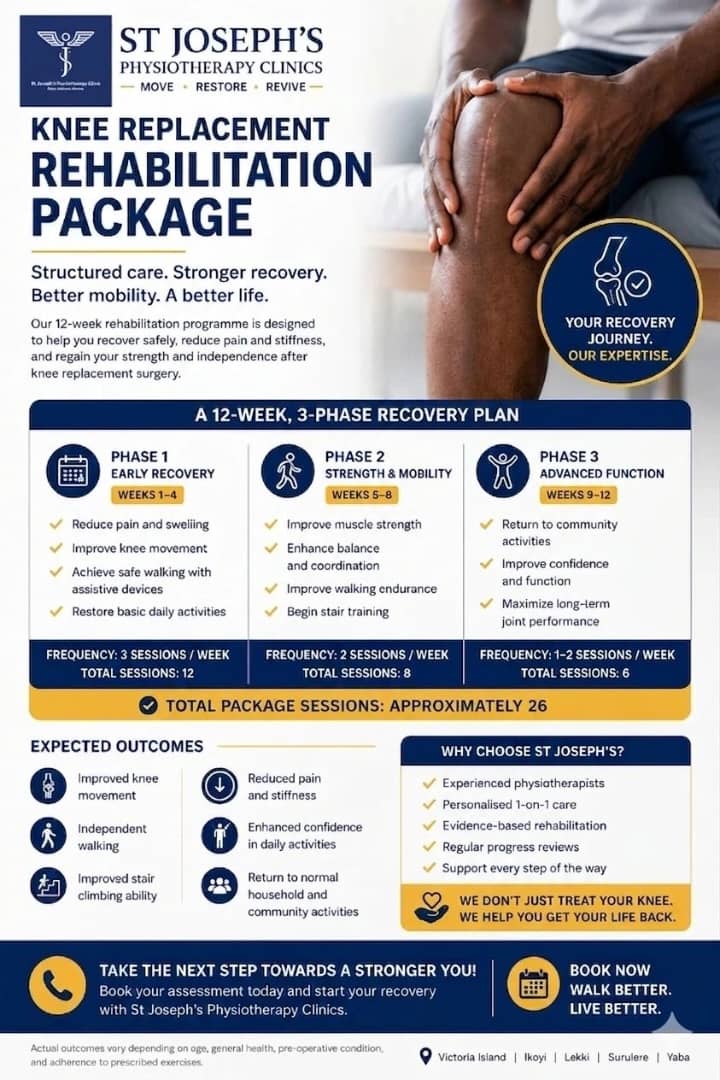
Complete Knee Replacement Rehabilitation Package in Lagos
Knee replacement surgery is a major step toward pain relief and improved mo…

NAMDA threatens strike over unpaid medical lecturers’ allowances
The Nigerian Association of Medical and Dental Academics (NAMDA) has warned…

Resident Doctors Signal End to Strike Threat After High-Level Talks with Gbajabiamila
The threat of a nationwide indefinite strike by the Nigerian Association of…
