Having met and married her in Metropolitan Lagos three years ago, Mrs Amaka Kenechukwu craved for the opportunity to visit her husband’s hometown in Amegbu, in Nkwerre Local Government, Imo State. That chance came when she joined Nkwerre Women, Lagos Branch which was to attending the Annual August meeting in Nkerre Town in faraway Imo State later in the year. However, she had hardly arrived Nkwerre village after the nine-hour journey from Lagos when she was struck with fever.
Even before the commercial bus in which she travelled got to Onitsha in Anambra State, she had been sneezing, coughing persistently and had developed very high temperature. Similarly, apart from having diarrhoea, she had severe headache, and vomited intermittently throughout the journey. Each time she sneezed while covering her mouth with hand a handkerchief, a co-traveler sitting close to her, expressed concern: “Are you better; is your fever subsiding?”
Responding, on one of such occasions, Mrs Kenechukwu said: “its malaria fever. Actually, I have been feeling the symptoms in the last three days but did not know it would get me down too quickly.” On arriving the village, her mother –in-law, Lolo Nnenne Kenechukwu stepped in, providing care.
After consultation with the sick on what the problem was, she dashed to the village square where the only patent medicine store serving the community was domiciled. Lolo promptly bought a pack of chloroquine and some paracetamol, an analgesic drug. Although, the medications were promptly administered on the sick, Mrs Kenechukwu did not get any respite.
Similarly, believing that malaria fever is caused by the consumption of excessive palm oil and other oil-rich fruits, Lolo deliberately withdrew all forms of oil from the meals she served Mrs Kenechukwu throughout the period of her illness. These measures however continued in addition to the medications that were administered.
Yet, more than 20 days after the treatment commenced, rather than abate; the condition of the sick went from bad to worse, resulting in Mrs kenechukwu slipping into unconsciousness. It was at that point that many relations in the village not only became worried, they were visibly agitated. For many of them something urgent and drastic must be done to save the life of their wife from the fever they believed to be malaria. But what else should be done? For Lolo, what they have done so far in providing care for the sick is in the right direction.
She said: “We have managed malaria in both children and adults in this village for well over 50 years and when malaria attacks our kids, youths, and elders; we know exactly how it presents. We are also well familiar with the medications to tackle it.
.jpg) We have always used choroquine.” On the country, while it may be true to suspect malaria whenever fever presents in patients, medical experts said fever may present when other ailments develop. What this means is that malaria is not the only cause of fevers in humans.
We have always used choroquine.” On the country, while it may be true to suspect malaria whenever fever presents in patients, medical experts said fever may present when other ailments develop. What this means is that malaria is not the only cause of fevers in humans. According to a Consultant Medical Parasitologist and Associate Professor at the College of Medicine University of Lagos, Wellington Oyibo, fever is caused by so many reasons. “The assumptions that fevers was caused by malaria about 15 to 30 years ago, were high.
“We did not even need to do a test then but things have changed,” he added. “Today, if you say a patient has fever, it is now necessary to find out if it is due to malaria. There has to be a diagnosis to provide that evidence.” The World Health Organisation, WHO in a new guideline for the treatment of malaria in 2010, recommended the diagnosis of malaria before treatment with Arthemisinin Combination Therapy, ACT.
“This is the only therapy that is found to be effective in the treatment of malaria in the 21st Century,” the world body stated. Malaria is caused by parasites that infect specific mosquitoes. Plasmodium falciparum is the most common of all the parsasites and most deadly. However, ACTs are a group of drugs that possess the most rapid action of all current drugs against P. falciparum malaria. The treatments containing an artemisinin derivative (artemisinin-combination therapies, ACTs) are now standard treatment worldwide for P. falciparum malaria.
“The world now has the means to rapidly diagnose malaria and treat it effectively” said Dr. Robert Newman, Director of the WHO Global Malaria Programme (GMP). “WHO now recommends diagnostic testing in all cases of suspected malaria. Treatment based on clinical symptoms alone should be reserved for settings where diagnostic tests are not available,” he added.
The move towards universal diagnostic testing of malaria is a critical step forward in the fight against malaria as it will allow for the targeted use of ACTs for those who actually have malaria. The aim is to reduce the emergence and spread of drug resistance and to help identify patients who have fever, but do not have malaria, so that alternative diagnoses can be made and appropriate treatment provided.
At the dinner for health editors organised by the Society For Family Health, SFH, in Lagos recently, a Professor of Paediatrics and Child Health and Director, Centre for Malaria Care at the University of Ilorin Teaching Hospital, Olugbenga Mokuolu asserted that news of ACT resistance is already spreading gradually, (not in Nigeria at the moment) but in the south-east Asia.
“We must be in anticipatory mood for its curtailment in Nigeria,” he added. According to the latest estimates from WHO, there were 214 million new cases of malaria worldwide in 2015, with the African Region accounting for about 88 per cent of global cases of malaria, followed by the South-East Asia Region (10 per cent) and the Eastern Mediterranean Region (two per cent).
Similarly, in 2015, there were an estimated 438 000 malaria deaths worldwide. Ninety per cent of these deaths occurred in the African Region, followed by the South- East Asia Region (seven per cent) and the Eastern Mediterranean Region (two per cent).
However, Nigeria accounts for one-third of global malaria deaths and malaria is responsible for one-quarter of all infant-related deaths and one-third of deaths in children under five years. The above data is an evidence of the huge burden of malaria in Nigeria. Yet, many Nigerians demonstrate carefree attitude towardsmalaria, a serious disease which can often be fatal.
According to public health experts, about $3 billion U.S. dollars is lost to the malaria yearly in Nigeria due to out-ofpocket treatment and prevention costs.
At the meeting with health editors the SFH, which champions malaria awareness in the country, also reported that this huge cost could pay the annual salaries of 2.2 million Nigerians on minimum wage. In socio-economics, malaria is also “a major cause of absenteeism in schools, offices and markets, and affects the national economy,” disclosed the SFH, which operates as a non-governmental organisation, NGO.
The organisation urged the media to prioritise malaria and make it a matter of national concern given the effects of the ailment. On this attitude, Mokuolu said a condition that kills should not be addressed as common. “The way you dress up a condition is the way you address it.
So, if malaria is a killer disease, it should be recognised as a killer disease. “The advantage of not having adults in a malaria-endemic nation, develop severe malaria, “should not make us reduce the appreciation of the severity of malaria, particularly among children.”
Nollywood Star, Kate Henshaw who recently signed on to support the malaria advocacy programme also decried the attitude of Nigerians who look down on malaria or consider it with condescending familiarity despite the harm it causes. Henshaw stated, “In those days, people spoke about malaria as if it belonged to them with expressions like “I have malaria,” “My malaria” and “ordinary malaria.”
Surprisingly, after many years, these terms are still common place among family members, colleagues, and friends, irrespective of class or level of education.” She declared, “I have committed myself to support the fight against malaria in Nigeria by letting people know the benefits of sleeping inside the Long Lasting Insecticidal Nets, especially for children under five and pregnant women.”
Malaria is caused by parasites that infect specific mosquitoes. Yet, the believe among people in the south east and south south is that malaria is caused by the consumption of excessive oil and oil-rich fruits and foods.
However, Dr. (Mrs) Perpetual Uhomoibhi, Director, National Malaria Elimination Programme, NMEG, at the Federal Ministry of Health, FMOH, affirmed that there is still a lot of misconceptions about malaria especially in the rural hinter land because the people there have limited access to health facilities. “We need a lot of behaviour change so that people will know what causes malaria and how to prevent it,” she added.
By: Appoloni A. Adeyemi
New Telegraph News
ABUJA: Training Schedule for Basic Life Support BLS, Pediatric Advanced Life Support (PALS), Advanced Cardiovascular Life Support ACLS, First Aid, CPR, AED
PORTHARCOURT: Training Schedule for Basic Life Support BLS, Pediatric Advanced Life Support (PALS), Advanced Cardiovascular Life Support ACLS, First Aid, CPR, AED
LAGOS: Training Schedule for Basic Life Support BLS, Pediatric Advanced Life Support (PALS), Advanced Cardiovascular Life Support ACLS, First Aid, CPR, AED
STOP paying for airtime and electricity, Let your phone pay its bills with ScreenT
You may also like
Comrade Lemii Christian Emerges Chairman of NANNM Rivers State Branch in Historic Victory
PORT HARCOURT, NIGERIA Following the long awaited National Association of N…

FG Supports Robotic Surgery Expansion to Reduce Medical Tourism
Nigeria is taking another step toward strengthening specialised healthcare …
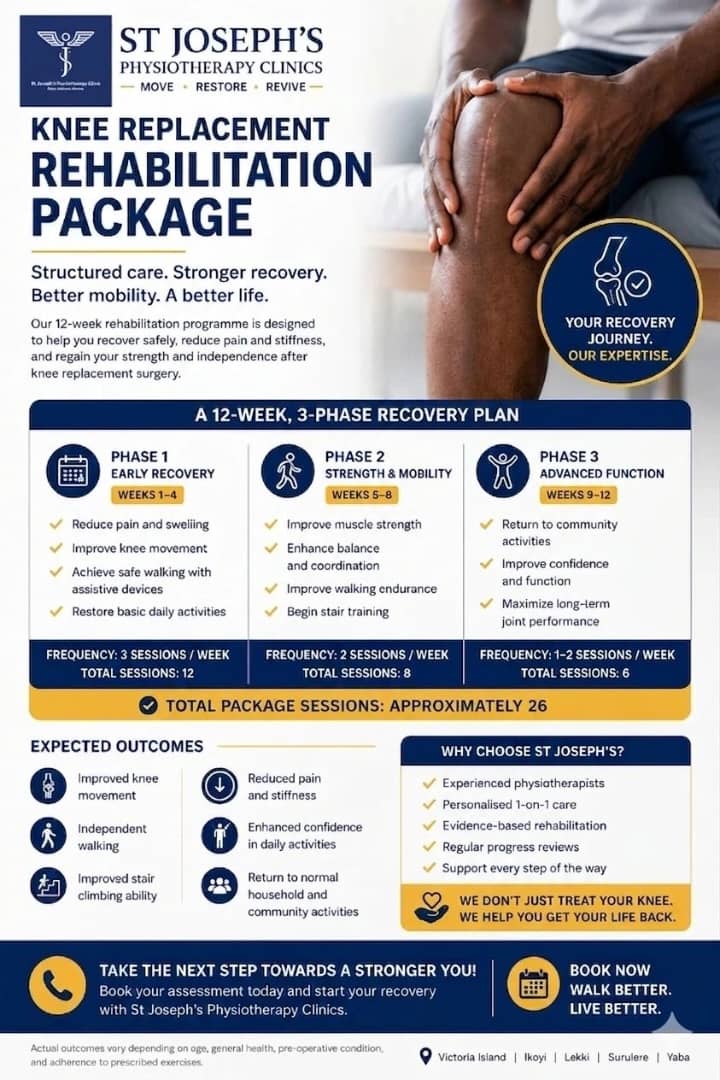
Complete Knee Replacement Rehabilitation Package in Lagos
Knee replacement surgery is a major step toward pain relief and improved mo…

NAMDA threatens strike over unpaid medical lecturers’ allowances
The Nigerian Association of Medical and Dental Academics (NAMDA) has warned…

Resident Doctors Signal End to Strike Threat After High-Level Talks with Gbajabiamila
The threat of a nationwide indefinite strike by the Nigerian Association of…