Between August 6-9, 2015, the United Nations Children’sFund (UNICEF) in Nigeria invited journalists to Kano as part of its activities to mark “Breastfeeding Week”. It was also an occasion to solicit for media assistance on ways of sensitising authorities and other stakeholders on the crisis of child malnutrition in Nigeria.
The venue was the Grand Central Hotel, Kano city where journalists from various media houses gathered at the invitation of the United Nations Children’s Fund (UNICEF) from August 6-9, 2015 to mark the “Breast Feeding Week”. The programme was to enlist the media in sensitising nursing mothers and other stakeholders on the imperative of breastfeeding newborns beginning from one hour after birth to six months of life, even without single drop of water.
Declaring the workshop open, UNICEF chief nutritionist in NIgeria, Arjan de Gwat lamented the high incidence of child malnutrition in the country, which he said is a major cause of stunt growth among them. He pleaded with the media to collaborate with the agency and bring to focus the issue of breastfeeding among nursing mothers.
According to him, breastfeeding has many benefits for both mother and baby, as breast milk contains all the nutrients an infant needs in the first six months of life.
This plea and message was re-echoed by UNICEF chief of communication, Doune Porter who in her remark called for intensified media advocacy on child nutrition in Nigeria, even as she noted that past efforts have been responsible for the increasing awareness on the importance of breastfeeding among mothers.
She noted that early initiation of breastfeeding ensures that the infant receives the colostrums, or ‘first milk’, which is rich in protective factors. Moreover, a child’s nutritional status is a reflection of his or her overall health. Ms Porter maintained that the absence of adequate nutrition results in undernourishment, thereby allowing room for lowered resistance to infection and more likelihood of death from common childhood illnesses.
Following the inaugural speeches, the tone for the two-day seminar was set. Kicking off under the theme: ‘Malnutrition – Nigeria’s Silent Crisis’, one resource persons after the other harped on the need for concerted actions to eliminate this health malady among Nigerian children.
Making his presentation, the Deputy Director and Head of Nutrition, Federal Ministry of Health, Dr. Chris Isokpunwu pointed out that poor nutrition in the first two years of child’s life can lead to stunted growth, which is irreversible and is associated with impaired cognitive ability, reduced school and work performance. He reiterated that to be well fed, children must eat the right types of food the right number of times a day.
The deputy director advised that children be fed on food sufficient in micronutrients for them to escape the vicious trap of stunting. According to him, research shows that infancy is the peak age for faltering of certain micronutrients and common childhoods illnesses, such as diarrhea, even as he advised that children should eat food with enough iodine, Vitamin A and iron.
Supporting the presentation with a graph, Isokpunwu said that in 1990, the number of children in Nigeria with stunted growth was 43 percent and by 2013, it fell to 37 percent, which is only a decrease of 6 percent. Lamenting the slow progress, the nutritionist said at the rate the country is going, it would be difficult to reach the 40 percent mark by 2025. He maintained that even at 37 percent, it shows that about 12 million children in Nigeria are stunted – a number equivalent to population of some countries in the world.
.jpg)
According to UNICEF bulletin, the global target is to reduce stunting by 40 percent, and maintain wasting below 5 percent by 2025. The agency noted that more than 25 percent of children aged between 1-10 years in Nigeria suffer from malnutrition. Survey also shows that 1 in 5 children in Abuja is stunted, while more than one third of children in Mushin, Lagos are malnourished.
Surprising is fact that 13 percent of children among well-to-do Nigerians are malnourished, even as 43 percent among them are stunted, while 50 percent of child mortality is caused by malnutrition. Corroborating this, statistics from Federal Ministry of Health, showed that 1,000 children under five years die daily in Nigeria, while 145 women also die during childbirth. Incidentally, these deaths are due to malnutrition.
What is malnutrition? It is a condition, which occurs when people consistently do not consume or absorb the right amounts and types of food and essential nutrients essential for physical and mental growth.
The main indicator of childhood malnutrition is stunting – that is, when children are too short for their age. Unfortunately, stunted children have poor physical growth and brain development, preventing them from thriving and living up to their full potential.
Result shows that Nigeria has a stunting prevalence of 32 percent among children less than 5 years of age; while about 21 percent and 9 percent are underweight and wasted respectively. In general, malnutrition prevalence in North West and East regions are higher than in the South.
Notable among the causes of stunting is Acute Malnutrition, which occurs because of rapid weight loss or a failure to gain weight within a relatively short period. Disaggregation by geopolitical zones shows that acute malnutrition is highest in the North East at 12 percent and North West at 10 percent and lowest in Southeast and North Central at 5 percent each.
Incidentally, an important nutrition indicator is exclusive breastfeeding of which Nigeria is still lagging behind. For example, 63 percent of infants fewer than six months in Ghana are exclusively breastfed, while only 17 percent are exclusively breastfed in Nigeria.
According to UNICEF, Nigeria is facing a crisis of child malnutrition and ranks second behind India among all countries with the highest number of such cases. Almost 30 percent of Nigerian children are underweight and that is more than double the proportion of Ghanaian children who are underweight.
The percentage of children, who are wasted, or too thin for their height, has steadily increased over the last decade, rising from 11 percent in 2003 to 18 percent in 2013. Globally, stunting is now recognised as the main indicator of malnutrition and can be prevented by employing good care and feeding practices such as exclusive feeding and complementary feeding during a child’s first two years of life.
By: Okay Osuji
Daily Time
ABUJA: Training Schedule for Basic Life Support BLS, Pediatric Advanced Life Support (PALS), Advanced Cardiovascular Life Support ACLS, First Aid, CPR, AED
PORTHARCOURT: Training Schedule for Basic Life Support BLS, Pediatric Advanced Life Support (PALS), Advanced Cardiovascular Life Support ACLS, First Aid, CPR, AED
LAGOS: Training Schedule for Basic Life Support BLS, Pediatric Advanced Life Support (PALS), Advanced Cardiovascular Life Support ACLS, First Aid, CPR, AED
STOP paying for airtime and electricity, Let your phone pay its bills with ScreenT
You may also like

Comrade Lemii Christian Emerges Chairman of NANNM Rivers State Branch in Historic Victory
PORT HARCOURT, NIGERIA Following the long awaited National Association of N…

FG Supports Robotic Surgery Expansion to Reduce Medical Tourism
Nigeria is taking another step toward strengthening specialised healthcare …
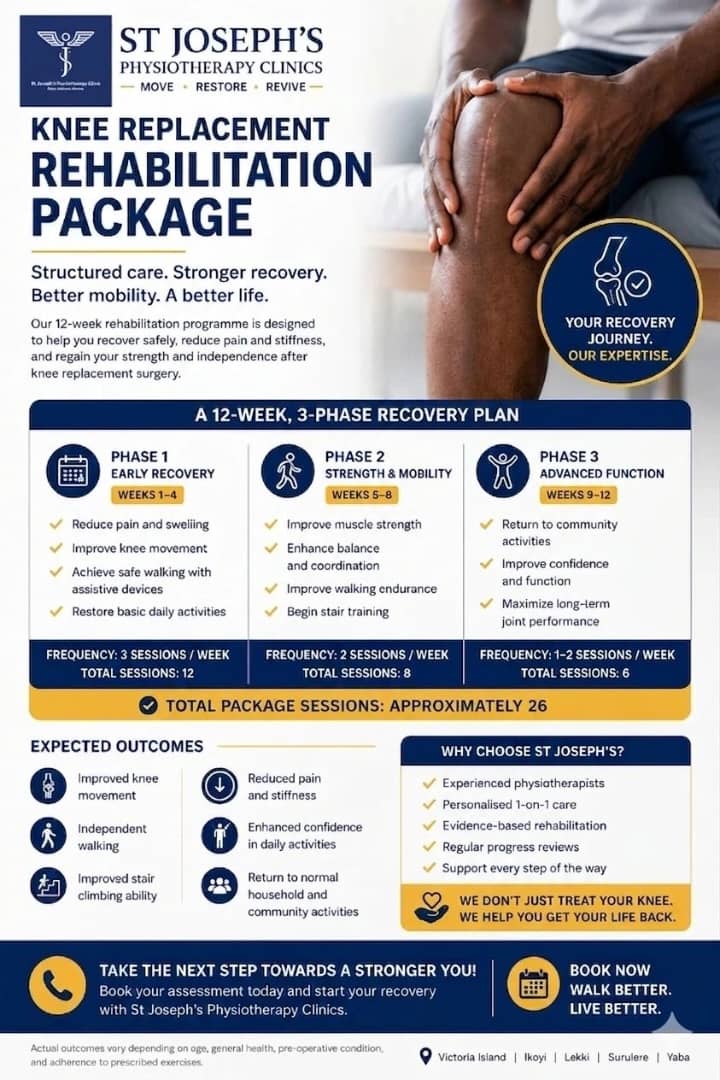
Complete Knee Replacement Rehabilitation Package in Lagos
Knee replacement surgery is a major step toward pain relief and improved mo…

NAMDA threatens strike over unpaid medical lecturers’ allowances
The Nigerian Association of Medical and Dental Academics (NAMDA) has warned…

Resident Doctors Signal End to Strike Threat After High-Level Talks with Gbajabiamila
The threat of a nationwide indefinite strike by the Nigerian Association of…
