As Nigeria joined the rest of the world last week to commemorate this year’s World AIDS Day, it is important for the country to plan adequately and be committed to fulfilling related promises and goals that will ensure improved healthcare for proper wellbeing of all Nigerians, particularly women and children.
HIV and AIDS were among the targets of the Sustainable Development Goals, which were adopted at the United Nations summit held from 25 to 27 September in New York. Goal three seeks to ensure healthy lives and promote wellbeing for all at all ages by grouping together HIV and AIDS, maternal newborn and child health, tuberculosis, malaria, hepatitis, water-borne diseases and other communicable diseases.
 The Sustainable Development Goal 3 also shows that HIV and AIDS, maternal mortality, child morality and other diseases are related to the wellbeing of the people. It targets an end to the epidemics of AIDS by 2030 and seeks to reduce maternal mortality ratio to less than 70 per 100,000 live births. Maternal Mortality Ration in Nigeria was about 576 per 100, 000 according to the Nigeria Demographic and Health Survey (NDHS) 2013.
 Meanwhile, the President of the Society of Gynaecology and Obstetrics of Nigeria (SOGON), Prof. Brian Adinma, at the just concluded 9th international congress, said Nigeria did not perform well in the MDG 4 and 5. According to him, there was need to re-strategise under the new development agenda of SDG.
The WHO says HIV continues to be a major global public health issue, having claimed more than 34 million lives so far. According to the health organisation, about 1.2 million people died from HIV-related causes globally, while Sub-Saharan Africa is the most affected region, with about 25.8 million people living with HIV in 2014.
Consequently, the NOTAGAIN Campaign urges the federal government of Nigeria to use the opportunity presented by the World AIDS Day 2015 to improve the health sector by increasing budgetary allocations to the sector, implementing the National Health Act 2014, and training of skilled health workers. There is also a need to employ and motivate health workers for improved health outcomes.
In order to achieve the SDG, the National Agency for the Control of AIDS (NACA), has advocated for more investment, commitment and accelerated innovation towards reducing the AIDS epidemic.Similarly, the WHO has urged nations to act more boldly.
“Achieving these targets will require bold action, with the health sector of nations around the world playing a central role,” said Dr. Winnie Mpanju-Shumbusho, WHO Assistant Director General for HIV/AIDS, Tuberculosis, Malaria and Neglected Tropical Diseases.
By: Rebecca Ejifoma
This Day News
ABUJA: Training Schedule for Basic Life Support BLS, Pediatric Advanced Life Support (PALS), Advanced Cardiovascular Life Support ACLS, First Aid, CPR, AED
PORTHARCOURT: Training Schedule for Basic Life Support BLS, Pediatric Advanced Life Support (PALS), Advanced Cardiovascular Life Support ACLS, First Aid, CPR, AED
LAGOS: Training Schedule for Basic Life Support BLS, Pediatric Advanced Life Support (PALS), Advanced Cardiovascular Life Support ACLS, First Aid, CPR, AED
STOP paying for airtime and electricity, Let your phone pay its bills with ScreenT
You may also like
Comrade Lemii Christian Emerges Chairman of NANNM Rivers State Branch in Historic Victory
PORT HARCOURT, NIGERIA Following the long awaited National Association of N…

FG Supports Robotic Surgery Expansion to Reduce Medical Tourism
Nigeria is taking another step toward strengthening specialised healthcare …
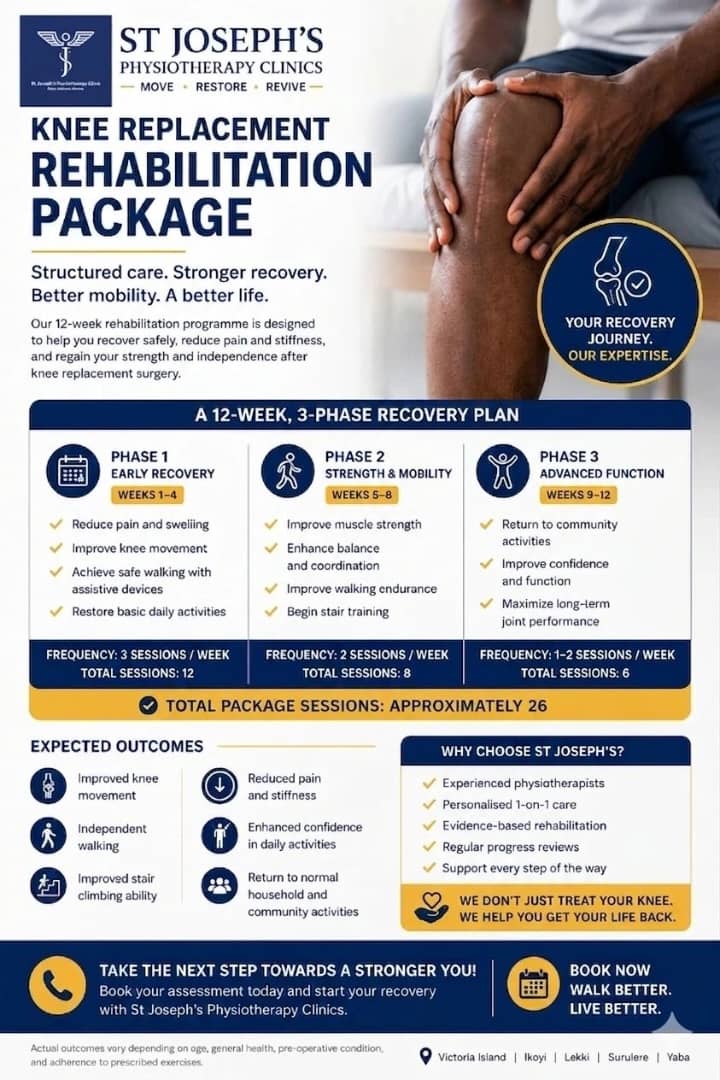
Complete Knee Replacement Rehabilitation Package in Lagos
Knee replacement surgery is a major step toward pain relief and improved mo…

NAMDA threatens strike over unpaid medical lecturers’ allowances
The Nigerian Association of Medical and Dental Academics (NAMDA) has warned…

Resident Doctors Signal End to Strike Threat After High-Level Talks with Gbajabiamila
The threat of a nationwide indefinite strike by the Nigerian Association of…