In an amazing new discovery, scientists have been able to halt Type 1 diabetes for 6 months, bringing the cure a step closer. The research showed that implanting insulin-producing cells in the body could actually reverse the condition. With this discovery, hundreds of thousands of sufferers have been given hope.
The breakthrough could signal the end of painful daily jabs for those with Type 1, the unpreventable autoimmune disease. During the research, experts were able to stop the body’s immune system from attacking its own insulin production by using human cells implanted into mice. Crucially, the researchers from US hospitals and other institutions including Harvard University, prevented the cells from being rejected by the body’s own auto-immune system. They are now in a race against time to replicate the results in people whose lives are blighted by the condition. Lead researcher and associate professor at the Massachusetts Institute of Technology, Daniel Anderson, said: “We are excited by these results and are working hard to advance this technology to the clinic.” The forward leap in understanding the treatable but as yet irreversible illness comes a year after experts discovered how to make huge quantities of insulin producing cells.
That research was led by Harvard professor Doug Melton, who has searched for a cure since his son was diagnosed with Type 1 as a baby. The human islet cells used in this latest experiment were generated from human stem cells developed by Professor Melton. After they were implanted in mice, the cells immediately began producing insulin in response to blood glucose levels and were able to maintain blood glucose within a healthy range for 174 days – the length of the study. In one test, alginate, a material originally derived from brown algae, was used to prevent the body triggering an immune response which can lead to the build-up of scar tissue and cells being rendered useless.
 Scientists created a library of almost 800 alginate derivatives and evaluated the immune response to each of them. This led them to focus on triazole-thiomorpholine dioxide (TMTD), which had a minimal immune response in mice and large animals. The researchers then implanted human islet cells encapsulated in TMTD in mice, which provided the success for the study. The findings are published in the journals Nature Medicine and Nature Biotechnology and were made possible with funding from the Juvenile Diabetes Research Foundation. Julia Greenstein, vice president of discovery research, said: “Encapsulation therapies have the potential to be groundbreaking for people with Type 1 diabetes. These treatments aim to effectively establish long-term insulin independence and eliminate the daily burden of managing the disease for months, possibly years, at a time without the need for immune suppression.
 “JDRF is excited by these findings and we hope to see this research progress into human clinical trials and ultimately a potential new Type 1 diabetes therapy.” There are two types of diabetes. Type 1 is when sufferers cannot produce insulin. Around 90 per cent have Type 2, which develops because they do not produce enough insulin or the insulin they produce doesn’t work properly. It is caused almost entirely by chronically unhealthy lifestyles and was once known as adult-onset diabetes but now commonly affects children. Professor Alan Sinclair, director of Diabetes Frail, said: “These studies are incredibly exciting and may lead to large numbers of people, both young and old, being able to reduce their daily injectable insulin requirements and the need for intense blood sugar monitoring. “As beta cell encapsulation delivery mechanisms improve combined with more selective immune suppression, I can see Type 1 diabetes becoming largely a curable metabolic condition.” It means 25 per cent of the population has, or is prone to, an illness that can lead to blindness, amputations, heart and kidney disease, stroke and death.
The dire statistics comes as specialists claim highly variable standards of care have placed sufferers at the mercy of a “postcode lottery”, with 24,000 dying early in Britain each year. Anna Morris, of Diabetes UK, said: “Transplanting insulin-producing islet cells into a person with Type 1 diabetes is a life-changing treatment for some, but transplant rejection is still a challenge. “This research highlights one potential way to hide the transplanted islet cells from the immune system, without the need for immunosuppressant drugs that can come with harmful side effects. “If successful, it could open exciting possibilities for people with Type 1 diabetes,” Jenny Hirst MBE, co-chairman of charity InDependent Diabetes Trust, said: “If this research can be translated into humans it would represent a significant breakthrough.” Meanwhile, the International Diabetes Federation (IDF ) report, states that Nigeria has the highest number of people with diabetes in Africa, with 3.9 million cases and 4.9 per cent national prevalence rate. The reports show that more than 80 per cent of diabetes deaths occur in low- and middle-income countries and that diabetes will be the 7th leading cause of death by 2030.
By: Franka Osakwe
National Mirror News
ABUJA: Training Schedule for Basic Life Support BLS, Pediatric Advanced Life Support (PALS), Advanced Cardiovascular Life Support ACLS, First Aid, CPR, AED
PORTHARCOURT: Training Schedule for Basic Life Support BLS, Pediatric Advanced Life Support (PALS), Advanced Cardiovascular Life Support ACLS, First Aid, CPR, AED
LAGOS: Training Schedule for Basic Life Support BLS, Pediatric Advanced Life Support (PALS), Advanced Cardiovascular Life Support ACLS, First Aid, CPR, AED
STOP paying for airtime and electricity, Let your phone pay its bills with ScreenT
You may also like

Comrade Lemii Christian Emerges Chairman of NANNM Rivers State Branch in Historic Victory
PORT HARCOURT, NIGERIA Following the long awaited National Association of N…

FG Supports Robotic Surgery Expansion to Reduce Medical Tourism
Nigeria is taking another step toward strengthening specialised healthcare …
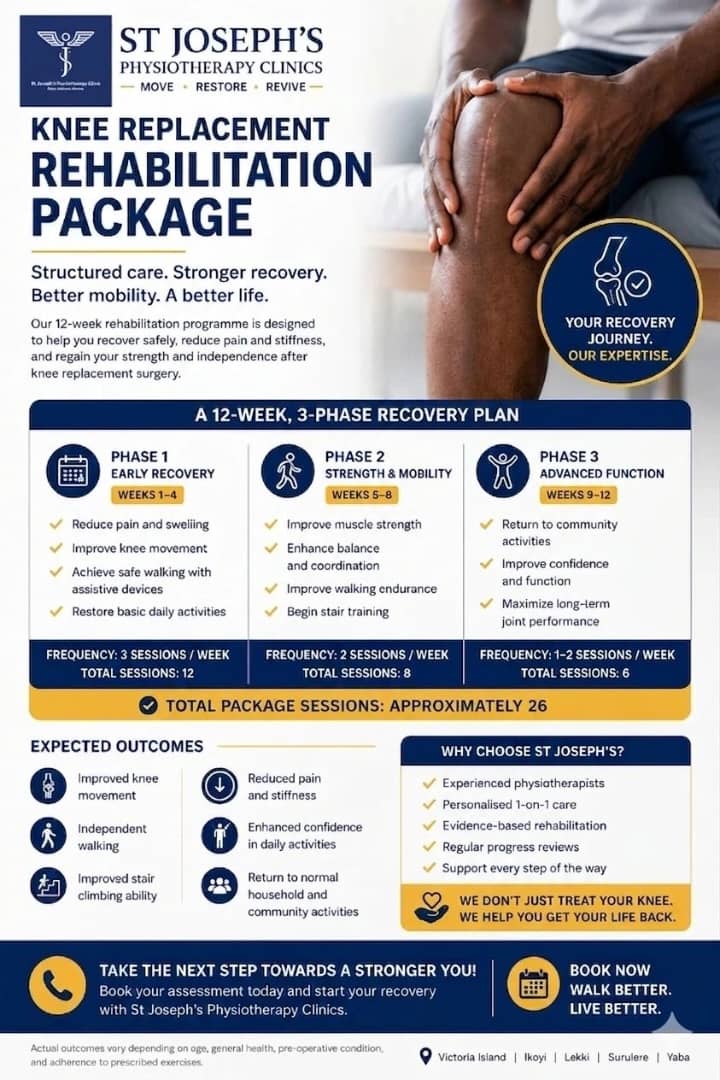
Complete Knee Replacement Rehabilitation Package in Lagos
Knee replacement surgery is a major step toward pain relief and improved mo…

NAMDA threatens strike over unpaid medical lecturers’ allowances
The Nigerian Association of Medical and Dental Academics (NAMDA) has warned…

Resident Doctors Signal End to Strike Threat After High-Level Talks with Gbajabiamila
The threat of a nationwide indefinite strike by the Nigerian Association of…