As part of efforts to help health correspondents hone their reportorial skills in this specialised field and learn about legislation, budget tracking and other developments, the Civil Society Legislative Advocacy Centre (CISLAC), in partnership with the Advocacy in Child and Family Health (ACFaH), recently organised a training programme with far-reaching effects.
The event saw health correspondents converging on Alcwanga, Nasarawa State, where they were taught by professionals about challenges in health sector, with a view to putting them at the top of their jobs.
Technical Consultant on Child and Family Health to CISLAC, Dr. Muhammed Muhammed Saleh, speaking on the theme "Budget Tracking for Media Champions in Child and Family Health," jolted the audience when he declared that despite the Nigerian National Health Act, 2004, which seeks to establish a framework for the regulation, development and management of a national health system (NHS), Nigeria's health services are nothing to write home about.
According to him, the Act aims to achieve universal health coverage as well as ensure the achievement of the Millennium Development Goal (1ViDGs) .
He said: "It was also enacted for the purposes of providing health care insurance to certain classes of people, who are actually deprived and also, by its provisions, to help Nigeria reduce maternal and infant mortality rate by 2015.
"The intent of the Federal Government on the legislation was also to ensure that in achieving the goals more pregnant women would have access to free delivery services, while their children were assured standard paediatric services in the nation's health facilities."
The consultant underlined the fact that one of the policies and plans aimed at ensuring UHC in the country includes the evolvement of national health policy, health financing policy, National Health Insurance Scheme (NHIS) and National Strategic Health Development Plan 2010-2015.
 He lamented that the implementation of the NHIS, which was developed to provide adequate medical insurance cover for enrollees, has had hiccups, as some critical stakeholders, like state governments and media owners, are yet to subscribe to the scheme. He also lamented that some that subscribed provide limited cover for their employees.
 Saleh stated that effective reportage of immunisation, nutrition, family planning and childhood killer diseases remains a big issue in Nigeria: "For instance, on immunisation, majority of rural women in the grassroots do not see it as aligning with their socio-cultural ethos and by so doing have avoided it like a plague over the years. In some cultures and some religious groups, immunisation is a taboo and, therefore, cannot be mentioned among them. While the situation appears to be gradually changing in some geo-political areas, others are yet to embrace it as a preventive medicine for their children.
"Even when immunisation is one of the most cost-effective public health interventions, with its benefits including preventing morbidity (sickness), mortality (death) and disability, the poor disposition of potential beneficiaries, that is, nursing mothers, has continued to be a source of serious concern, as such an important tool (provided free by the government) is not being optimally utilised in Nigeria."
On good food, he said the disposition of mothers to good nutrition for their growing children could be traced to socio-economic conditions. According to him, the latest statistics on this challenge, as captured in the 2016 UNICEF global nutrition report, indicated that 361,000 children in Nigeria die annually from malnutrition, with a total of 2.1 million others currently diagnosed as suffering from malnutrition.
"Globally, 25,000 children under the age of five years die daily and 45 per cent of cause of death is attributed to malnutrition. Nigeria is one of the 20 countries responsible for 80 per cent of global child malnutrition, which accounts for one tenth of the global total," he said.
He disclosed that UNICEF had budgeted N820 million for tackling malnutrition among children in Katsina State: "All that is required for the state to access the fund is for it to pay its N120 million counterpart funding."
In evaluating the issues of family planning in Nigeria, Saleh said: "We find a combination of socio-cultural and economic factors influencing it, such that medical experts are beginning to understand better the twists and turns of attempting to encourage families embrace it as a reproductive health option.
"As it is in other developing countries, in Nigeria, lack of awareness and access to effective methods of contraception and family planning impact the health of women and indirectly that of children," he said.
Citing a report entitled "The Challenges of Effective Implementation of Family Planning (Reproductive Health)," published by Stanford University, he said fewer than 20 per cent of women in sub-Saharan Africa and barely one-third of women in South Asia use modem contraceptives.
According to him, "The report disclosed that a recent study predicted that Nigeria's economy would grow by at least $30 billion if the fertility rate in the country fell by just one child per woman in the next 20 years. As expected, the research paper's findings showed that family planning interests impact diverse crosssections of the population through issues, such as maternal health, child mortality and spread of sexually transmitted diseases."
Saleh said apart from ignorance of nursing mothers on immunisation and nutritional requirements for children in Nigeria, one of the greatest factors behind childhood killer diseases is poverty.
He said a study conducted in one remote Yoruba community some years ago showed that diarrhea, measles, pertussis, convulsions and fever were among the major childhood killer diseases in Nigeria.
By: Doris Obinna
Daily Sun News
ABUJA: Training Schedule for Basic Life Support BLS, Pediatric Advanced Life Support (PALS), Advanced Cardiovascular Life Support ACLS, First Aid, CPR, AED
PORTHARCOURT: Training Schedule for Basic Life Support BLS, Pediatric Advanced Life Support (PALS), Advanced Cardiovascular Life Support ACLS, First Aid, CPR, AED
LAGOS: Training Schedule for Basic Life Support BLS, Pediatric Advanced Life Support (PALS), Advanced Cardiovascular Life Support ACLS, First Aid, CPR, AED
STOP paying for airtime and electricity, Let your phone pay its bills with ScreenT
You may also like
Comrade Lemii Christian Emerges Chairman of NANNM Rivers State Branch in Historic Victory
PORT HARCOURT, NIGERIA Following the long awaited National Association of N…

FG Supports Robotic Surgery Expansion to Reduce Medical Tourism
Nigeria is taking another step toward strengthening specialised healthcare …
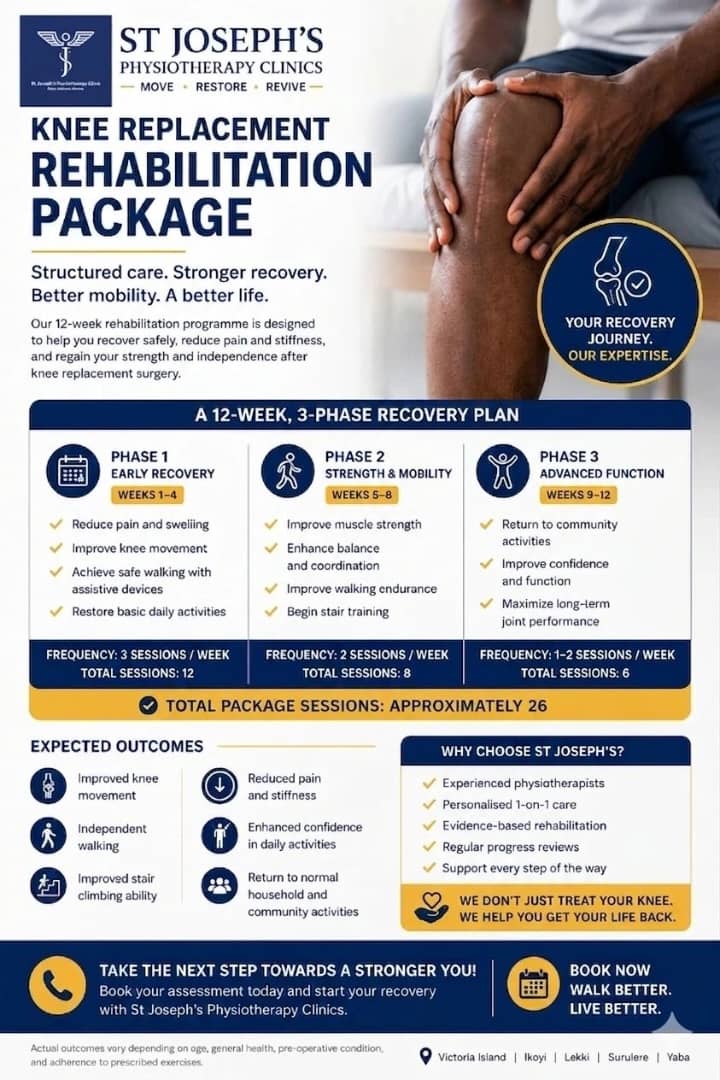
Complete Knee Replacement Rehabilitation Package in Lagos
Knee replacement surgery is a major step toward pain relief and improved mo…

NAMDA threatens strike over unpaid medical lecturers’ allowances
The Nigerian Association of Medical and Dental Academics (NAMDA) has warned…

Resident Doctors Signal End to Strike Threat After High-Level Talks with Gbajabiamila
The threat of a nationwide indefinite strike by the Nigerian Association of…