Prostate cancer is the foremost leading cause of death in men worldwide. It is also the most common cancer in men in Nigeria, with over 50,000 new cases diagnosed every year. Just like every cancer case, it’s silent and deadly if not detected early.
Nelson Mandela was diagnosed with early-stage prostate cancer at the age of 83. He underwent seven weeks of out-patient radiotherapy and made a full recovery. He lived until the age of 95, and was cancer-free until the end. In July 2014, the news about a former Secretary General of the Organisation of the Petroleum Exporting Countries (OPEC) who died of prostate cancer came as a rude shock to Nigerians. Undoubtedly, while some maybe lucky to survive, many others aren't that lucky as thousands of lives have been claimed by this deadly non-communicable disease.
Current statistics by the World Health Organisation (WHO) shows that in Nigeria within a period of four years, there was a speeding increase in death rate among men caused by prostate cancer. For instance, WHO noted that 26 men die daily, up from 14 men upwards every day. Ultimately, this shocking outrageous yet valid report can only mean a rapid response is needed for the prevention, early diagnosis and treatment against the deadly disease for the survival of men.
According to the American Cancer Society, prostate cancer is a gland found only in males. It’s located in front of the rectum and below the urinary bladder. The size of the prostate varies with age. In younger men it about the size of a walnut but in older men the prostate can be large enough to affect the urethra (the tube that carries urine from the bladder to the penis). It is said to develop slowly often times there may be no signs until it becomes apparent.
However, all hope is not lost as some stakeholders have risen in the plausible cause towards the fight against the rising scourge of the deadly disease. Recently, it was reported that the Govenor of Imo State, Rochas Okorocha, commissioned a Government-owned Diagnostic Centre named Ochiedike Dialysis and further called on men and women above 40 years in the State to come to the Diagnostic Centre, Owerri for their free tests for Prostate and Breast Cancer.
Also, in a recent interview, Executive Secretary, Committee Encouraging Corporate Philanthropy (CECP-Nigeria) Abia Nzelu, noted that an excellent way of providing easily accessible prostate cancer screenings would be the deployment of Mobile Cancer Centres (MCC) which would take holistic health promotion to the grassroots of Nigeria. The campaign to actualise this is the present focus of CECP-Nigeria.
“An MCC is not the same as a Mobile Mammogram. Rather, it is a clinic on wheels, in which screening, follow-up and treatment (including surgeries), can take place. It includes facilities for mammography, sonology, colonoscopy, colposcopy and cryotherapy, as well as a surgical theatre.
“It is also equipped with a laboratory for screening against certain cancers like prostate, colon and bladder cancer and other common diseases which are known to increase the risk of cancer. These include malaria, diabetes, hepatitis, kidney disease, hypertension and HIV/AIDS. The MCC would tackle the double burden of disease i.e. Communicable & non-communicable with each MCC costing N95m.
The Collaborative Research- USA Network of Mobile Clinics aptly summarised the value of mobile healthcare thus: “The mobile clinic sector is an untapped resource for helping the nation reduce health disparities while improving care, improving health and saving healthcare costs. All hands need to be on deck in order to stem the cancer menace in our dear nation." Nzelu explained.
Interestingly, it is observed that the general awareness of prostate cancer in Nigeria is greatly lagging behind unlike breast cancer which has gotten a lot of media attention in the past few decades. Although given the fact that prostate cancer is curable if detected early, experts have called for increasing public awareness on the importance of prostate health
"Nigerian media has never reported such a rapid succession of prostate cancer deaths of prominent personalities in the past. Although most of the 26 Nigerian men, who die of prostate cancer daily according to WHO reports, are unknown and unsung by the general public, each of them is someone’s beloved and precious husband, father, uncle or friend." Nzelu said.
While the high mortality rate of prostate cancer in the country is continuously blamed on the lack of awareness, inadequate infrastructure and manpower (for cancer prevention and treatment), the burden of high cost of treatment of the disease in Nigeria cannot be over emphasised. In 2012, of the 12 drugs approved by the Food and Drugs Administration for various cancer conditions, 11 were priced above N16 million for a year treatment which further fuels the raging prevalence of cancer in Nigeria.
Nzelu maintained that in order to improve prostate cancer survivorship, it is important for every man to know his risk of prostate cancer as well as the signs and symptoms.
“The risk factors of prostate cancer could be classified as modifiable (can be changed) and non-modifiable (cannot be changed). The major non-modifiable risk factors include: age, race and family history of prostate cancer. The chance of having prostate cancer rises rapidly after age 50.
“Having a father or brother with prostate cancer more than doubles one’s risk. The risk is higher for men who have a brother with the disease than for those with an affected father. Men with several affected relatives have a much higher risk, particularly if their relatives were young at the time the cancer was found,” Nzelu explained.
“The modifiable risk factors include diet, obesity, smoking, workplace exposures and sexual activity. Men who eat a lot of red meat or high-fat dairy products appear to have a slightly higher chance of getting prostate cancer.
Men who are obese have a higher risk of getting more aggressive prostate cancer. Smoking has been linked to a possible small increase in the risk of death from prostate cancer. There is evidence that fire fighters are exposed to toxic combustion products that may increase their risk.
With difficulty in passing urine, poor urine flow, bloody urine, frequent passage of urine especially at night and inability to hold urine, weakness or numbness in the legs/feet/even loss of bladder or bowel control from cancer pressing on the spinal cord are symptoms associated with prostate cancer, the need to address this worrisome health issue, many Nigerians believe is not negotiable given the implication to productivity and national economy.
There is urgent need to make prostate cancer screening widely available and accessible to all Nigerian men. According to the World Health Organisation, “We cannot treat our way out of the cancer problem. More commitment to prevention and early detection is desperately needed in order to complement improved treatments and address the alarming rise in cancer burden globally."
By Busayo Adekoya
ABUJA: Training Schedule for Basic Life Support BLS, Pediatric Advanced Life Support (PALS), Advanced Cardiovascular Life Support ACLS, First Aid, CPR, AED
PORTHARCOURT: Training Schedule for Basic Life Support BLS, Pediatric Advanced Life Support (PALS), Advanced Cardiovascular Life Support ACLS, First Aid, CPR, AED
LAGOS: Training Schedule for Basic Life Support BLS, Pediatric Advanced Life Support (PALS), Advanced Cardiovascular Life Support ACLS, First Aid, CPR, AED
STOP paying for airtime and electricity, Let your phone pay its bills with ScreenT
You may also like
Comrade Lemii Christian Emerges Chairman of NANNM Rivers State Branch in Historic Victory
PORT HARCOURT, NIGERIA Following the long awaited National Association of N…

FG Supports Robotic Surgery Expansion to Reduce Medical Tourism
Nigeria is taking another step toward strengthening specialised healthcare …
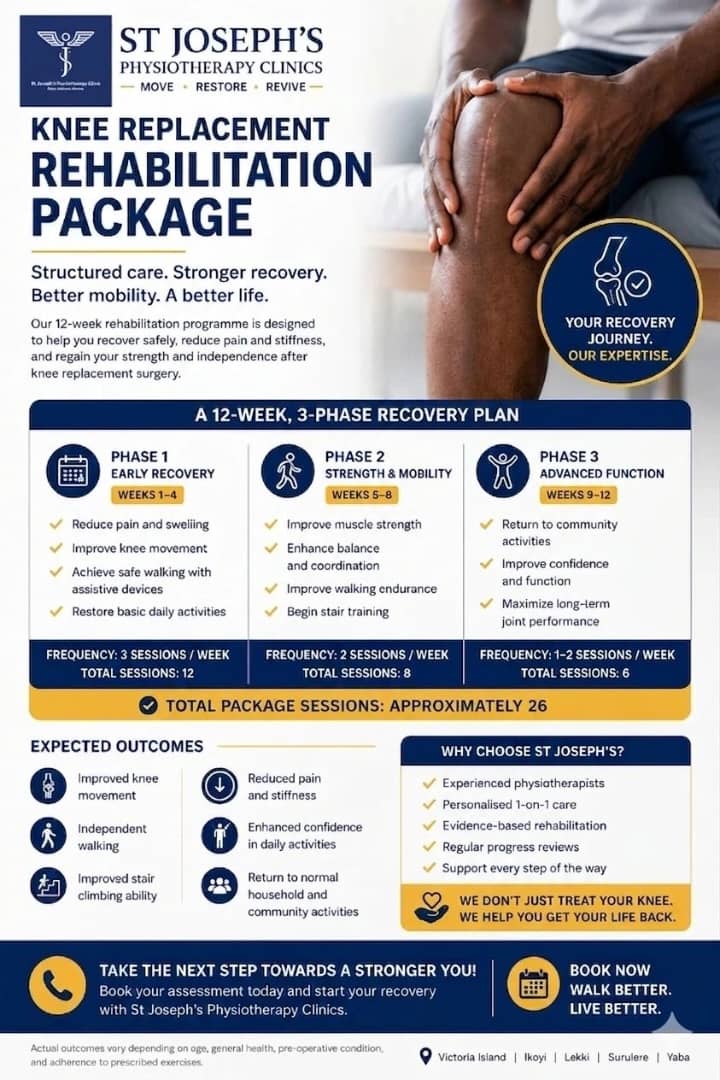
Complete Knee Replacement Rehabilitation Package in Lagos
Knee replacement surgery is a major step toward pain relief and improved mo…

NAMDA threatens strike over unpaid medical lecturers’ allowances
The Nigerian Association of Medical and Dental Academics (NAMDA) has warned…

Resident Doctors Signal End to Strike Threat After High-Level Talks with Gbajabiamila
The threat of a nationwide indefinite strike by the Nigerian Association of…
