What exactly is the Partnership For Advocacy in Child and Family Health (PACFaH) initiative all about?
Partnership for Advocacy in Child and Family Health (PACFaH) is a very unique project that cuts across the continuum of care in child and family care, ranging from routine immunisation all the way down to treatment of childhood killer diseases.
The routine immunisation which is what brings us together is anchored by a Civil Society Organisation (CSO) called Community Health Research (CHR) initiative and they are very instrumental in bringing about what is now called the National Immunisation Finance Task Team.
They were instrumental in convening the meeting where the Executive Director of the National Primary Health Care Development Agency, NPHCDA, initiated this task team and what is the purpose? Nigeria has a huge dependence on partner support and donor support on vaccination, among other things and this task team is determined to find sustainable ways of mobilising domestic resource so that this dependence will wind off gradually.
You may be aware of the fund that has been assisting in procuring vaccines for our people but the richer a country gets, the less qualified it becomes for aid. So, in the next couple of years we (Nigeria) may be losing that status of beneficiary from GAVI, the global Vaccine Alliance created in 2000.
GAVI brings together public and private sectors with the shared goal of creating equal access to new and underused vaccines for children living in the world’s poorest countries.
 Do you think that financing for pneu-monia and diarrhoea was adequately factored into the 2016 Budget?
 I would say the 2016 Budget had a lot more that could have been done. The first thing is that contrary to the provision of the law the National Health Act, NHA, provided for one per cent of consolidated revenue fund of the Federal Government to be compulsorily allocated for health and that money would have gone into primary health care, PHC, where basic illnesses from pneumonia and diarrhoea are treated.
So, the single absence of that fund itself is a clear admission of government side of inadequate funding as prescribed by law, not discretionally but fortunately the Minister of Health and other government agencies are working towards ensuring that the one per cent is included in the 2017 Budget so that the poor financing which is from the target of Abuja Declaration of 15 per cent, is addressed.
What that means is that most health care needs are underfunded. It is even worse for pneumonia and diarrhoea which are second and third biggest killers of Nigerian children under five. Unlike malaria and HIV which have a lot resonance in the press and community, very few are actively aware of the danger that this pneumonia and diarrhoea potent and so we are pushing and asking that the government should increase the resource allocation and also include the awareness that the people have of recognising these.
They have got a policy now that that can help. It is called, ICCMA, Integrated Community Case Management Approach where the issues of malaria, diarrhoea and pneumonia will be managed by community health extension workers, CHEWS, who will be trained and supervised to be able to intervene at the PHC level.
Do you think GAVI should review its position and reconsider Nigeria as one of the countries that will be receiving GAVI assistance?
I think organisations like GAVI is very systematic in their approach; they don’t make decisions based on whims and caprices. They have laid down procedures which are openly advertised. So, the calculation that will determine whether you fall in as a GAVI eligible country is open and even you as a journalist can go and cross check it.
It is about 1,500 to 1,600 dollar per capita. So we heard from the National Bureau of Statistics, NBS, and I think also that Blumberg also confirmed it that our GDP has come down to about $290 billion compared to when it was above $500 billion.
We have to now find out what population figure are we using because when we say per capita it means divided by the total population. So, are we using 160 million; are we using 170 million; are we using 180 million?
The answer to what our per capita income is right now needs to be officially pronounced, either by the Ministry of Finance or Bureau of Statistics or whoever is the government agency that’s in charge of that.
When that pronouncement is made then we can compare it to what the GAVI cut off is which is open on their website. Other things we need to know is that a country has to be at that level for three years before being eligible to come on or go off. However, as an advocate for child and family health, we will appeal that GAVI authority should look at it critically so that the children of Nigeria don’t suffer. There is always a human side to everything.
What steps should the government take to step up funding for immunisation?
I think this is one of the most important steps. It is first to have a clear strategy as to how the government can achieve improved domestic resource mobilisation. With regard to the National Immunisation Finance Task Team, there are several facets to it.
What we are here for today is the advocacy component which is bringing the awareness and evaluating the evidence for intervention and alternative strategy. That’s just one part. There is a technical part which is local production part.
So the first step the government has taken correctly is championed by NPHCDA is setting up this Immunisation Finance Task Team. They have the technical competence to go about it effectively and we should all support their effort by giving them all the publicity they require and by engaging with them to make sure they don’t jump the board along the line.
What is the massage to the Federal Government?
Nigeria should not be a beggar nation. Nigerians have to be more productive and key into “Change Begins with Me”. We have to look inward. Let’s encourage local manufacturing. Manufacturing vaccines health care and health care products are national security issues.
If we quarrel with America or Europe and those products are restricted from coming here we will all be in trouble but we don’t need to wait for that kind of situation. So, Nigerians should look inward in everything including health care and Nigerians should adopt a health-seeking behaviour.
Don’t limit health seeking to yourself; ensure that everyone around you have their children immunised. They are aware where the nearest local health center is and be curious as well as hold the government accountable.
By: Appolonia Adeyemi
New Telegraph News
ABUJA: Training Schedule for Basic Life Support BLS, Pediatric Advanced Life Support (PALS), Advanced Cardiovascular Life Support ACLS, First Aid, CPR, AED
PORTHARCOURT: Training Schedule for Basic Life Support BLS, Pediatric Advanced Life Support (PALS), Advanced Cardiovascular Life Support ACLS, First Aid, CPR, AED
LAGOS: Training Schedule for Basic Life Support BLS, Pediatric Advanced Life Support (PALS), Advanced Cardiovascular Life Support ACLS, First Aid, CPR, AED
STOP paying for airtime and electricity, Let your phone pay its bills with ScreenT
You may also like
Comrade Lemii Christian Emerges Chairman of NANNM Rivers State Branch in Historic Victory
PORT HARCOURT, NIGERIA Following the long awaited National Association of N…

FG Supports Robotic Surgery Expansion to Reduce Medical Tourism
Nigeria is taking another step toward strengthening specialised healthcare …
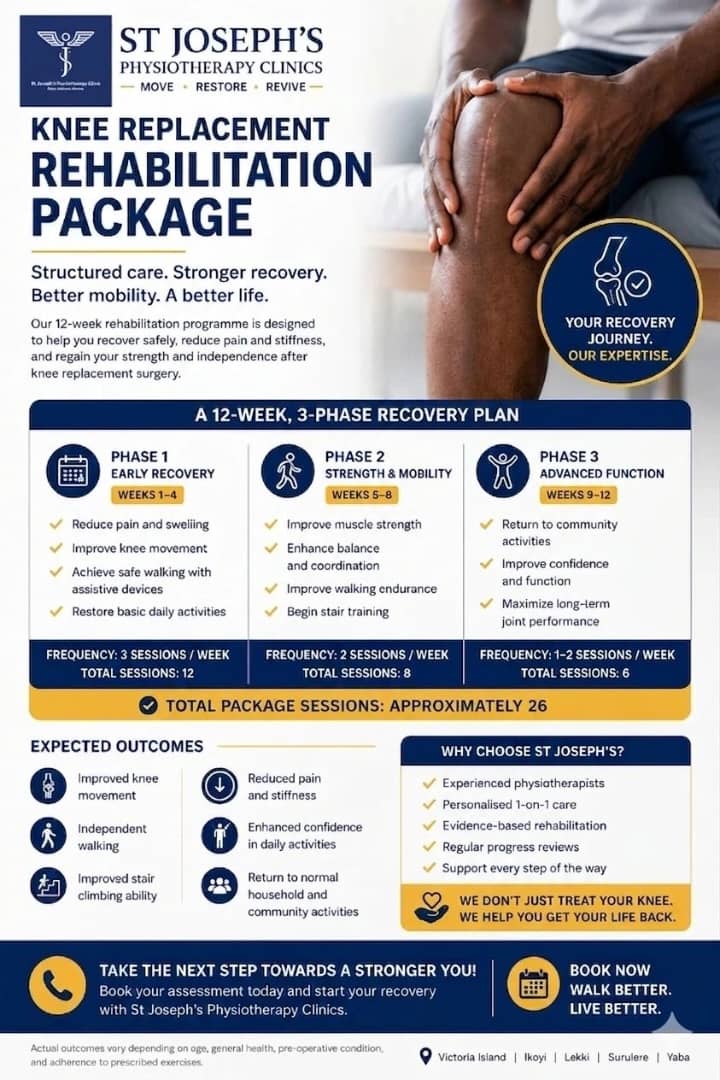
Complete Knee Replacement Rehabilitation Package in Lagos
Knee replacement surgery is a major step toward pain relief and improved mo…

NAMDA threatens strike over unpaid medical lecturers’ allowances
The Nigerian Association of Medical and Dental Academics (NAMDA) has warned…

Resident Doctors Signal End to Strike Threat After High-Level Talks with Gbajabiamila
The threat of a nationwide indefinite strike by the Nigerian Association of…