I have what may be the most common disease among middle-aged and older adults: osteoarthritis. But unlike many similarly afflicted, I don’t take it lying down. And neither should you.
In fact, you and your doctor should be paying more attention to it even before it happens, because if you live long enough, it almost certainly will develop in one or more of your vital joints. There is much you can do to forestall it, minimize its symptoms and overcome the disability that can result.
Even what you eat and don’t eat, as well as whether and how you exercise, can affect your risk of developing arthritis and your ability to cope well despite its effects on your joints.
.jpg) Recent evidence indicates that osteoarthritis is not simply the result of years of wear and tear on the cartilage in important joints like knees and hips. Rather, it may be promoted, and perhaps initially caused, by chronic low-grade inflammation that is now also linked to other major chronic ills, including heart disease and Alzheimer’s disease, in which diet and exercise may play a protective role.
Recent evidence indicates that osteoarthritis is not simply the result of years of wear and tear on the cartilage in important joints like knees and hips. Rather, it may be promoted, and perhaps initially caused, by chronic low-grade inflammation that is now also linked to other major chronic ills, including heart disease and Alzheimer’s disease, in which diet and exercise may play a protective role. One of the biggest mistakes people make with arthritis is to limit movement of the affected joint, which leads to stiffness and weakness that only makes matters worse. The resulting decline in neuromuscular function, especially balance and walking speed, is a major risk factor for falls and fall injuries that too often lead to costly hip replacements and lasting disability.
A national survey in 2012 by the Centers for Disease Control and Prevention found that among people with arthritis, the prevalence of two or more falls during the previous year was 137 percent higher and of fall injuries 149 percent higher than among their age mates without arthritis.
In 2011, osteoarthritis accounted for 95 percent of the 757,000 total knee replacements and 80 percent of the 512,000 total hip replacements in this country, the United States Bone and Joint Initiative has reported.
Much is known about the factors that increase the likelihood of developing arthritis, several of which are related to the way people live their lives. The most important of these — being overweight or obese — bodes ill for the future of millions of American adults, half of whom now weigh a lot more than they should.
“Every extra pound increases the stress across the knee joint three to five times,” Dr. Roland Moskowitz, a rheumatologist at University Hospitals Case Medical Center in Cleveland, told the Nutrition Action Healthletter, published by the Center for Science in the Public Interest, a public advocacy group. “When researchers in Norway tracked more than 1,600 people with healthy knees for 10 years, those who were overweight or obese were two to three times more likely to be diagnosed with osteoarthritis of the knee than those who were normal weight,” the newsletter reported.
Even a very moderate weight loss of 10 or 12 pounds in a person weighing 250 pounds can reduce the pain and disability associated with arthritis.
Joint injuries, as well as surgery, say, to repair a torn meniscus, are another major factor in the development of arthritis. The inflammation that occurs when a joint is damaged in any way may account in part for this relationship. Athletes and others who undergo surgery for a torn meniscus develop arthritis at a rate five to 10 times greater than people spared this operation.
Research in both laboratory animals and people by Dr. William Robinson and Dr. Mark Genovese, specialists in immunology and rheumatology at Stanford University, has suggested that injuries and age-related wear and tear ignite low-grade inflammation that further damages the joints. They are seeking ways to selectively deter the inflammatory effect in the hopes of forestalling further joint damage.
Source: The Punch News
ABUJA: Training Schedule for Basic Life Support BLS, Pediatric Advanced Life Support (PALS), Advanced Cardiovascular Life Support ACLS, First Aid, CPR, AED
PORTHARCOURT: Training Schedule for Basic Life Support BLS, Pediatric Advanced Life Support (PALS), Advanced Cardiovascular Life Support ACLS, First Aid, CPR, AED
LAGOS: Training Schedule for Basic Life Support BLS, Pediatric Advanced Life Support (PALS), Advanced Cardiovascular Life Support ACLS, First Aid, CPR, AED
STOP paying for airtime and electricity, Let your phone pay its bills with ScreenT
You may also like

Comrade Lemii Christian Emerges Chairman of NANNM Rivers State Branch in Historic Victory
PORT HARCOURT, NIGERIA Following the long awaited National Association of N…

FG Supports Robotic Surgery Expansion to Reduce Medical Tourism
Nigeria is taking another step toward strengthening specialised healthcare …
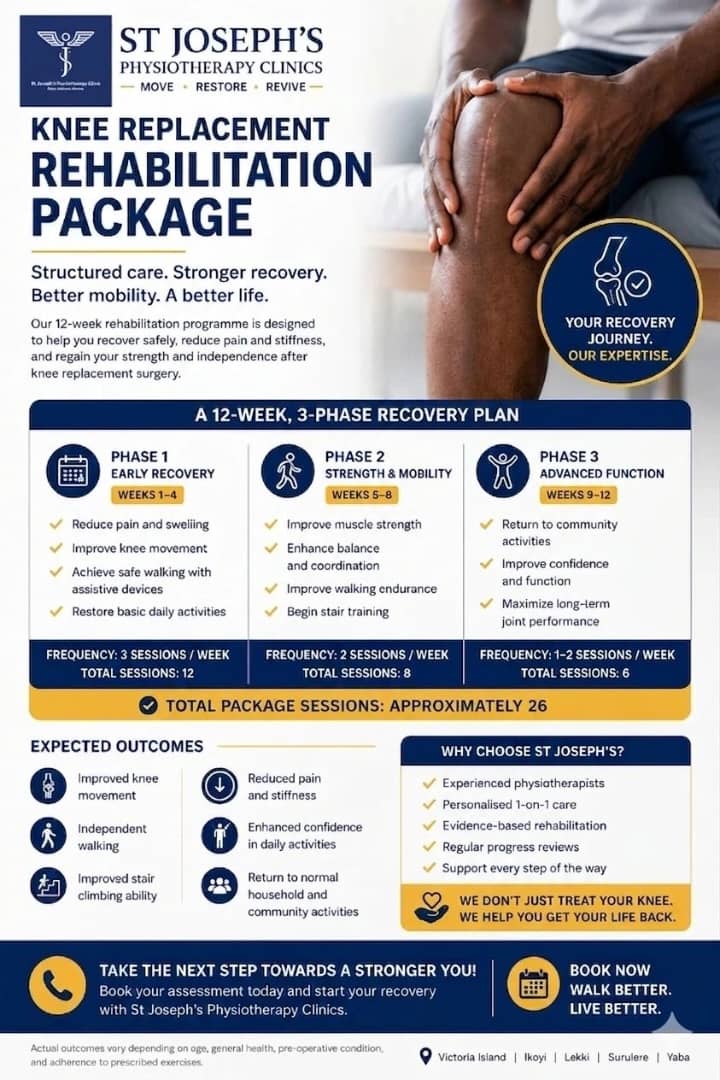
Complete Knee Replacement Rehabilitation Package in Lagos
Knee replacement surgery is a major step toward pain relief and improved mo…

NAMDA threatens strike over unpaid medical lecturers’ allowances
The Nigerian Association of Medical and Dental Academics (NAMDA) has warned…

Resident Doctors Signal End to Strike Threat After High-Level Talks with Gbajabiamila
The threat of a nationwide indefinite strike by the Nigerian Association of…