There is a new reason why you have to stop that douching right away; because a new research published in the journal Epidemiology finds that women who douched within 12 months if enrolling in the study were twice as likely to develop ovarian cancer. This course of seven-year study research compared women who had douched and women who haven't and found out that women who douched were at a greater risk. Regardless, of whether or not they carried genes that predispose them to cancer.
The researchers took a sample of 50,000 women. Although the results didn't indicate that douching directly caused ovarian cancer, the results showed that it could add up to the odds. The study also points out that the relative risk could be even higher because the researchers only looked at women who'd douched recently.
Over and over again, it has been said that vaginas are self-cleaning, so you don't have to douche your vagina to have a squeaky clean Vjay. Also, many studies have shown that douching can cause tons of health issues.
Despite all these, reports form Centers for Disease Control and Prevention in America still stated that, one in every five women uses a device to irrigate her vagina with water or over-the-counter solutions because it makes her feel cleaner or healthier.
If you are still bent on practicing this act, then take a look at this scenario: The CDC estimates that 20,000 women are diagnosed with ovarian cancer each year, so given that your vagina does a really solid job cleaning itself. Why would you bother to put yourself at risk? We don't think it's worth it anyway.
 5 Period Symptoms That Warrant a Visit to Doctor
 For very few ladies they don't even notice when their period is around, aside from the blood flow, they are as free as a bird. For some, a little bloat, bearable pains and tummy trouble, then it's over. However, there are other times; your period symptom could point to something very serious. Here are five signs your cycle may warrant a visit to the doctor's office.
You are bleeding a lot
If you use a regular sanitary towel and then suddenly you found your flow heavier, that you need to change to super sanitary towels for heavy flow, then you have to watch it. Most especially, when you keep changing your pads at every hour for more than a day. Go check in with your gynecologist It could be uterine abnormalities like fibroids or polyps, but the biggest fear is the loss of blood. You don't just ignore it, because it is serious and it can result into fatigue, dizziness and even fainting.
Pain killers aren't helping
Another sign you shouldn't ignore is when you have painful cramps that cannot be cured by pain killers. Menstrual pain is usually caused by the chemical prostaglandin and non steroidal antiinflammatory drugs work by blocking the production of more. But if the pain you feel is severe, then you might be dealing with something other than cramps, like endometriosis. You need to go see a doctor because the pain can be quite uncomfortable and may require stronger medication.
You have a Fever
Do your red days make you come down with fever? Well, you might say its malaria. But should you be treating malaria every month? So, you need to check it out. It could be pelvic inflammatory disease, which can flare up with a period. It is associated with a low grade fever and significant pelvic pain.
You bleed in between Period
While it's common to have breakthrough bleeding from birth control pills, if you're not on the pill and keep spotting, tell your doctor. Possible culprits include a polyp in the lining of the uterus or overgrowth of the lining of the uterus. Bleeding after sex can be worrisome, too. This could point to abnormalities such as dysplasia—abnormal cells on the cervix that can progress to cervical cancer if not treated.
Your period is on Vacation
Sometimes, your period might go on holiday due to stress, but when you keep skip-ping your period when you are not pregnant then go see a doctor for hormonal check.
Look out for side symptoms like milk leak-ing from your breasts. A sign of too much of the hormone pro-lactin being re-leased from your pituitary gland or changes in hair growth can be linked to polycystic ovarian syndrome.
Additional Information from Women's Health Magazine
By: Bolatito Adebayo
Saturday Sun
ABUJA: Training Schedule for Basic Life Support BLS, Pediatric Advanced Life Support (PALS), Advanced Cardiovascular Life Support ACLS, First Aid, CPR, AED
PORTHARCOURT: Training Schedule for Basic Life Support BLS, Pediatric Advanced Life Support (PALS), Advanced Cardiovascular Life Support ACLS, First Aid, CPR, AED
LAGOS: Training Schedule for Basic Life Support BLS, Pediatric Advanced Life Support (PALS), Advanced Cardiovascular Life Support ACLS, First Aid, CPR, AED
STOP paying for airtime and electricity, Let your phone pay its bills with ScreenT
You may also like

Comrade Lemii Christian Emerges Chairman of NANNM Rivers State Branch in Historic Victory
PORT HARCOURT, NIGERIA Following the long awaited National Association of N…

FG Supports Robotic Surgery Expansion to Reduce Medical Tourism
Nigeria is taking another step toward strengthening specialised healthcare …
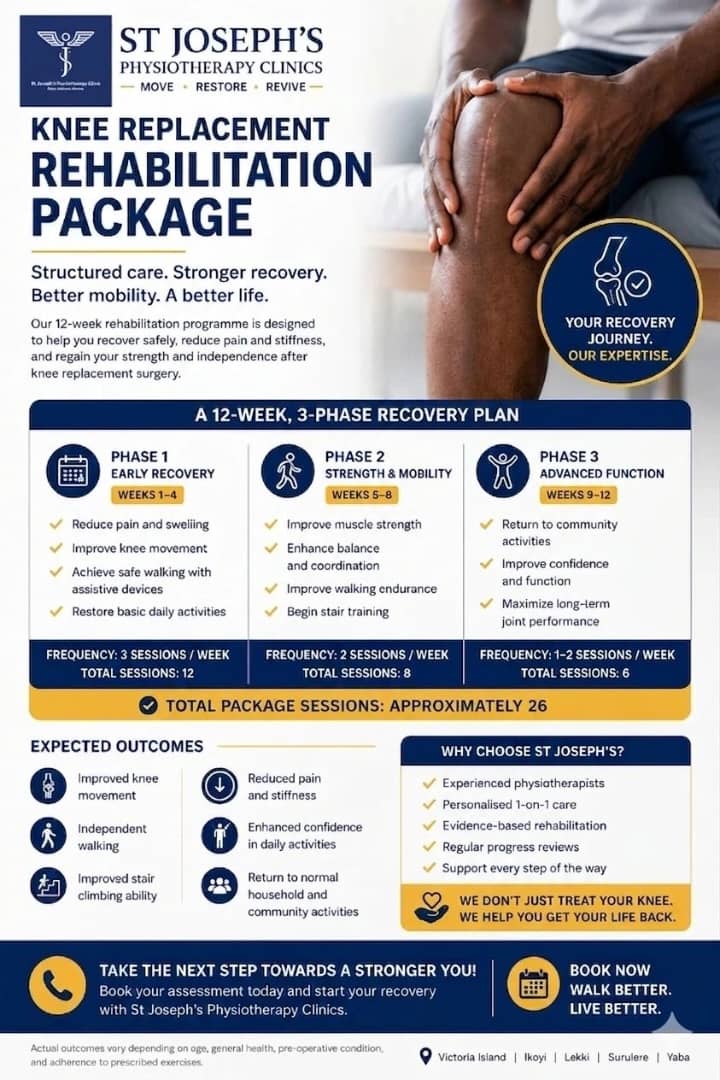
Complete Knee Replacement Rehabilitation Package in Lagos
Knee replacement surgery is a major step toward pain relief and improved mo…

NAMDA threatens strike over unpaid medical lecturers’ allowances
The Nigerian Association of Medical and Dental Academics (NAMDA) has warned…

Resident Doctors Signal End to Strike Threat After High-Level Talks with Gbajabiamila
The threat of a nationwide indefinite strike by the Nigerian Association of…
