. Dr Craig Spencer, 33, who returned to the U.S. six days ago from Guinea, was admitted to Bellevue Hospital on Thursday
. The doctor was taken to the hospital from his home in Harlem after developing an 103F fever and nausea
. Dr Spencer reported feeling sluggish on Tuesday but only developed a temperature on Thursday
. Last night, the doctor, who had been self-monitoring his symptoms, took an Uber cab to a bowling alley in Williamsburg
. His girlfriend is being quarantined as a precaution
. 'Disease detectives' have fanned out to trace the patients' contacts in order to identify anyone who may be potentially at risk
. Rushed to Bellevue Hospital in New York with 103F fever and nausea
A doctor who treated Ebola patients in West Africa and was rushed to a New York City hospital with fever and nausea Thursday has tested positive for the deadly virus.
Dr Craig Spencer, 33, who returned to the U.S. six days ago from Guinea, is the first reported case of Ebola in the most populous city in America. Spencer was admitted to Bellevue Hospital in midtown Manhattan on Thursday and is being cared for in isolation.
New York officials have been making preparations for the possibility for months but some fear the positive test in America's busiest metropolis reveals the nation's continued susceptibility to the growing plague. New York City Mayor Bill de Blasio and Governor Andrew Cuomo assembled at Bellevue Hospital following the the positive test results. 'Today testing confirmed that a patient here in New York City has tested positive or Ebola,' began Mayor de Blasio. The mayor said that being near someone in places like a subway car does not put someone at risk because 'Ebola is an extremely difficult disease to get.'
'Every hospital in the city is prepared in the event other patients come forward,' said de Blasio. Governor Cuomo hit on many of the same points, but admitted this case did not come as a surprise.[We were] hoping that it didn't happen but also realistic,' Cuomo said. 'We can't say this is unexpected.' Governor Cuomo revealed that four people were considered potentially exposed to Dr. Spencer 'during the relevant period.' 'We're already in contact with the four people,' the governor said.
New York City Department of Health Commissioner Dr. Mary Travis Bassett said those contacts are Spencer's girlfriend and his two friends. A fourth was the Uber car driver, who is not considered at risk.
'He did leave his apartment,' Bassett admitted. 'We are aware that he went on a 3-mile jog.' She said Spencer reported that he took three different subway trains--the 1, the A and the L. Dr. Basset also revealed that Spencer went to the Highline elevated park, a popular tourist destination in Manhattan, and 'may have' eaten at a restaurant Wednesday. But the next day, Spencer was taken in an ambulance staffed with a hazmat crew from his home in Harlem after developing an 103F fever, nausea, pain and fatigue. The NYPD were seen cordoning off the street where the doctor lives with his girlfriend, named as Morgan Dixon.
Before Spencer was admitted between 1 p.m. and 2 p.m. local time to Bellevue, the staff spent about three hours shutting off certain areas to isolate the seventh-floor ward where he would be kept, one nurse aide said.
'Anyone would be scared to be next door to a patient. But if we do it the right way there's nothing to be scared of,' said the aide, Kirk Elphage.A woman at the Bellevue information desk identified herself to a staff member as the patient's fianceé. She appeared very agitated and declined to comment. The physician works at Columbia University Medical Center and originally comes from Detroit, Michigan.
He has not treated any patients at Columbia Presbyterian since returning from Africa. 'It is our understanding very few people were in direct contact with him,' Mayor Bill DeBlasio said at a news conference. 'Every protocol has been followed. We're hoping for a good outcome for this individual.' The doctor reported his fever immediately, and Doctors Without Borders said it promptly notified the city health department.
The health department said it was tracing all of the patient's contacts to identify anyone who may be at potential risk. It said the patient had been transported by a specially trained unit wearing protective gear. The doctor's neighbor John Roston told the Daily News that Spencer lived with a girlfriend. Mr Roston added: 'I hope he feels better, I hope it's not Ebola, I hope it's the flu.'Health officials and police officers were fanned out in the area of Spencer's 142nd and Broadway apartment even before the results came in--handing out flyers, knocking on doors and asking neighbors about potential contact with Spencer.
initial news of Spencer's potential infection led the CDC to ready a 'team of specialists for epidemiology, infection control and communications' to travel to New York City on Thursday night, reports the Washington Post. A woman at the Bellevue Hospital information desk identified herself to a staff member as the patient's fianceé. She appeared very agitated and declined to comment. Spencer had been checking in with MSF regularly to monitor his condition however investigators were taking the case seriously because it is not believed that the doctor self-quarantined on his return from Guinea, CNN reported. Spencer flew back through Brussels, Belgium into JFK Aiport in Queens, New York on October 16. The doctor has been out in public and has been providing details of his movements.
 TIMELINE: THE RUN UP TO DR SPENCER'S EBOLA DIAGNOSIS
 Dr Craig Spencer flew to Guinea on September 16 to treat Ebola patients as a member of the French organization Doctors Without Borders (Medecins Sans Frontiers).
On October 16, he flew to Brussels in Belgium, where he stayed the night in a hotel.
He flew in to JFK where he was screened for the deadly virus.
In the last six days we know that he went on a three-mile run around Harlem and spent most of his time with his fiancee at their apartment on 147th St.
On Wednesday, he took the 1 train to the High Line garden bridge, on the west side of Manhattan.
Afterwards, he had lunch at a restaurant.
That night, he took the A train to 14th St-8th Ave. He then transferred to the L train and alighted at Bedford Avenue.
He went to The Gutter bowling alley with his fiancee and two friends before taking an Uber cab home.
On Thursday morning, between 10am and 11am, he contacted the health department to report that he had a fever.
He was then admitted to Bellevue and tested.
At approximately 8.30pm, the tests came back positive.
His girlfriend is being quarantined as a precaution, the network reported.
Dr Spencer reported feeling sluggish on Tuesday but only developed a temperature on Thursday, The New York Times reported.
Last night, he took the subway--most likely including the extremely busy L train--to a bowling alley in Williamsburg, Brooklyn. He took an Uber taxi home.
While it initially remained unclear which bowling alley the doctor visited, Brooklyn Bowl - a 16-lane bowling alley, bar and music venue - confirmed to MailOnline it would open on Thursday night.
An employee at The Gutter declined to reveal to MailOnline whether or not they intended to open their doors on Thursday evening.
The doctor flew to Africa on September 18 to treat patients in Guinea with non-profit organization Doctors Without Borders.
On September 18, Dr Spencer tweeted a picture of himself wearing a full yellow hazmat suit and face mask with the message: 'Off to Guinea with Doctors Without Borders. Please support organizations that are sending support or personnel to West Africa, and help combat one of the worst public health and humanitarian disasters in recent history.'
The NYC Department of Health and Mental Hygiene said on Thursday: 'EMS HAZ-TAC Units transported a patient to Bellevue Hospital who presented a fever and gastrointestinal symptoms. 'The patient is a health care worker who returned to the U.S. within the past 21 days from one of the three countries currently facing the outbreak of this virus. 'The patient was transported by a specially trained HAZ TAC unit wearing Personal Protective Equipment (PPE).'
Bellevue Hospital is the designated center for the isolation and treatment of potential Ebola patients in New York. The health department added: 'New York City is taking all necessary precautions to ensure the health and safety of all New Yorkers. 'Bellevue and the New York State Department of Health will ensure that all staff caring for the patient do so while following the utmost safety guidelines and protocols.' So-called 'disease detectives' will now fan out to trace the patients' contacts in order to identify anyone who may be potentially at risk. Authorities also reassured New Yorkers that the chances of catching Ebola were slim unless a person came in direct contact with a contagious Ebola patient's bodily fluids.
The emergence of a potential Ebola case in New York City came on the same day that the White House announced that Ebola response squads — likened to public health SWAT teams — are being readied to rush to any U.S. city where an Ebola case might be identified. Meanwhile, the government has formed a second set of teams to prepare hospitals in cities deemed most likely to see a new Ebola case, should one turn up. Three of those teams have already been sent out. Health officials this week first shared details about the two sets of health squads.
The teams are 'ready to go — boom — if we have another case of Ebola,' said Dr Jordan Tappero, one of the leaders of CDC's Ebola response effort. The government has been criticized for its handling of the first person diagnosed with Ebola in the U.S. Thomas Eric Duncan, a Liberian, came down with Ebola symptoms last month, a few days after arriving in Dallas from West Africa. He was admitted to a Dallas hospital on September 28 and died on October 8. Duncan's illness and death created public fear as health officials had to track down and monitor scores of people he came in contact with.
No one in the community has been infected, but two nurses who cared for him were. Since then, CDC officials have said they should have sent more people to Dallas when Duncan's case first surfaced — particularly infection control specialists, who could have provided better guidance to the hospital.
Last week, President Obama announced a push for a faster federal reaction. 'We want a rapid response team, a SWAT team essentially, from the CDC to be on the ground as quickly as possible, hopefully within 24 hours, so that they are taking the local hospital step by step though what needs to be done,' he said. Both the U.S. and Spain have recorded deaths from Ebola. In Dallas, a Liberian national died of the virus three weeks ago and two nurses who treated him tested positive for the virus.
At least two Spanish missionaries died in Spain after contracting the disease in West Africa. One Spanish nurse also tested positive for the virus but has been given the all-clear. The US only has four hospitals that have specially-designed bio-containment units, with a total of about a dozen places for highly-infectious or dangerous cases. Once those spaces are filled, any new Ebola patients would have to be treated in regular hospitals, which help from CDC specialists. The virus has killed more than 4,000 people, almost all of them in West Africa, but infections are increasing in the West.
Thomas Eric Duncan, 42, died on October 8, a week after he became the first person diagnosed with Ebola in the U.S., and two weeks after he first sought treatment at Texas Health Presbyterian Hospital in Dallas. Two nurses involved in his care – Nina Pham, 26, and Amber Vinson, 29 – have since been diagnosed with the virus, raising serious questions about the hospital's procedures. The two nurses were moved from Texas Health to specialized hospitals with biocontainment units last week. Miss Pham is in a good condition at the NIH Clinical Center in Bethesda, Maryland and Miss Vinson has tested negative for Ebola at Emory in Atlanta, Georgia. NBC cameraman Ashoka Mukpo, 33, was given the all-clear on Tuesday at Nebraska Medical Center after being diagnosed last month.
WILL NYC BE VISITED BY FIRST EBOLA SWAT TEAM?
The CDC has developed two sets of teams, identified by acronyms CERT and FAST.
The CERTs - CDC Ebola Response Teams - are to be made up of 10 to 20 people each, who can be sent to a hospital immediately after a new case of Ebola is lab-confirmed or even before confirmation, if health officials believe a person is very likely to be infected. They are drawn from a list of roughly 100 CDC workers and others, scattered across the country. No CERT team has been deployed yet but the 20 or so people at the top of the list are on standby, with bags packed.
FAST TEAMS
Three FAST teams were assembled last week. These are smaller, preparatory teams: FAST stands for Facility Assessment and Support Teams. They're involved in checking out hospitals that have volunteered to handle Ebola cases, making sure they are ready to handle everything from the first encounter with a patient to the disposal of Ebola-infected medical waste. The FAST teams have already been sent to New York, Chicago and Washington, D.C, Atlanta and Newark, New Jersey.
OTHER TEAMS
On Sunday, the Pentagon said it's building a 30-person medical support team that could go to help civilian hospitals deal with a future emergence of Ebola. The team is to include 20 critical care nurses, five doctors trained in infectious disease and five trainers in infectious disease protocols.
By LOUISE BOYLE and JAMES NYE and JOSH GARDNER
MAILONLINE
ABUJA: Training Schedule for Basic Life Support BLS, Pediatric Advanced Life Support (PALS), Advanced Cardiovascular Life Support ACLS, First Aid, CPR, AED
PORTHARCOURT: Training Schedule for Basic Life Support BLS, Pediatric Advanced Life Support (PALS), Advanced Cardiovascular Life Support ACLS, First Aid, CPR, AED
LAGOS: Training Schedule for Basic Life Support BLS, Pediatric Advanced Life Support (PALS), Advanced Cardiovascular Life Support ACLS, First Aid, CPR, AED
STOP paying for airtime and electricity, Let your phone pay its bills with ScreenT
You may also like
Comrade Lemii Christian Emerges Chairman of NANNM Rivers State Branch in Historic Victory
PORT HARCOURT, NIGERIA Following the long awaited National Association of N…

FG Supports Robotic Surgery Expansion to Reduce Medical Tourism
Nigeria is taking another step toward strengthening specialised healthcare …
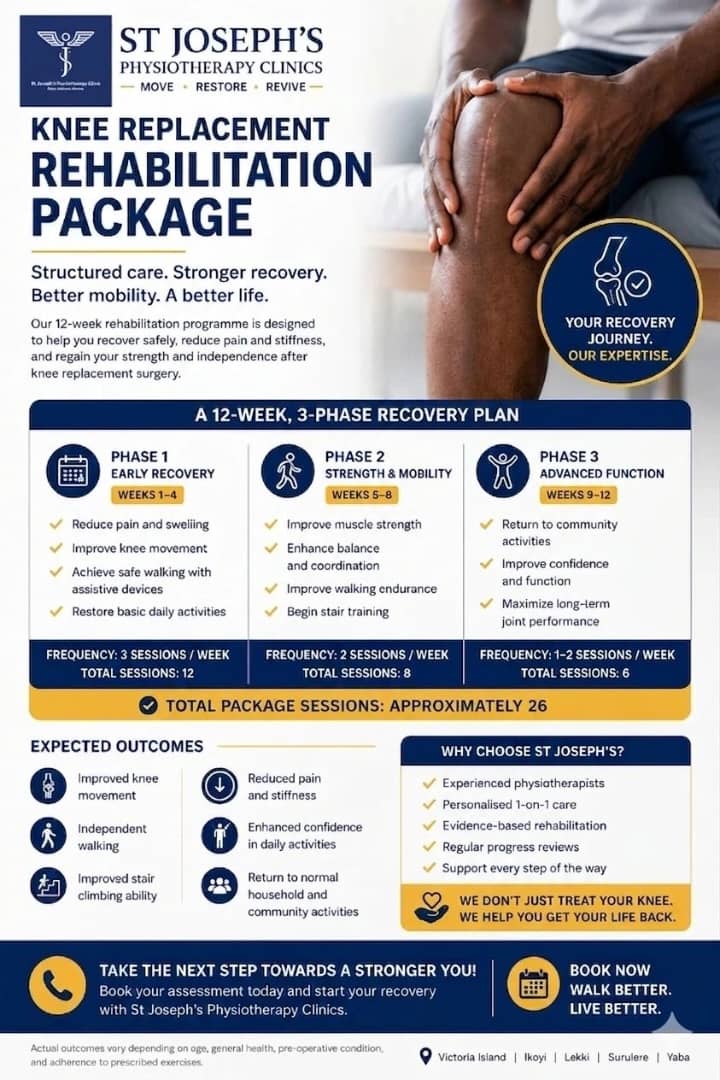
Complete Knee Replacement Rehabilitation Package in Lagos
Knee replacement surgery is a major step toward pain relief and improved mo…
NAMDA threatens strike over unpaid medical lecturers’ allowances
The Nigerian Association of Medical and Dental Academics (NAMDA) has warned…
Resident Doctors Signal End to Strike Threat After High-Level Talks with Gbajabiamila
The threat of a nationwide indefinite strike by the Nigerian Association of…