Dr. Steven Oluwole is the President of the Medical and Dental Consultants Association of Nigeria (MDCAN). In this interview with EMEKA ANUFORO in Abuja, he speaks on the Nigerian healthcare system, Ebola Virus Disease (EVD) containment, among other issues.
Nexus Between Professional and Good Healthcare
MANY thanks for your interest in health care delivery in Nigeria, which as you observed appears to have stagnated in development for decades although it compared with European and North American standards in the 1960s to early 1980s. Health care delivery in India, where many Nigerians now go with unrestrained pride, was nowhere near that of Nigeria even in the mid 1980s. The problems cannot be blamed on policies of the Federal Government and health care financing alone. The unhealthy rivalry and quests for ascendancy by multitude of professional groups in the health team have eroded and fractionated a system that should work in harmony. The primary functions of the health team is now secondary to who controls or head departments, who takes custody of equipments and other needless ventures.
What is MDCAN doing to support the government in ensuring that Nigeria remains Ebola – free?
As you will recall one case of Ebola arrived in Nigeria as it did in the USA. The Nigerian doctors that made the correct diagnosis did practically everything right. But compare with the USA that admitted countless errors in their management, guidelines and protocols, for which the Director of the CDC apologised publicly. The same can be said of Spain, where doctors and nurses held demonstrations against management and government. The MDCAN responded with a set of guidelines that were described by some as 10-point plan.
The response of MDCAN was to prevent some of the errors that plagued USA and Spain, and even the WHO that admitted the need to revise its guidelines. The core focus of MDCAN were: management of cases in designated facilities rather than randomly hospitals. You will observe the error of random management in the USA; rigorous contact tracing. You will observe that WHO and the USA adopted this from Nigeria.
Special transportation of cases. You will observe the errors in the USA. Attention to all body fluids and close contacts, which can occur in crowded buses and other means of transportation. You will observe that WHO has recently appreciated the need to focus on more than just handshakes.
There is no need to close Nigerian airspace, borders, or schools. This is to show that MDCAN and many Nigerian doctors supported and continue to support the effort of the government that was laudable during the outbreak. The swift response of the State and Federal Governments averted disaster. The screening and surveillance efforts should continue, but we must also contribute to helping West African countries that are most affected, and to offer effective and practical public advice to those that are not affected.
Is the appointment of a Surgeon -General still relevant in the health sector?
Less than a week ago the USA debated the need to appoint a Surgeon-General. A previous attempt had failed because of the background of the candidate that was linked to anti-gun campaign. This illustrates that the debate of the need for such a position in Nigeria is not motivated by ego of the medical profession that seeks to dominate other professionals in the health team.
The position of the MDCAN is that appointments to leadership positions in the health team should not be politicised to please any group, but must be competency based to achieve clearly stated objectives. Had the Minister of Health been incompetent to understand basic public health processes, the situation would have been different. The country was saved enormous resources that would have been wasted on committees, monitoring groups, and other irrelevant agencies that were not needed to control the Ebola disease epidemic.
Minister of Health, (Chukwu) just resigned. What area of specialty in the health sector should a new Minister be appointed?
The Ebola crisis epidemic prompted the USA to appoint Ebola-Czar. Nigeria did not appoint one to control the epidemic. This illustrates that the Minister of Health can embody the skills to perform the role of the Czar of epidemics, Chief Medical Officer of the Federal and the Chief Administrator of the Ministry of Health. The scenario illustrated by Professor Chukwu shows that we need to examine the current model that worked well under him.
But, will this always work? I will suggest for now that the next Minister should possess the requisite skills to perform the combined roles, as Professor Chukwu did, until such a time that the understanding of the need to split roles extend beyond the medical profession.
But should the Minister of Health be merely a medical doctor? No! He must minimally possess the following: basic degree in medicine and surgery, postgraduate qualification, not necessarily in public health, skills in public and international health, evidence of administration and leadership skills.
At the personal level such a person must not be ethnocentric towards the medical profession, but able to lead the health team dispassionately.
Members of Joint Health Sector Union (JOHESU) are on the opinion that for peace to reign in the Health Sector, the next Minister of Health should be a none Medical Practitioner? Do you agree with this opinion?
Nigeria needs a Minister of Health to protect the health of the citizens, but not to gratify any association of Union. There is no war in the health team to be pacified by inappropriate appointment.
The MDCAN will suggest to Mr President to ignore the cacophony of self-serving calls to make political rather professional judgement in the appointment of the next Minister of Health.
WHO on recently issued Nigeria an Ebola free Certificate. Do you think Nigeria in all ramifications is prepared to confront the disease if it breaks out again?
You have to appreciate that the first eradication was not an accident of history. The protocols and guidelines used, are not only applauded, but are being copied by the USA, Europeans, and the WHO. They are currently the benchmarks for control of Ebola virus disease. What we should focus on is prevent new cases coming into Nigeria.
The Guardian
ABUJA: Training Schedule for Basic Life Support BLS, Pediatric Advanced Life Support (PALS), Advanced Cardiovascular Life Support ACLS, First Aid, CPR, AED
PORTHARCOURT: Training Schedule for Basic Life Support BLS, Pediatric Advanced Life Support (PALS), Advanced Cardiovascular Life Support ACLS, First Aid, CPR, AED
LAGOS: Training Schedule for Basic Life Support BLS, Pediatric Advanced Life Support (PALS), Advanced Cardiovascular Life Support ACLS, First Aid, CPR, AED
STOP paying for airtime and electricity, Let your phone pay its bills with ScreenT
You may also like
Comrade Lemii Christian Emerges Chairman of NANNM Rivers State Branch in Historic Victory
PORT HARCOURT, NIGERIA Following the long awaited National Association of N…

FG Supports Robotic Surgery Expansion to Reduce Medical Tourism
Nigeria is taking another step toward strengthening specialised healthcare …
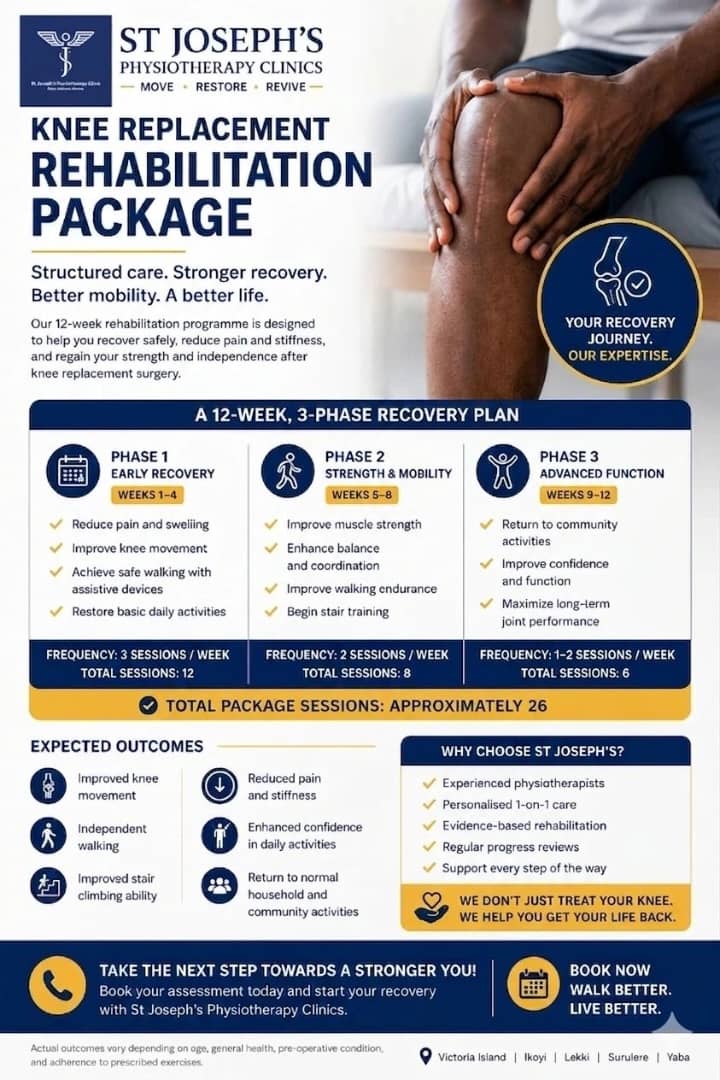
Complete Knee Replacement Rehabilitation Package in Lagos
Knee replacement surgery is a major step toward pain relief and improved mo…

NAMDA threatens strike over unpaid medical lecturers’ allowances
The Nigerian Association of Medical and Dental Academics (NAMDA) has warned…

Resident Doctors Signal End to Strike Threat After High-Level Talks with Gbajabiamila
The threat of a nationwide indefinite strike by the Nigerian Association of…