Some medical experts on Thursday called for aggressive enlightenment of Nigerians on the need to cultivate the habit of donating blood to save the lives of many accident victims.
They spoke on the sidelines of a two-day Biomedical Science Day and free medical tests organised by the Association of Laboratory Scientists of Nigeria, of the National Orthopaedic Hospital, Igbobi, Lagos branch.
In her remarks, Mrs Catherine Ogunlade, a medical scientist at the hospital, said that more people should be involved in blood donation, because it saves lives.
“Nigerians do not really buy the idea of voluntary blood donation until when they have someone in dire need of blood.
“We, medical scientists, have been encouraging Nigerians, through many avenues that blood donation to a government hospital can be done for future reference.
“We save lives by donating blood and it does not come with any negative implication. It is lack of education to assume that it has implications,’’ she said.
 Ogunlade said that after blood donation, the system has a way of replenishing itself, adding that donors would undergo a status check before they could donate blood.
 “The test carried out will ascertain if a donor can donate or not. If the blood level is low, such a person will not be able to donate, but if in excess, he can donate,’’ she said.
Also speaking, another medical laboratory scientist, Mr Chris Ubi, said that the orthopaedic hospital, as a trauma centre, was always demanding for more blood in the bank, to shore up its services.
“This is a trauma centre and a specialist place which means all over the 36 states of the federation, this is where they bring a lot of accident victims in critical conditions.
“This is why we are emphasising that people should come here and donate blood. Accident victims come here from the far North, for treatment.
“Sometimes, those victims need about three pants of blood, and some even 10. We are appealing to the public to help save some lives through voluntary donations,’’ he said.
A blood donor, Mr Babatunde Adesanya, said that it was a pleasure for him to donate blood to those in need, without any incentive.
“I feel fulfilled donating today although, this is not my first time.
“I enjoy doing it and I advise people to also cultivate the habit of donating their excess blood.
“It is not harmful or stressful, it has its own advantages too,’’ Adesanya, who is also a computer engineer, said.
Commenting on the free health screening, Mrs Dorothy Obiaju, in charge of biometric data and blood pressure, said that from available statistics, the number of people with issues of overweight were much higher.
“More people are overweight and have high blood pressure; this is due to the diet regimen. Diets and lifestyles contribute a lot to being overweight.
“These days, many people do not want to engage in farming or active work, everybody wants to sit idle, using automated machines for their work.
“At home, they use washing machines, dish washers, stay in air-conditioned houses, air-conditioned cars and air-conditioned offices.
“With all these conveniences, people keep on accumulating fat without a way of burning it, and the fat affects their hearts directly,’’ she said.
Also, Mrs Olubunmi Adegbite, a nurse at the National Orthopaedic Hospital, Igbobi, said that from available statistics, the number of hypertension cases are also on the increase.
“We only have few cases of people with hypertension, but not as much as those that are free from it,’’ she said.
One of beneficiaries, Mr Rasheed Ogunyemi, said that he was happy to attend the screening, to know his health status, especially in respect of malaria and blood pressure.
Another beneficiary, Mr Morufu Ganiyu, an artisan, who lives in Somolu, said, “This is a laudable programme. I wish everybody should benefit from it.’’
In her remark, Mrs Kemi Oladipo, narrating her experience, commended the organisers of the programme and asked for more regular screenings exercises. (NAN)
Source: Leadership News
ABUJA: Training Schedule for Basic Life Support BLS, Pediatric Advanced Life Support (PALS), Advanced Cardiovascular Life Support ACLS, First Aid, CPR, AED
PORTHARCOURT: Training Schedule for Basic Life Support BLS, Pediatric Advanced Life Support (PALS), Advanced Cardiovascular Life Support ACLS, First Aid, CPR, AED
LAGOS: Training Schedule for Basic Life Support BLS, Pediatric Advanced Life Support (PALS), Advanced Cardiovascular Life Support ACLS, First Aid, CPR, AED
STOP paying for airtime and electricity, Let your phone pay its bills with ScreenT
You may also like
Comrade Lemii Christian Emerges Chairman of NANNM Rivers State Branch in Historic Victory
PORT HARCOURT, NIGERIA Following the long awaited National Association of N…

FG Supports Robotic Surgery Expansion to Reduce Medical Tourism
Nigeria is taking another step toward strengthening specialised healthcare …
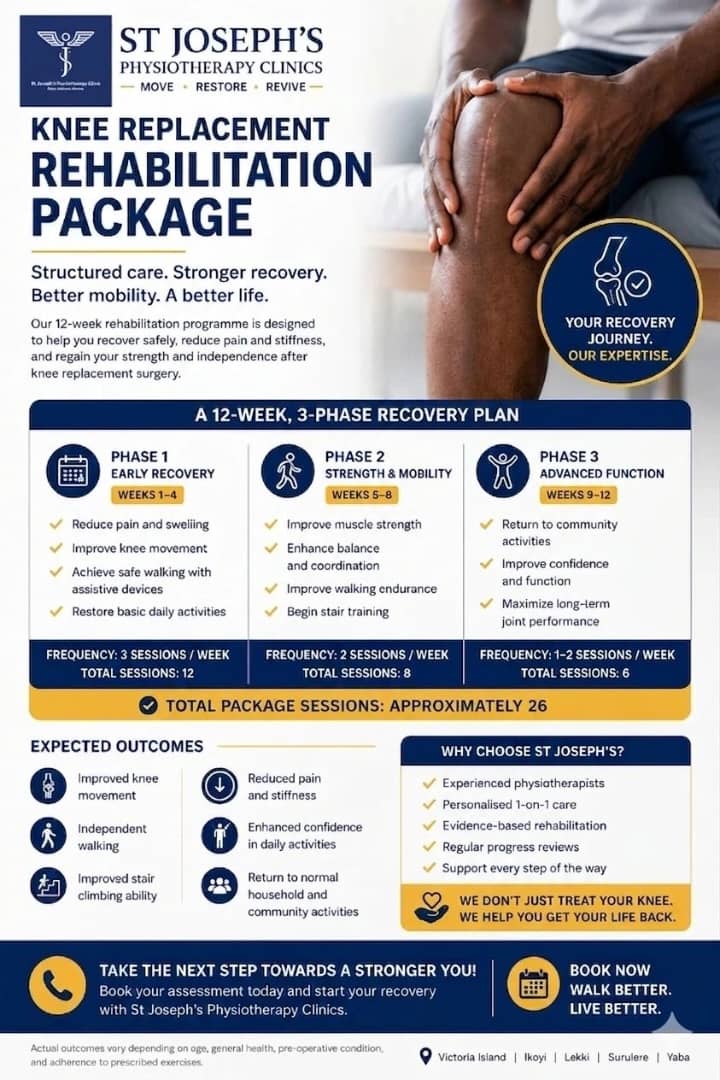
Complete Knee Replacement Rehabilitation Package in Lagos
Knee replacement surgery is a major step toward pain relief and improved mo…
NAMDA threatens strike over unpaid medical lecturers’ allowances
The Nigerian Association of Medical and Dental Academics (NAMDA) has warned…
Resident Doctors Signal End to Strike Threat After High-Level Talks with Gbajabiamila
The threat of a nationwide indefinite strike by the Nigerian Association of…