WOMEN WHO HAVE EXCESS HAIR ON THE UPPER LIP
Many women have been concerned about excess hair at one time or another - in fact, it ranks just behind weight gain for body dissatisfaction. It is estimated that one in ten females suffer from excess facial and body hair so what exactly causes it?
Dr Rina Davison, an endocrinologist from Whipps Cross University Hospital, London, with a special interest in excess hair, says Polycystic Ovaries Syndrome (PCOS) is the main cause of excess hair in women and is estimated to affect 10 to 15 per cent of them. With PCOS, the ovaries don't work properly and are covered in small cysts. As a result, eggs are released erratically or not at all, causing irregular or missed periods, and often reduced fertility and acne. One of the most common symptoms is a high level of male hormones (androgens), which leads to hair growth.
.PNG) All women produce androgens. However, sometimes women produce higher levels, or they may have normal levels, but their hair follicles are more sensitive to androgens. One in 10 females are estimated to suffer from excess facial and body hair, according to a recent survey. It is often caused by Polycystic Ovaries Syndrome, where the ovaries don't work properly. 'If excess hair is due to a hormonal imbalance, then it tends to occur in areas such as the chin, upper lip, sideburns, chest and inner thighs,' said Dr Davison. 'These are areas of the skin that are more sensitive to testosterone. The hair is also likely to be coarse and dark.'
All women produce androgens. However, sometimes women produce higher levels, or they may have normal levels, but their hair follicles are more sensitive to androgens. One in 10 females are estimated to suffer from excess facial and body hair, according to a recent survey. It is often caused by Polycystic Ovaries Syndrome, where the ovaries don't work properly. 'If excess hair is due to a hormonal imbalance, then it tends to occur in areas such as the chin, upper lip, sideburns, chest and inner thighs,' said Dr Davison. 'These are areas of the skin that are more sensitive to testosterone. The hair is also likely to be coarse and dark.' Given the implications for fertility, women worried about excess hair should see their GP, advises Steve Franks, professor of reproductive endocrinology at Imperial College, London and an endocrinologist at St Mary's and Hammersmith Hospitals, London. 'There may be other problems to investigate,' he suggests. 'Often, excess hair is a symptom of PCOS, but it also can be indicative of less common, but potentially more serious, hormonal disorders, or tumours of the ovary or adrenal gland - the two parts of the body that produce testosterone. 'Many, if not most, GPs will take the problem seriously and refer to an endocrinologist if appropriate.
'Women should not be afraid to ask for a referral to a specialist.' The alarm bells should ring for a GP if a woman comes in with a growth of facial hair that has developed within the past six months, he adds.
DANDRUFF
We've all taken a sly look at our shoulders, especially while wearing a dark top or suit, to check for any unsightly snow showers on our shoulders. Most people will experience dandruff at some point in their lives with typical flare-ups caused by anything from stress to washing your hair either too little or too often.
Dandruff is caused when the natural cycle of skin renewal is speeded up. This leads to patches of dead skin forming on the surface of the scalp, which come away into the hair, resulting in the flaking. The most common type of dandruff is 'pityriasis' which is a relatively common skin condition.
Scalp skin shedding becomes noticeable when there is an imbalance of bacteria on your scalp, or if you are not washing your hair often enough. Our skin is covered in bacteria and skin secretions, sweat and sebum, usually form a protective layer that prevents bacteria from multiplying on your scalp. But illness, stress, hormone changes and diet can alter the barrier's make-up which allows bacteria to reproduce, leading to flake-shedding.
'It's a highly embarrassing problem,' said Dr Daron Seukeran. 'But can be quite easily treated with a tar-based shampoo or the likes of Head and Shoulders are effective for some. 'In some patients it continues to persist and there's more to it - like psoriasis, eczema and fungal conditions can contribute towards scaling. 'There are different over the counter shampoos that can help and are well worth a try. But if the problems persist, then visit your GP.'
SWEATING
Humans are the smallest animals that sweat and, as with other species, it is the body's natural way of cooling down. But unlike animals, unsightly wet patches under the arms - or perspiration dripping from our forehead - can be an embarrassing problem we'd all rather avoid. According to Professor Mark Whiteley, a consultant vascular Surgeon at The Whiteley Clinic, London, the problem - and therefore solution - is often very simple.
A leading expert in excessive sweating, known medically as hyperhidrosis, he says the culprit might be right under your nose - drinking too much water. In fact, he says this is the leading cause of too much perspiration. 'You should ask are you drinking out of habit or because you are thirsty?' he says. 'There are companies that charge money to buy water and say you have to drink two or three litres a day when you don't need it. 'If you read medical books or ask a doctor you need two litres a day - and half of that comes through food. 'You have normal, healthy people who are eating well but because someone has told them they need water, they're having four to five litres a day. 'Most people only need to drink a litre of water a day.
He adds that a good way of checking if you are drinking the right amount of water is by checking your urine colour. If it is dark yellow, you're not drinking enough, if there's no colour, not enough - with light yellow the benchmark for perfect pee. However, some cases of hyperhidrosis can arise from medical reasons and can be triggered by factors like the menopause. People who go to the gym a lot also tend to sweat - even while not exercising - as the body is used to having to cool itself down. It can also occur in people who take antidepressants as well as illegal drug use such as cocaine and steroids.
However, Professor Whiteley says there are people who suffer from hyperhidrosis which is not linked to their fluid intake, who will require treatment beyond cutting down on liquids. It is normal to sweat in heat when exercising, or in stressful situations, he said. Usually people in these situations sweat all over the body. But some people are ‘wired differently’ meaning they sweat the same volume, but it is concentrated in one area, usually the armpits or the groin, Professor Whiteley explained. They may also experience sweating in situations when most people wouldn’t, such as watching television or walking down the street.
‘That’s socially very embarrassing, and so they seek treatment,’ he said.
Hyperhidrosis affects men and women equally, he said, although women find it more of a problem. It can be caused by stress, a high-protein diet, or some people might react to over the counter medicines and begin to sweat in a certain area of their body. Professor Whiteley says he advises cutting fluid intake, trying to relax and reduce stress, stopping any over the counter medication that the person has started taking recently and using spray or roll on deodorants for the problem. If all of these avenues have been exhausted, and the person still has a problem with sweating, he will suggest a treatment such as Botox injections to the armpits, which temporarily stop the sweat glands producing sweat. For the most severe cases, he recommends Laser Sweat Ablation surgery, which removes most of the sweat glands completely. He says he turns down four out of five people who seek the Laser Sweat Ablation surgery, but for some people with severe hyperhidrosis, it can be an appropriate treatment.
BODY ODOUR
Bromhidrosis or 'body odour' is a medical condition characterised by the skin giving off an unpleasant or even offensive smell. When it is severe, it can be a very socially debilitating problem that is often not very well understood by those people who do not suffer from it. Rather than being caused by a lack of hygiene, sufferers can omit an unpleasant odour even when they have just washed. Body odour mainly comes from the apocrine glands - which are mainly found in hairy areas of the body, such as the armpits and genital area; apocrine glands develop during puberty and release scented chemicals called pheromones. However, it's the apocrine glands that are mainly responsible for body odour, because the sweat they produce contains high levels of protein, which bacteria find easy to break down. People who sweat excessively from their apocrine glands, or have a lot of bacteria on their skin, tend to have worse body odour.
The unpleasant odour is produced by bacteria on the skin that break down the sweat into acids. Professor Mark Whiteley said: 'When people say they sweat too much it can either be hyperhidrosis or bromhidrosis, which is the smelly stuff. 'Usually it's one or the other but some people are unlucky enough to have both.' He adds there is a lot of misinformation about bromhidrosis and body odour, with many people thinking that it is due to being 'dirty' or not washing properly.
True bromhidrosis or body odour starts when a person reaches puberty and continues through their reproductive life until menopause. Regular washing, changing of clothes and using deodorants are all recommended to keep bacteria at bay and in very severe cases of, surgery or treatment with Botox may be possible options.
INCONTINENCE
Though few discuss the subject even with their closest friends, around half of all women suffer from a dysfunctional bladder at some point. There are two main types of incontinence — an overactive bladder and stress incontinence. Normally when the bladder has filled to its capacity of around 400 ml, a signal is sent to the brain telling it to empty.
Women with an overactive bladder feel the urge to go before the bladder is full. Around one in five women over the age of 40 is affected. An overactive bladder can cause a range of problems, including urinary frequency, nocturia (needing the lavatory at night), urgency and urge incontinence (feeling you only just make it to the loo in time, or even getting ‘caught short’). Patients with stress incontinence leak urine when they laugh, run, sneeze or cough — this is triggered by weakening of the muscles supporting the bladder, which can happen in pregnancy and childbirth.
This makes up 50 per cent of all incontinence cases, although a large number of women have both stress incontinence and an overactive bladder. The most common cause of stress incontinence is weakness of the pelvic floor muscles that support the base of the bladder. Overstretching and damage to the muscles during childbirth is often to blame, and women who have long labours, big babies or forceps deliveries are at particular risk. Many new mothers have some stress incontinence, but this often then improves, and then makes an unwelcome re-appearance many years later. Toning up the muscles with pelvic floor exercises can often bring about a dramatic improvement. Losing weight or avoiding substances that inflame the bladder, such as cigarettes and caffeine, can make a big difference. A 10 per cent loss in weight can give a 50 per cent improvement in incontinence symptoms. But if these won’t help, doctors can offer a range of treatments on the NHS or privately.
Drugs for an an overactive bladder include anti-cholinergic drugs to strengthen the sphincter - the muscles supporting the bladder — reducing the urgency, frequency and number of leaks. Botox injections, where small doses of botulinum toxin is injected into the bladder, paralysing the bladder muscle so it doesn’t contract so readily, is being offered privately.
Surgeons are now using nerve stimulation to tackle incontinence with the most common procedure to implant an electrode and stimulator permanently in the back, close to the sacral nerve - which runs through the lower back to the bladder and helps to control the bladder. It’s thought stimulating the nerve may reduce the faulty signals from the brain that cause the bladder to empty. For stress incontinence, pelvic floor exercises are the most recommended which can be very effective when done correctly.
SMELLY FEET
There are about 250,000 sweat glands in your feet, so it should come as little surprise that they sweat more than other parts of the body. When this becomes a particular problem is when feet start to smell. Smelly feet are caused by bacteria on the skin which breaks down the sweat producing the smell. Just to add to the difficulties of being a teenager, those over-active hormones raging round the body can be a leading cause. However, according to the Society of Chiropodists and Podiatrists (SCP) another cause of sweaty feet is stress on the foot.
This could be because the bones in your feet are not aligned properly or maybe if you have just been on your feet all day. Your sweat glands also respond to emotional, mental or physical stress so upheavals or stress in your life could also be triggering your sweaty feet. It might sound obvious but a daily foot care routine is an excellent way to get rid of any unwanted whiffs. Washing feet with anti-bacterial soap will help keep your feet smelling of roses as it combats the bacteria which causes foot odour. However you should avoid soaking them as this could destroy their natural oils.
Always dry them thoroughly, especially between the toes, to avoid getting athletes foot - a fungal infection which can cause foot itching, burning, pain, and scaling as well as unwanted odour. Hard skin on your feet should be removed with pumice stone once a week. If the skin is very hard or painful, make an appointment to see a chiropodist in case it could be corns.
When your feet are completely dry, apply a moisturising cream all over the foot but avoid going between the toes, again to discourage athletes foot. If this doesn't work, a foot deodorant or even ordinary deodorant can be a great way of stopping the stink.
ACNE
Acne can be caused by any number of factors but it is a myth that one of them is bad hygiene. It is usually a result of excess oil production called sebum which can block the sebaceous glands and ducts, leading to inflammation. This allows for the overgrowth of bacteria normally found on skin, Propionibacterium acnes - or P. acnes - which produce irritating chemical substances that further fuel the inflammation. Dead skin cells cannot be shed properly which then block the openings to the hair follicles. The sebaceous glands enlarge, forming a spot or pimple.
Dr Daron Seukeran, a consultant dermatologist at James Cook University Hospital, Middlesborough, said it typically occurred at a 'It affects youngsters at a very difficult time and can have a really significant psychological impact,' he said. 'One of the concerns is that if it's not dealt with properly, they can have years of suffering.' Dr Serukeran said there are various treatments for acne, depending on how severe it is.
For mild acne, a doctor may recommend treatment with a non-prescription medication that contains benzoyl peroxide. 'It will reduce the inflammation and dry up the spots,' he said. 'You can also use topical antibiotics which can be prescribed by your GP. 'The problem is, for some people with particularly bad acne, topical treatment isn't enough and they need an antibiotic. 'With these, you are often taking them for four months to get the response that's required which is why people sometimes give up but they shouldn't. They don't just beat the infection but are anti-inflammatory as well.' If these treatments don't work, the final referral is likely to be a dermatologist at a hospital, who are able to prescribe more powerful drugs to suppress oil production. 'The majority of patients will be in their teens but I have seen children as young as eight and nine that can have acne,' said Dr Seukeran. 'There's also late onset acne in people aged over 25 who get it for the first time. They are often the patients that require specialist intervention.
. Association for Continence Advice (ACA) - membership organisation for health and social care professionals concerned with the progression of care for continence
By KATE PICKLES
Dailymail
ABUJA: Training Schedule for Basic Life Support BLS, Pediatric Advanced Life Support (PALS), Advanced Cardiovascular Life Support ACLS, First Aid, CPR, AED
PORTHARCOURT: Training Schedule for Basic Life Support BLS, Pediatric Advanced Life Support (PALS), Advanced Cardiovascular Life Support ACLS, First Aid, CPR, AED
LAGOS: Training Schedule for Basic Life Support BLS, Pediatric Advanced Life Support (PALS), Advanced Cardiovascular Life Support ACLS, First Aid, CPR, AED
STOP paying for airtime and electricity, Let your phone pay its bills with ScreenT
You may also like

Comrade Lemii Christian Emerges Chairman of NANNM Rivers State Branch in Historic Victory
PORT HARCOURT, NIGERIA Following the long awaited National Association of N…

FG Supports Robotic Surgery Expansion to Reduce Medical Tourism
Nigeria is taking another step toward strengthening specialised healthcare …
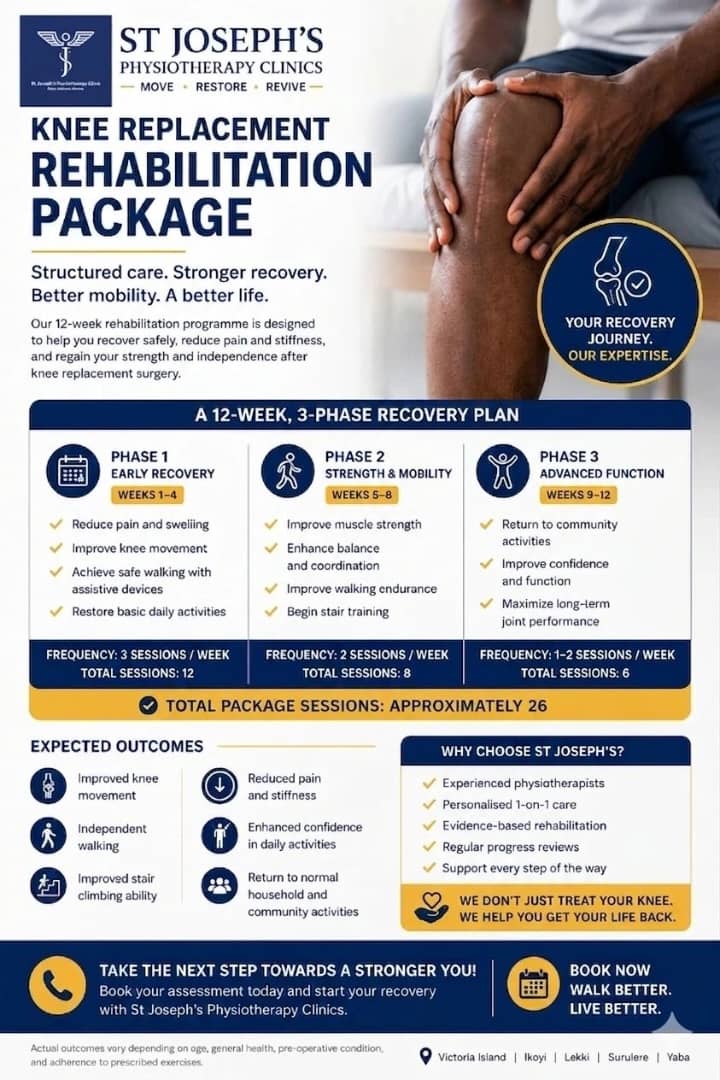
Complete Knee Replacement Rehabilitation Package in Lagos
Knee replacement surgery is a major step toward pain relief and improved mo…

NAMDA threatens strike over unpaid medical lecturers’ allowances
The Nigerian Association of Medical and Dental Academics (NAMDA) has warned…

Resident Doctors Signal End to Strike Threat After High-Level Talks with Gbajabiamila
The threat of a nationwide indefinite strike by the Nigerian Association of…