According, to Nasidi, the drug will be in use for the treatment of patients infected with the Ebola Virus Disease.
The NCDC boss, who stated this at the EVD stakeholders meeting organised by the Nigerian Academy of Science in Lagos on Tuesday, said the serum would be available for clinical trial and evaluation by July.
The serum, he added, would boost the antibodies of Ebola infected patients to enable them to fight the virus.
The EbolaTAB is being developed by scientists at the Oxford University; a UK pharmaceutical group, Micropharm company; Public Health England, and Nigerian scientists at the NCDC.
Nasidi said, “EbolaTAB is an antibody that we are working on at Oxford to help treat patients with the Ebola Virus Disease. The serum is like the Zmapp that works to boost the antibodies of the patients. We are getting positive results.
“We developed a similar serum for the treatment of snake bites and venom and we recorded a 60 per cent success rate when the serum was used. We are using a similar mechanism for the EbolaTAB.
‘We are hopeful that by July, it would be possible to start using the serum on compassionate grounds for Ebola patients and carry out quality control assessment of the drug on a larger scale. We are also hoping that Nigerians and other African scientists can champion more research to get the solution to EVD, instead of waiting for the results of other foreign research.”
Calling for improved funding, the NAS President, Prof. Oyewale Tomori, said it was high time, the Nigerian government committed resources that would boost medical research on infectious diseases tormenting Africans.
According to him, the government has been underfunding medical research in the last four decades, a situation that could expose Nigerians to emerging diseases.
Tomori said, “It is unfortunate that research funding is still at the level it was when I started mine in the 70s. The government is not interested in medical research. We are a consuming nation.We do not want to pay for research but we are ready to enjoy the result of other people’s research.
“But Nigeria can no longer afford to sleep or wait for foreign agencies to sponsor local research because the dynamics of research are changing. The Ebola outbreak has showed that a nation that does not come up with solution is exposed to danger.”
The virologist urged the government and its agencies to re-invigorate their surveillance to ensure that the virus does not re surface in the country.

According to Tomori, as long as there is a case of Ebola in the world, every Nigerian is at risk of contracting the virus.
“We are not out of the woods yet. Relevant agencies must keep up with internal surveillance at both the air and land borders. This the price we have to pay to ensure that the virus does not resurface. There is the need to handle every case of fever with suspicion. A single case of an infectious disease that is not contained can lead to an epidemic.
“We must do it for polio, which we have not yet eradicated in spite of the information in the public domain. The Ministry of Agriculture should use the same strategy that that of health used to contain EVD to tackle Avian flu outbreak in the country. However, for now, no human case of Avian flu infection has been recorded.” he added.
In his presentation titled, “ When Ebola Came: The Initial steps” the Chief Medical Director, First Consultant Hospitals, the centre where the first case of EVD was recorded in Nigeria, Dr. Benjamin Ohiaeri, urged managers of hospitals to endeavour to put disease detection and infection control measures in place.
Ohiaeri said though the hospital lost two doctors, including Stella Adadevoh and two nurses to EVD, the mortality and infection rates would have been higher, if its management had not taken the right steps to isolate the index case, Patrick Sawyer.
Ohiaeri added, “When Sawyer came in, he was being treated for malaria fever. He was not showing any of the sign and symptoms of Ebola at the time. He also denied that he had contact with an infected person. But the late Adadevoh insisted that we isolate him when he was not showing any improvement two days after we had admitted him.
“He also refused and threatened to sue us if we did not discharge him. He kept citing his rights as a patient to either take or refuse treatment. It was a time of panic for us because, here we were with a patient that was highly educated, a diplomat, who knew his rights and we could have been liable since we had not got a laboratory result but we relied on our clinical diagnosis.
“In spite of the threat of a legal action, even when we knew it would hurt the hospital, we did what was necessary to avert a disaster and contacted both the federal and state authorities.
“If we had not isolated him, if we did not review his case and just treated him like another patient with malaria, it could have been too late to contain the outbreak even after it was confirmed that he had EVD.”
BY BUKOLA ADEBAYO
ABUJA: Training Schedule for Basic Life Support BLS, Pediatric Advanced Life Support (PALS), Advanced Cardiovascular Life Support ACLS, First Aid, CPR, AED
PORTHARCOURT: Training Schedule for Basic Life Support BLS, Pediatric Advanced Life Support (PALS), Advanced Cardiovascular Life Support ACLS, First Aid, CPR, AED
LAGOS: Training Schedule for Basic Life Support BLS, Pediatric Advanced Life Support (PALS), Advanced Cardiovascular Life Support ACLS, First Aid, CPR, AED
STOP paying for airtime and electricity, Let your phone pay its bills with ScreenT
You may also like
Comrade Lemii Christian Emerges Chairman of NANNM Rivers State Branch in Historic Victory
PORT HARCOURT, NIGERIA Following the long awaited National Association of N…

FG Supports Robotic Surgery Expansion to Reduce Medical Tourism
Nigeria is taking another step toward strengthening specialised healthcare …
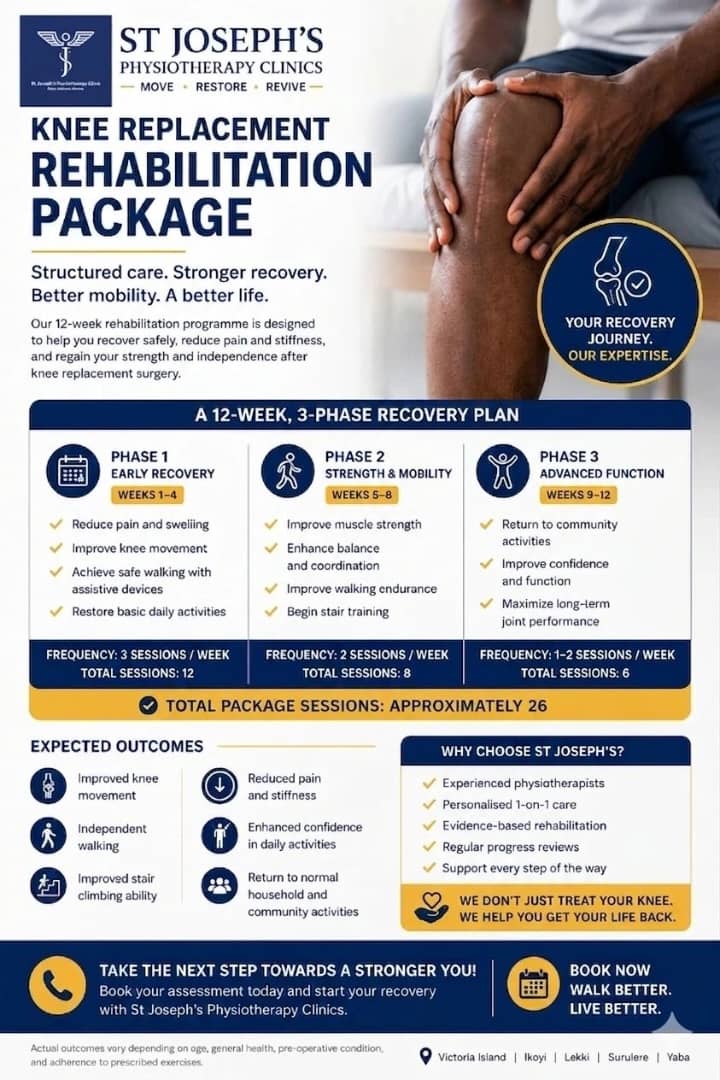
Complete Knee Replacement Rehabilitation Package in Lagos
Knee replacement surgery is a major step toward pain relief and improved mo…

NAMDA threatens strike over unpaid medical lecturers’ allowances
The Nigerian Association of Medical and Dental Academics (NAMDA) has warned…

Resident Doctors Signal End to Strike Threat After High-Level Talks with Gbajabiamila
The threat of a nationwide indefinite strike by the Nigerian Association of…