Last year, scientists launched a trial of an experimental vaccine against Ebola in Guinea. On Friday, they reported great news: The vaccine works well, providing remarkable protection just 10 days after injection.
“We have to stop and celebrate the fact that an innovative trial design was able to come up, in the middle of an emergency, with pretty strong results,” said Seth Berkley, chief executive officer of Gavi, an alliance of public and private organisations that provides greater access to vaccines in developing countries. “Let’s start with that.”
But let’s not end with that.
Berkley and other vaccine experts note a grim irony. Scientists showed that this vaccine was effective in monkeys a decade ago. Thereafter, the vaccine lingered in scientific limbo.
“We should have had an Ebola vaccine at least two or three years ago,” said Peter J. Hotez, president of the Sabin Vaccine Institute and a science envoy at the State Department.
Only after the West African outbreak exploded last year did fresh urgency push experimental Ebola vaccines into trials. By the time the positive results were published, the outbreak was subsiding.
“After considerable rush and expense, and after thousands of people have died, you now have a vaccine that appears to be pretty damn good,” said Stanley A. Plotkin, an emeritus professor of pediatrics at the University of Pennsylvania and a member of the board of the Foundation for Vaccine Research.
We can only guess how many lives might have been saved if this vaccine had passed muster before the outbreak, rather than after.
Now Hotez fears that history will repeat itself.
Another infectious disease may explode before a promising vaccine is proved safe and effective. “Once again, the world will be caught flat-footed,” he said.
Vaccines are one of the great triumphs of science, but the way that modern medicine functions makes it hard to develop new ones. “That model doesn’t work,” said Hotez. “It hasn’t worked for decades, and it was really brought home with Ebola.”
To make a vaccine, scientists first design experimental forms to test on cells and animals. It may cost $25m to perform these studies, said Plotkin. The cost of that basic research is typically covered by governments or philanthropies.
.jpg)
Then researchers have to put vaccines through several rounds of trials in humans. In small initial studies, they evaluate its safety and figure out the right dose. In larger studies, they look more closely at its effectiveness and side effects.
The cost of taking a vaccine all the way through this process is hundreds of millions of dollars, said Plotkin.
Major pharmaceutical companies can afford to pay for the later stages of vaccine development, said Adel A.F. Mahmoud, former president of Merck Vaccines and now a professor of molecular biology and public policy at Princeton University.
But drug companies are increasingly reluctant to take the risk. “The next step, nobody is touching,” he said.
Part of the problem is that many vaccines offer only modest financial returns, compared with highly profitable drugs for diseases like cancer or heart disease.
In a recent issue of The New England Journal of Medicine, Plotkin, Mahmoud and Jeremy Farrar, director of the Wellcome Trust, issued a call for better ways to get vaccines through the pipeline more quickly.
They proposed the creation of a global vaccine-development fund, supported by governments, pharmaceutical companies and philanthropies.
The authors suggested seeding the fund with $2 billion. “It probably can cover maybe four, maybe five potential products,” said Mahmoud. “It can make a difference.”
Mahmoud and other experts see a number of vaccines that could be pushed forward right now with the support of such a fund. Many say a top priority is MERS, a respiratory virus discovered in the Middle East in 2012.
Two billion dollars may sound like a lot of money to put into vaccines. But Mahmoud points out that nearly $8 billion has been spent coping with West Africa’s Ebola outbreak – not to mention more than 11,000 lives lost.
“If you had a vaccine,” he said, “that total would have been far less.”
By The Punch
ABUJA: Training Schedule for Basic Life Support BLS, Pediatric Advanced Life Support (PALS), Advanced Cardiovascular Life Support ACLS, First Aid, CPR, AED
PORTHARCOURT: Training Schedule for Basic Life Support BLS, Pediatric Advanced Life Support (PALS), Advanced Cardiovascular Life Support ACLS, First Aid, CPR, AED
LAGOS: Training Schedule for Basic Life Support BLS, Pediatric Advanced Life Support (PALS), Advanced Cardiovascular Life Support ACLS, First Aid, CPR, AED
STOP paying for airtime and electricity, Let your phone pay its bills with ScreenT
You may also like
Comrade Lemii Christian Emerges Chairman of NANNM Rivers State Branch in Historic Victory
PORT HARCOURT, NIGERIA Following the long awaited National Association of N…

FG Supports Robotic Surgery Expansion to Reduce Medical Tourism
Nigeria is taking another step toward strengthening specialised healthcare …
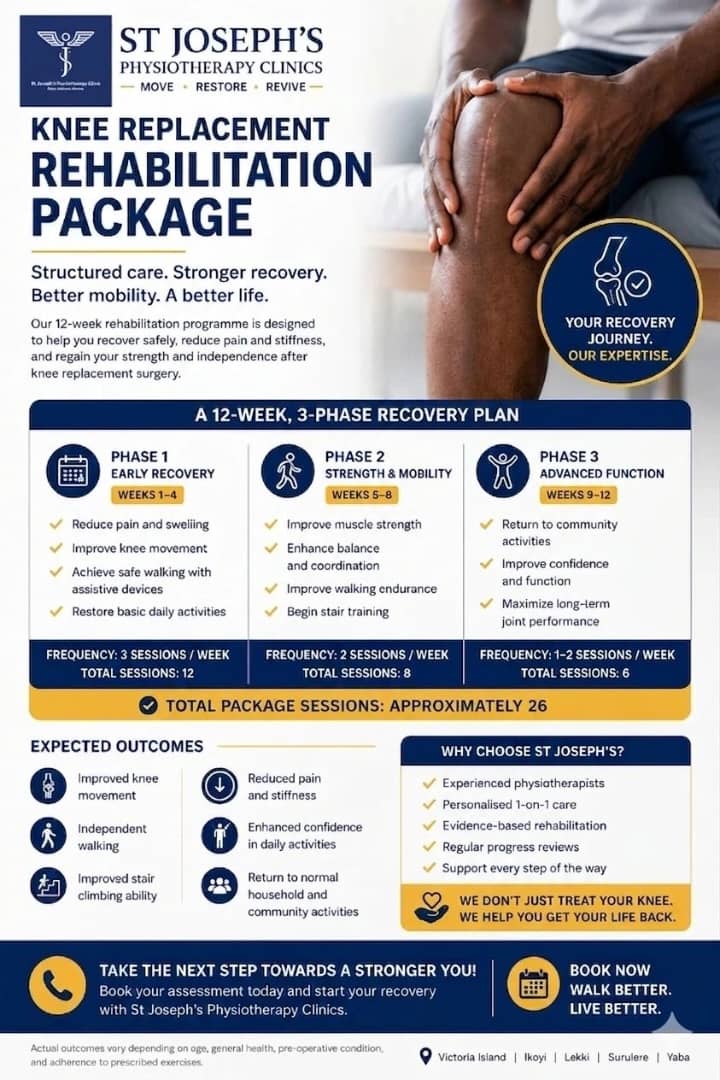
Complete Knee Replacement Rehabilitation Package in Lagos
Knee replacement surgery is a major step toward pain relief and improved mo…

NAMDA threatens strike over unpaid medical lecturers’ allowances
The Nigerian Association of Medical and Dental Academics (NAMDA) has warned…

Resident Doctors Signal End to Strike Threat After High-Level Talks with Gbajabiamila
The threat of a nationwide indefinite strike by the Nigerian Association of…
