Katy Clemens wanted to have a natural, drug-free childbirth. Then an ultrasound suggested her baby would weigh 11.5 pounds, and her doctors insisted she schedule a cesarean section.
After describing the possible birth injuries that could befall such a large baby during a vaginal birth, Clemens relented. But when Sam was delivered by C-section, the doctors were in for a small surprise.
Sam weighed in at seven pounds 13 ounces - nearly four pounds less than expected. The doctors were so surprised that they put him back on the scale to double-check.
"They said the estimates are never off by more than a pound .You imagined a baby that was 30 percent bigger," said Clemens, now 37, a lawyer from Columbia, Maryland, who now says the surgery was unnecessary and probably caused her son to have breathing problems at birth, a complication more common in C-section babies.
Clemens is not alone. Last month, researchers reported that a significant number of women are wrongly told that they are having large babies. The research showed that mothers who believed they were having large babies were nearly five times more likely to ask for a scheduled C-section, even though the vast majority of their babies weighed less than 4,000 grams (eight pounds, 13 ounces), which is the medical definition of a large baby.
Telling mothers their baby will be large "has a profound effect and contributes to undermining women's confidence they can deliver the baby," said Eugene R. Declercq, a professor at Boston University School of Public Health who is one of the authors of the new paper, published in Maternal and Child Health Journal recently.
Fewer than eight per cent of babies born in the United States meet the medical definition of a large baby. But exaggerated estimates of fetal birth weight may be playing a role in the nation's high cesarean section rates, Declercq said. In the United States, nearly one in three babies are born by C-section.
"Childbirth is seen as a painful process to begin with," said Erika R. Cheng, an assistant professor of pediatrics at Indiana University School of Medicine in Indianapolis who was the paper's lead author.
 "When you're told your baby will be large, it conjures up images of more pain, and risks and complications that might harm you and your baby. Women understandably might want to avoid that.
 The new study, called Listening to Mothers III, was based on Childbirth Connection's nationally representative survey of some 1,960 new mothers. It found that four out of five of the mothers who were warned they might have large babies gave birth to infants who were not large and weighed less than eight pounds, 13 ounces.
Yet these mothers were almost twice as likely to have medical interventions such as having doctors medically induce their labor or attempting to self-induce labor, presumably out of concern the baby would continue growing otherwise. They were also nearly twice as likely as other mothers to have a planned cesarean although the increase fell just sho statistically meaningful.
Guidelines from the American College of Obstetricians and Gynecologists in 2014 say that a suspected large baby is only "rarely" an indication for a cesarean delivery. The guidelines note that newborns weighing 11 pounds also are rare, although they leave open the possibility of performing a C-section delivery for an 11-pound baby, or a lO-pound baby whose mother is diabetic.
The concerns about vaginal delivery of large babies are real. Large babies born vaginally are at risk of shoulder dystocia, which is when the head is delivered but the shoulders are stuck.
This can result in nerve damage that causes a loss of movement or weakness in the arms.
But the guidelines urge caution in the use of ultrasound scans to estimate fetal weight, noting that the scans are associated with cesareans, and they ur!f.: doctors to use them "sparingly" and to counsel patients that scans are imprecise during the third trimester.
"We really urge caution because our tools for identification of a large fetus are so poor," said Dr. Aaron B. Caughey, who helped develop the 2014 guidelines.
"We just aren't very good at predicting birth weight - every study in the literature would tell you that."
Although the guidelines say doctors should "offer" a cesarean to women with a baby predicted to weigh 11 pounds, he said, "I have a sense that many clinicians do it at lower thresholds than that," which may be keeping C-section rates up.
"We don't want people pulling the trigger at every estimate above 4,000 grams," he said.
While it is important to share information with patients, the mere act of "offering" C-sections influences women's decisions, Caughey said.
"If you're offering something that isn't normally provided, you are saying somehow that this is a New York Times Service.
Source: The Punch News
ABUJA: Training Schedule for Basic Life Support BLS, Pediatric Advanced Life Support (PALS), Advanced Cardiovascular Life Support ACLS, First Aid, CPR, AED
PORTHARCOURT: Training Schedule for Basic Life Support BLS, Pediatric Advanced Life Support (PALS), Advanced Cardiovascular Life Support ACLS, First Aid, CPR, AED
LAGOS: Training Schedule for Basic Life Support BLS, Pediatric Advanced Life Support (PALS), Advanced Cardiovascular Life Support ACLS, First Aid, CPR, AED
STOP paying for airtime and electricity, Let your phone pay its bills with ScreenT
You may also like
Comrade Lemii Christian Emerges Chairman of NANNM Rivers State Branch in Historic Victory
PORT HARCOURT, NIGERIA Following the long awaited National Association of N…

FG Supports Robotic Surgery Expansion to Reduce Medical Tourism
Nigeria is taking another step toward strengthening specialised healthcare …
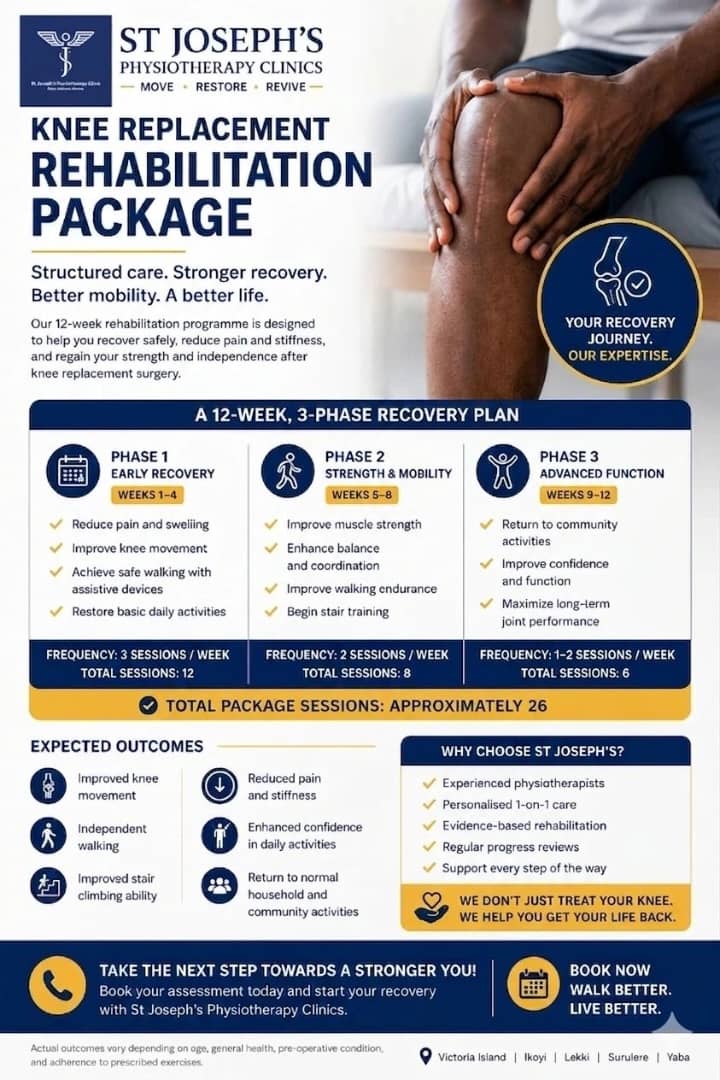
Complete Knee Replacement Rehabilitation Package in Lagos
Knee replacement surgery is a major step toward pain relief and improved mo…

NAMDA threatens strike over unpaid medical lecturers’ allowances
The Nigerian Association of Medical and Dental Academics (NAMDA) has warned…

Resident Doctors Signal End to Strike Threat After High-Level Talks with Gbajabiamila
The threat of a nationwide indefinite strike by the Nigerian Association of…
