Researchers have identified the genetic variants that contribute to specific facial features and it could one day allow forensic scientists to recreate the faces of criminals based on Deoxyribonucleic Acid (DNA) at the scene.
According to the new study, traits including nose size, face width, and even distance between the eyes are associated with particular genetic variations.
The findings so far represent just a small number of the genes that play into the size and shape of a human face, but provide new insight on both normal and abnormal facial development.
In a paper published to the journal Plos Genetics, researchers describe the `genomewide association study,' which allowed them to trace the origins of numerous characteristics of a person's face.
The study has implications for future research on facial anomalies, including cleft lip and palate, but the researchers say mapping larger numbers of these genes will require much greater samples and a more comprehensive approach.
 Further developments in this area could also benefit forensic investigations, with potential to allow scientists to recreate the faces of perpetrators based on evidence left at the crime scene.
 "Our ability to connect specific genetic variants to ubiquitous facial traits can inform our understanding of normal and abnormal craniofacial development," the authors wrote in the paper.
And they say it could "provide potential predictive models of evolutionary changes in human facial features, and improve our ability to create forensic facial reconstructions from DNA."
The team looked for associations between 20 facial characteristics measured from 3D images of 3,118 healthy individuals, all of European descent.
Along with the images, they examined nearly one million single base pair variations, called SNPs, across the genome.
Single nucleotide polymorphisms, frequently called SNPs (pronounced "snips"),.are the most common type of genetic variation among people. Each SNP represents a difference in a single DNA building block, called a nucleotide.
Through the new analysis, which also considered results from two earlier studies, the researchers confirmed previous findings and determined that facial width, distance between the eyes, size of the nose, and distance between the lips and eyes had significant associations with specific SNPs.
"Our analysis identified several genetic associations with facial features not previously described in earlier genomewide studies," says corresponding author, Dr. • Seth Weinberg.
"What is exciting is that many of these associations involve chromosomal regions harbouring genes with known cranioformal function.
"Such findings can provide insights into the role genes play in the formation of the face and improve our understanding of the causal factors leading to certain craniofacial defects."
By: Chukwuma Muanya
The Guardian News
ABUJA: Training Schedule for Basic Life Support BLS, Pediatric Advanced Life Support (PALS), Advanced Cardiovascular Life Support ACLS, First Aid, CPR, AED
PORTHARCOURT: Training Schedule for Basic Life Support BLS, Pediatric Advanced Life Support (PALS), Advanced Cardiovascular Life Support ACLS, First Aid, CPR, AED
LAGOS: Training Schedule for Basic Life Support BLS, Pediatric Advanced Life Support (PALS), Advanced Cardiovascular Life Support ACLS, First Aid, CPR, AED
STOP paying for airtime and electricity, Let your phone pay its bills with ScreenT
You may also like
Comrade Lemii Christian Emerges Chairman of NANNM Rivers State Branch in Historic Victory
PORT HARCOURT, NIGERIA Following the long awaited National Association of N…

FG Supports Robotic Surgery Expansion to Reduce Medical Tourism
Nigeria is taking another step toward strengthening specialised healthcare …
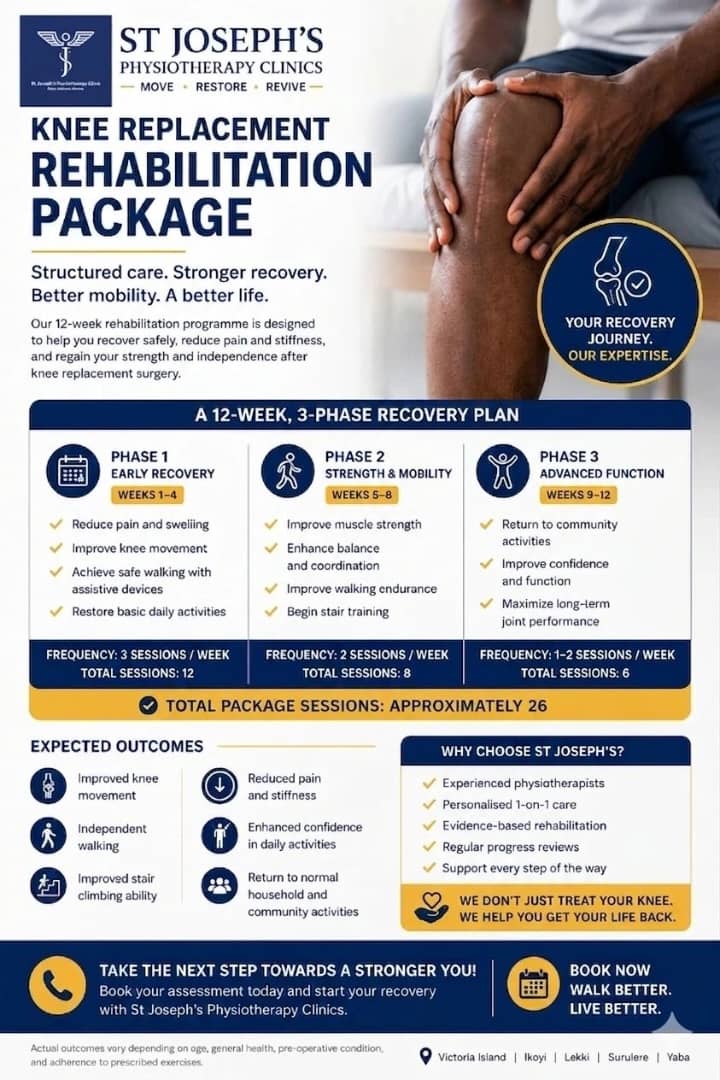
Complete Knee Replacement Rehabilitation Package in Lagos
Knee replacement surgery is a major step toward pain relief and improved mo…

NAMDA threatens strike over unpaid medical lecturers’ allowances
The Nigerian Association of Medical and Dental Academics (NAMDA) has warned…

Resident Doctors Signal End to Strike Threat After High-Level Talks with Gbajabiamila
The threat of a nationwide indefinite strike by the Nigerian Association of…
