The maternal mortality rate in Nigeria is still alarming, but if the Federal Government provides anti-shock garments for hospitals in the country, such deaths will be reduced, expert has said.
The former Chairperson of the Lagos State Primary Health Care Board (LSPHCB), Dr. Olayinka Abosede, said this at the 6th Media/CSOs on Maternal Health, organised by Devcom/Civil Organisation Forum in Lagos recently.
According to her, “with anti-shock garments, women who bleed excessively to death can have sustenance through the garment until blood transfusion is done on them,” she noted.
Olayinka explained that some of the causes of maternal deaths include anemia, abortion, prolonged labour especially among first timers, infection, enclampsia and HIV/AIDS.
She added: "We should mind our environment, the food we eat, engage in exercises always, avoid sedentary activities and avoid whatever will stress you.
"We all have cancer cells in our genes. When we inhale fumes from generator sets, firewoods, kerosene from stoves and lamps, and sawdust - the cells begin to enlarge. Once we stress ourselves, the cells grow." Dr. Olayinka said.

According to her, Lagos state has been able to get a few anti-shock garments. "Although the instrument is not that cheap, it could be affordable if bought in bulk, she added.
On the topic, 'Improving Access to Maternal Health in Nigeria: Challenges and Best Practices', the Medical expert urged that everyone should engage more in brisk-walking.
With such alarming number of maternal deaths in the country, especially in the North, she urged the government to attend to communal efforts at the grassroots especially.
"Though there is improvement, the situation we are in now is not even good enough. The North East still has the worst maternal deaths' statistics in Nigeria. In every 100, 000 births recorded, 1, 026 deaths occur in the region. Although some states in the South has as low as 245, it varies in Lagos; I am aware Lagos was having about 540."
Speaking further on Improving maternal health accountability in Nigeria, the Executive Director of Women Advocates' Research & Documentation Centre (WARDC), Nigeria, Abiola Akiyode-Afolabi, said the government has an obligation to its people.
"It has made commitments at the international and regional levels. Human rights commitments, development commitments, alignment with global accountability framework, national commitment," she added.
Meanwhile, he explained that the Saving One Million Lives by 2015 programme aims to, among other objectives; expand access to health care towards improving maternal health, new born and child health.
By Rebecca Ejifoma
This Day
ABUJA: Training Schedule for Basic Life Support BLS, Pediatric Advanced Life Support (PALS), Advanced Cardiovascular Life Support ACLS, First Aid, CPR, AED
PORTHARCOURT: Training Schedule for Basic Life Support BLS, Pediatric Advanced Life Support (PALS), Advanced Cardiovascular Life Support ACLS, First Aid, CPR, AED
LAGOS: Training Schedule for Basic Life Support BLS, Pediatric Advanced Life Support (PALS), Advanced Cardiovascular Life Support ACLS, First Aid, CPR, AED
STOP paying for airtime and electricity, Let your phone pay its bills with ScreenT
You may also like
Comrade Lemii Christian Emerges Chairman of NANNM Rivers State Branch in Historic Victory
PORT HARCOURT, NIGERIA Following the long awaited National Association of N…

FG Supports Robotic Surgery Expansion to Reduce Medical Tourism
Nigeria is taking another step toward strengthening specialised healthcare …
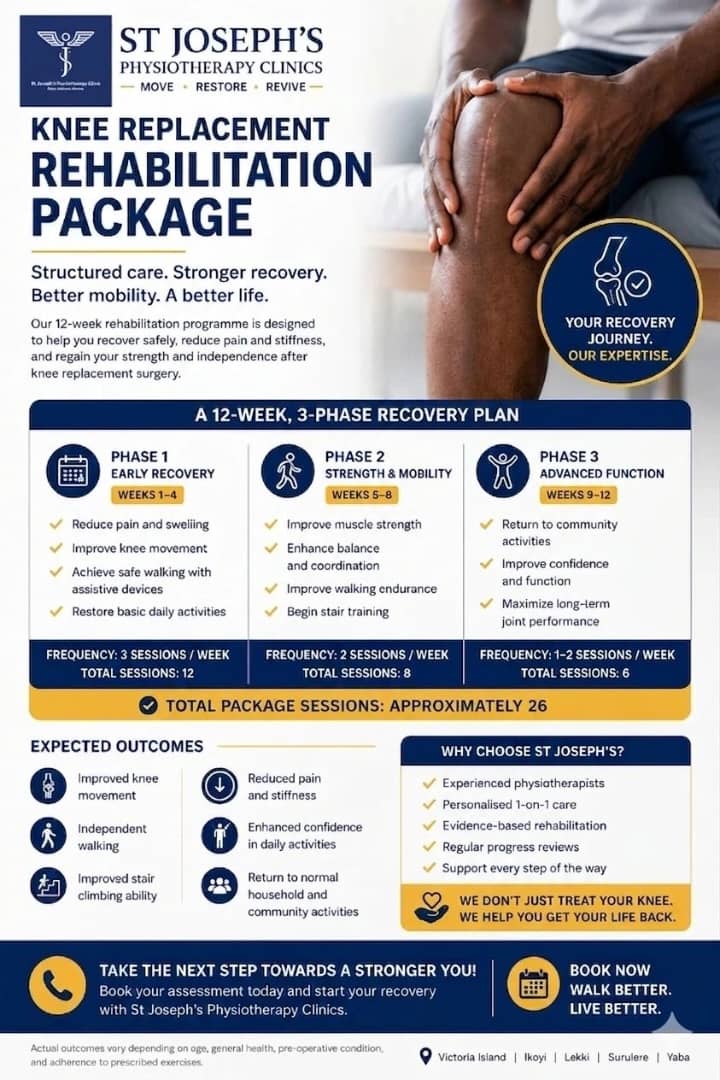
Complete Knee Replacement Rehabilitation Package in Lagos
Knee replacement surgery is a major step toward pain relief and improved mo…

NAMDA threatens strike over unpaid medical lecturers’ allowances
The Nigerian Association of Medical and Dental Academics (NAMDA) has warned…

Resident Doctors Signal End to Strike Threat After High-Level Talks with Gbajabiamila
The threat of a nationwide indefinite strike by the Nigerian Association of…