How do you react to recent public notices from the Registry of the Pharmacists Council of Nigeria (PCN) concerning Privatisation of pharmacy facilities?
The attention of the Pharmaceutical Society of Nigeria has been drawn to recent public notices from the Registry of the Pharmacists Council of Nigeria (PCN) with regards to a Public Private Partnership (PPP) philosophy. PSN believe very much in the spirit of a private sector-driven economy and logically support the concept of legitimate models of a Public Private Partnership.
Our practice is a regulated one with a myriad of regulatory agencies having substantial degrees of influence. These agencies include PCN, National Agency for Food and Drug Administration and Control (NAFDAC), National Drug Law Enforcement Agency (NDLEA), Federal and State Task force as well as an array of other statutory agencies of government.
The Pharmaceutical Society of Nigeria is worried at attempts by some state governments to reduce pharmacy practice to a purely commercial venture of buying and selling with absolutely no standards in the guise of a Public Private Partnership (PPP).
There are patients who visit public hospitals simply because they assume drugs in such facilities will be genuine in view of the existing fake drug syndrome which continues to ravage the health sector.
This is why the PSN continues to caution on the consequences of diverting a guaranteed public sector market in pharmacy facilities to private profiteers.
The question remains: Who takes responsibility when anything goes wrong with respect to drugs dispensed in such public facilities concessioned to profiteers – the profiteer or government? Presently, the Lagos State Government which blazed this trail has been able to align its privatisation model to the PPP guidelines prescribed by the PCN.
There can be no compromise on this demand in both the public and professional interest.
Some federal health institutions which experimented with privatisation of pharmacy facilities are still in huge mess even after such contracts have been terminated.
This is because the profiteers who utilised the goodwill of the federal health institutions to source drugs from the pharmaceutical industry simply sold the drugs and pocketed the accruing revenue.
Many of the pharmaceutical companies refuse to do business with public health facilities up till now with serious consequences for consumers of health in such institutions.
We urgently enjoin pharmacists, pharmaceutical companies and stakeholders to become familiarised with the tenets of the Public Private Partnership (PPP) guidelines of the Pharmacists Council of Nigeria (PCN) before formalising contracts with public pharmacy facilities.
Violations of existing provisions of the PPA Cap 535 LFN 1990, Cap P. 17 LFN 2004, gazettes 79 and 81 of August 2005 and the code of ethics for Pharmacists in Nigeria will attract sanctions from the PSN as erring Pharmacists will be placed on the roll of dishonour of the Pharmaceutical Society of Nigeria.
Finally, we also appeal to affected state governments and other stakeholders to dialogue immediately with the Pharmacists Council of Nigeria to facilitate lawful models of PPP in their domains in public interest.
Status of Nigeria health workers welfare Eight months after we commenced a robust attempt to redress the unfortunate status quo in healthcare in Nigeria, we are still left in the cold.
Government as a matter of fact has traded off salient MOUs it signed with us in a bid to placate doctors when they embarked on their unlawful and illegal strike for seven weeks between July and August.
We note with serious concern that Government in continuation of its delay tactics has yet again come up with excuses including a need to allow the fresh supervising Minister of the Federal Ministry of Labour and Productivity to get familiarize with the various welfare issues being canvassed by PSN/JOHESU for over eight months now.
Our presumption remains that government is a continuum and in the light of such, the relevant bureaucrats in the Federal Ministry of Labour and Productivity ordinarily do not need a whooping three and half weeks to adequately brief the newly appointed supervising Minister.
It is imperative to draw the attention of government again to the increasing entropy which the levity that it has treated the welfare of over 95 per cent of the health workforce has continued to generate. While we continue to solicit the patience of our members who have become extremely restive as demonstrated when one of the unions in the health sector made attempts to embark on a strike recently, the JOHESU will not continue to wait eternally and allow government to trample on the rights as well as privileges of its members.
Perhaps we should put on record, that the seemingly government ineptitude to make any meaningful progress on our demands for about one year has now exposed us to ridicule and insult from the rank and file of our members.
In some extreme situation outright blackmail is employed as a tool as in some strange instances the leadership is accused of compromise with the federal government.
PSN have chosen to remain both reasonable and responsible in our dialogue with government. In the light of the prevailing circumstance, we strongly proposed holding meeting with the federal government today.
At this meeting we will demand that government come up with circulars in tandem with memorandum of understandings already signed with JOHESU in the following areas: Non promotion of our members from salary CONHESS 14-15 as directors having stayed between four and 15 years on the same salary level without promotion in most Federal Tertiary Hospitals.
The next is immediate release of circular on adjustment of salary since January 2014 and immediate payment of at least two months arrears while the remaining is paid after being accomodated in the 2015 budget.
Others are: Immediate release of the circular on extension of retirement age to be back dated to February 2014 when the issue was presented to National Council on establishment; Immediate and full payment of arrears of salaries of CONHESS 10 skipping outstanding since the year 2010 and Immediate amendment of the circular on consultancy status as pronounced by National Industrial Court on July 22, 2013, and agreed to at a meeting of August 12, one month ago, with the Federal Government.
The rest are: Payment of arrears of specialist allowance to qualified hospital based professionals with effect from January 1, 2010 in line with National Industrial Court of Nigeria (NICN) ruling; Minimizing the lopsidedness in the membership of Boards of Management of Tertiary Hospitals; Need to define the functions and power of honourary consultants in Teaching Hospitals and the need to appoint more hospital based consultants instead of Honourary Consultants.
Other issues we will demand from the government are: Need for residency programme for all health professionals; Issuance of guidelines on appointment of Chairman, Medical Advisory Committee and the committee’s composition; Need for complete autonomy for the Teaching Hospitals by removing University lecturers as heads in some of the clinical departments and Restoration of working days as annual leave.
The PSN will align totally with the decisions of JOHESU to chart a way forward after this current dialogue.
PCN and NAFDAC made important reforms for practitioners recently. What is your position?
I seize this opportunity to express the gratitude of every member of PSN to the hierarchy at PCN and specifically to the DG NAFDAC, Dr. Paul Orhii, as well as the management of NAFDAC for landmark reforms approved for practitioners in our sector in the last few weeks.
The DG NAFDAC has approved of measures to curb incessant clashes between pharmacy practitioners in the private sector and NAFDAC Enforcement officers by reviewing the implementation mode of the supply chain in the scheme of service/orphan drugs in Nigeria. NAFDAC has also facilitated the re-introduction of Community Pharmacy Action Centre which would improve the tenets of documentation and the overall philosophy of pharmacovigilance.
We are happy to state that the PCN has also complemented this gesture by approving permits to players who need to make essential life saving drugs which are not needed in commercial quantities to their clients.
The sales of such products will be restricted to only the premises of prospective applicants through the enabling permits.
This move opens the frontiers of service delivery in pharmacy practice and members of the PSN congratulate both the PCN and NAFDAC for this bold initiative.
Significant features of the annual national conference of the PSN – ‘Ibom 2014’
This conference came with new packages including the maiden Deans Forum, Directors of Pharmaceutical Services Forum, and Head of Pharma, Federal Health Institutions Forum as part of our agendum to boost human relationship management.
As part of arrangements with Pharmacists Council of Nigeria to revolutionalise Mandatory Continuing Professional Development (MCPD) credit point earnings, the continuing education segment of the conference took place at the ultra-modern e-library facility of the Akwa Ibom State Government in Uyo.
There were Technical/Interest Group and other sectorial consultations. The Board of Fellow and Young Pharmacists Group were energized through new processes to optimize their potentials. An official social nite will be hosted on today while the VIP forum which debuted in Ilorin last year will be consolidated later tonight.
PSN gave special recognition to some eminent Nigerians during the Tuesday event.
Who were they?
The major highlight of the opening ceremony was the awards of Ambassadors of the Health Sector to four distinguished Nigerians.
Those who received awards are: Chief Martin Elechi, Governor of Ebonyi State; Comrade (Dr) Ayuba Wabba, Chairman of Joint Health Sector Union (JOHESU), Dr. Godswill C Okara, Chairman, Assembly of Healthcare Professionals of Nigeria (AHPN) and Prof. Temitope Alonge Chief Medical Director University College hospital (UCH) Ibadan.
These distinguished Nigerians were recognized for the ideals of collaborative health practice in Nigeria.
By: CHIOMA UMEHA (HEALTH EDITOR)
ABUJA: Training Schedule for Basic Life Support BLS, Pediatric Advanced Life Support (PALS), Advanced Cardiovascular Life Support ACLS, First Aid, CPR, AED
PORTHARCOURT: Training Schedule for Basic Life Support BLS, Pediatric Advanced Life Support (PALS), Advanced Cardiovascular Life Support ACLS, First Aid, CPR, AED
LAGOS: Training Schedule for Basic Life Support BLS, Pediatric Advanced Life Support (PALS), Advanced Cardiovascular Life Support ACLS, First Aid, CPR, AED
STOP paying for airtime and electricity, Let your phone pay its bills with ScreenT
You may also like
Comrade Lemii Christian Emerges Chairman of NANNM Rivers State Branch in Historic Victory
PORT HARCOURT, NIGERIA Following the long awaited National Association of N…

FG Supports Robotic Surgery Expansion to Reduce Medical Tourism
Nigeria is taking another step toward strengthening specialised healthcare …
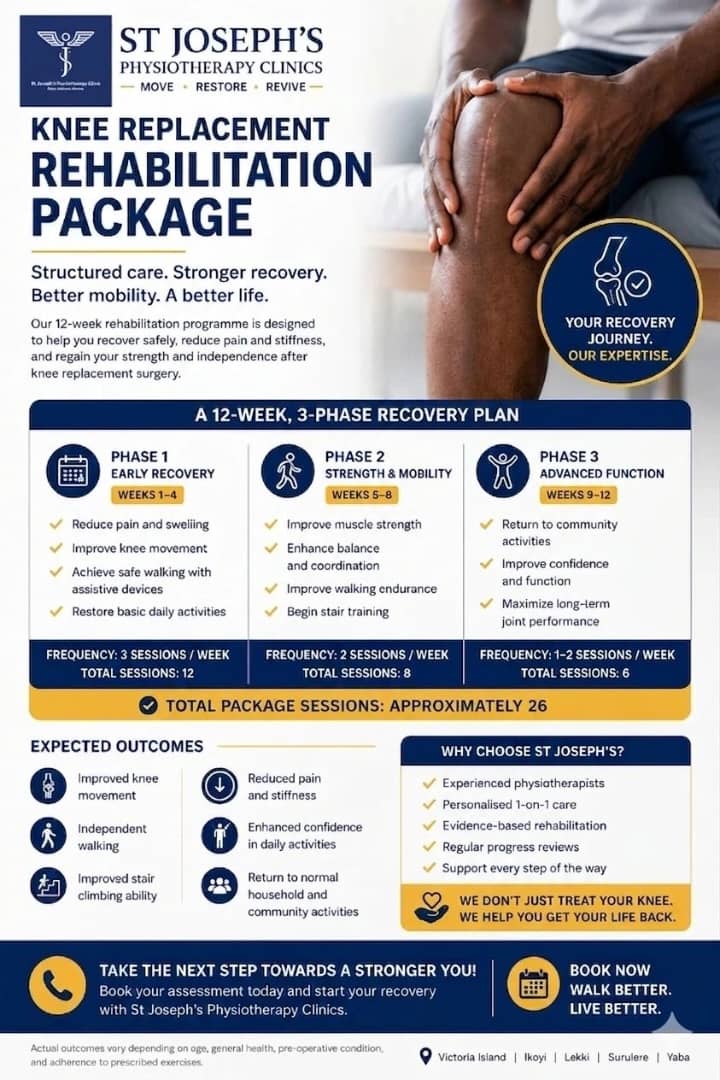
Complete Knee Replacement Rehabilitation Package in Lagos
Knee replacement surgery is a major step toward pain relief and improved mo…

NAMDA threatens strike over unpaid medical lecturers’ allowances
The Nigerian Association of Medical and Dental Academics (NAMDA) has warned…

Resident Doctors Signal End to Strike Threat After High-Level Talks with Gbajabiamila
The threat of a nationwide indefinite strike by the Nigerian Association of…