Hemorrhoids (or “Piles”) are swollen blood vessels inside and around the back passage (anus) and the anal canal (rectum). Sometimes, the veins around the anus swell, become stretched, thin and become irritated when passing feces.
The anal canal is the last part of the large intestine and is about 4cm long. At the lower end of the anal canal is the opening to the outside usually referred to as the anus, through which the feces pass. At the upper end, the anal canal connects with the rectum, which is also part of the large intestine.
There is a network of small veins within the lining of the rectum. These veins sometimes become wider and engorged with more blood than usual. The engorged veins and the overlying tissue may then form into one or more small swelling called “piles”.
According to Dr. Abdulazeez Qumas, an herbal practitioner, there are different types of piles:
 Internal hemorrhoids are those that form above a point 2-3cm inside the anus in the upper part of the rectum. This type of piles is usually painless because the upper anal canal has no pain nerve fibres. They lie far enough into the rectum and anus. You cannot readily see or feel them. They hardly cause much pain but can cause bleeding from the anus.
 Some internal hemorrhoids may protrude outside the anus (prolapse). If prolapse occurs, it may be painful due to irritation from push, clothing and sitting. Sometimes, the protruded hemorrhoid may be pushed gently back into place if it does not go in by itself.
External hemorrhoids are those that form below that point, in the lower part of the anal canal. External piles may be painful because the lower part of the anal canal has lots of pain nerve fibres. They lie within and around the anus and are very uncomfortable. A prolapsed, external hemorrhoid (one that protrudes or extends outside the anus) can be seen and felt. It is very painful if the vein of the hemorrhoid bursts (a condition called thrombosis). It may look very frightening and bleed when this happens. Hemorrhoids are the most common cause of bleeding from the anus.
“The terminology can be a little confusing, you would have thought that external piles would mean outside of the anal canal (and so outside of the anus) but this is not always the case. There are external piles that are actually inside the anus. Internal piles can also enlarge and drop down (prolapse), so that they hang outside of the anus,” Dr. Qumas stated.
Experts reveal that the exact reason why the changes in the veins within the lining of the anal canal occur and lead to piles forming is not clear. Some piles seem to develop for no apparent reason. However, it is thought that an increased pressure in and around the back passage (anus) and anal canal can be a major factor in many cases.
Research shows that about half the people in the United Kingdom, for instance, develop one or more piles at some stage.
Situations that increase the chances of piles developing include:
1.) Constipation and straining at the toilet. These increase the pressure in and around the veins in the anus and seem to be a common reason for piles to develop.
2.) Pregnancy: Piles are common during pregnancy. This is probably due to pressure effects of the baby lying above the rectum and anus, and the effect that the change in hormones during pregnancy can have on the veins.
3.) Aging: The tissues in the lining of the anus may become less supportive as we get older.
4.) Heredity : Some people may inherit a weakness of the wall of the veins in the anal region.
Qumas said “signs and symptoms of hemorrhoids vary from one person to another. Sometimes no symptoms may be present and a person may not realize that they have piles.
“Pain from the anus, especially during defecation and painful swelling or lumps near the anus.
“Itching from the anus, mucus discharge from the anus and bleeding from the anus.
Sometimes, there is leaking of feces, soreness around the anus and also anaemia (low blood level) due to bleeding.”
The doctor noted, however, that the most common symptom experienced is bleeding after going to the toilet to defecate. “The blood is usually bright red and may be noticed on the toilet tissue, in the toilet pan or coating one’s feces.”
“A hemorrhoid can hang down (prolapse) and can be felt outside the anus. Often, it can be pushed back up after you have been to the toilet. However, more severe piles remain permanently prolapsed and cannot be pushed back up inside.
“Small internal piles are usually painless. Larger piles may cause a mucus discharge, some pain, irritation, and itching. The discharge may irritate the skin around the anus. You may have a sense of fullness in the anus, or a feeling of not fully emptying when you go to the toilet,” he said.
“A possible complication of piles that hang down is that they can ‘strangulate’ (the blood supply to the hemorrhoid can be cut off). This can be intensely painful. Another possible complication is a blood clot (thrombosis) which can form within the hemorrhoid. This is uncommon, but again causes intense pain if it occurs. The pain usually peaks after 48-72 hours, and then gradually goes away over a 7-10 day period.”
Anyone can be affected by hemorrhoids and it may even occur during pregnancy. However, recent research shows a high incidence of hemorrhoids in young people and commonly in male rather than in females. In western medicine, the exact cause of hemorrhoids is not certain but in natural medicine, the cause is known. It is worthy of note also that weak hemorrhoidal veins can be inherited.
“Some people has a greater tendency to develop hemorrhoids than others. Other factors that may trigger hemorrhoids include the following obesity, standing or sitting for long periods, holding your breath while straining to do physical labour and, very notably, your diet.”
“A diet high in processed food may cause hemorrhoids. Also, avoid sugary foods. A high fibre diet is always advisable. Avoid heavy carbohydrates and low fibre meals like yam, cassava meal (fufu), processed rice, pastries like meat pie, chicken pie, junk food, generally, eat more of vegetables, fruits, nuts and whole grains. Avoid processed foods and meals as much as possible.
“Inadequate intake of water may cause constipation which can contribute to hemorrhoids because constipation makes you strain in the toilet and makes your stool hard, thereby, irritating the swollen veins. So by all means, avoid being constipated. Drink at least 8 glasses of water per day. Also, monitor your salt intake.”
“Meanwhile, some foods consumed by certain people may not affect them negatively whereas same foods may cause adverse effects in others. In some people, piles may be triggered by eating of plantain, especially the ripe type. Even sweet fruits like banana intake may worsen the condition in others. So it is important that you know your body.
“The intake of alcohol should be avoided as much as possible as well as soft drinks and juice. That was why our forefathers used to take very potent herbal syrups (commonly called ‘Agbo’) to reduce the accumulation of sugars and excess unwanted components of food eaten and to detoxify their bodies. That was why our forefathers never suffered from piles.”
“In Africa, our forefathers had been treating piles successfully long before the advent of western medicine. They used natural remedies, herbs, leaves, shrubs and roots successfully to treat piles without any side effects.”
By: Doris Obinna,
DAILY SUN
ABUJA: Training Schedule for Basic Life Support BLS, Pediatric Advanced Life Support (PALS), Advanced Cardiovascular Life Support ACLS, First Aid, CPR, AED
PORTHARCOURT: Training Schedule for Basic Life Support BLS, Pediatric Advanced Life Support (PALS), Advanced Cardiovascular Life Support ACLS, First Aid, CPR, AED
LAGOS: Training Schedule for Basic Life Support BLS, Pediatric Advanced Life Support (PALS), Advanced Cardiovascular Life Support ACLS, First Aid, CPR, AED
STOP paying for airtime and electricity, Let your phone pay its bills with ScreenT
You may also like
Comrade Lemii Christian Emerges Chairman of NANNM Rivers State Branch in Historic Victory
PORT HARCOURT, NIGERIA Following the long awaited National Association of N…

FG Supports Robotic Surgery Expansion to Reduce Medical Tourism
Nigeria is taking another step toward strengthening specialised healthcare …
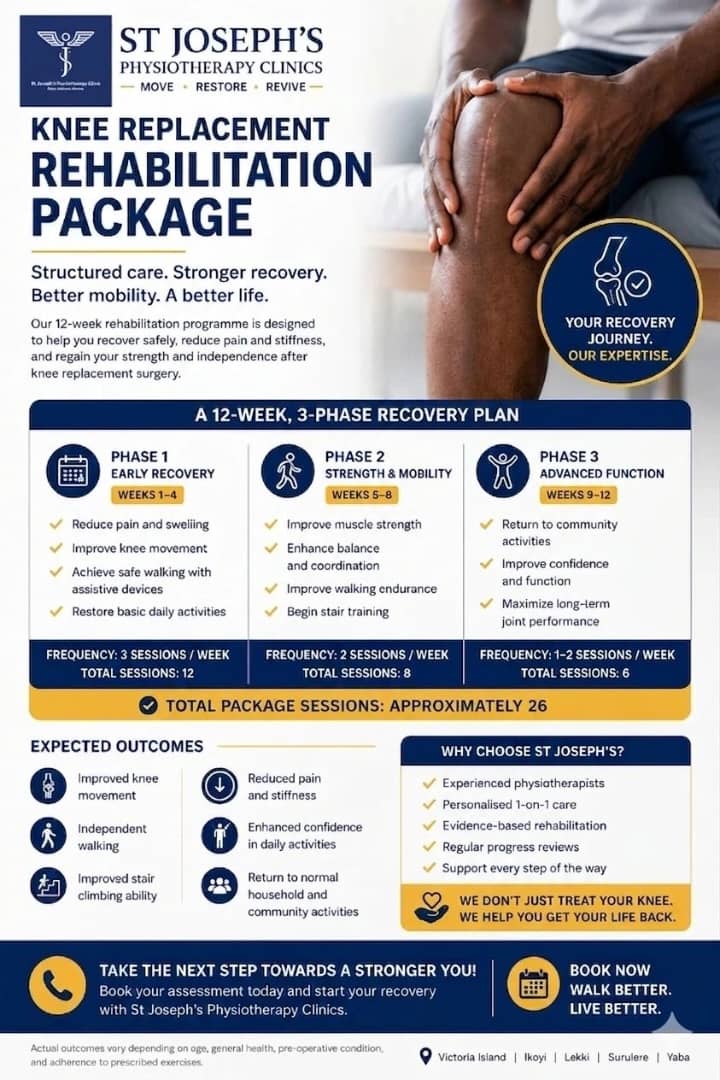
Complete Knee Replacement Rehabilitation Package in Lagos
Knee replacement surgery is a major step toward pain relief and improved mo…

NAMDA threatens strike over unpaid medical lecturers’ allowances
The Nigerian Association of Medical and Dental Academics (NAMDA) has warned…

Resident Doctors Signal End to Strike Threat After High-Level Talks with Gbajabiamila
The threat of a nationwide indefinite strike by the Nigerian Association of…
