Diabetes is not the only "adult" disease on the rise in children and adolescents. High blood pressure has become more common as well, largely because of increased obesity in the young, although often an underlying and treatable — disorder is the cause.
Experts say that neither parents nor their children's doctors are sufficiently aware of this health problem and its potentially serious consequences, including lasting organ damage. Too often, these experts say, abnormally high blood pressure in children goes undetected or is noted but not taken seriously.
National guidelines state that blood pressure should be measured every year in children, starting at age three. In general, blood pressures in children should be lower than in adults. In adolescents, for example, a blood pressure of 120 over 8o millimeters of mercury is considered to be prehypertension, a condition that sets the stage for full-blown hypertension.
Among children ages 3 to 18 over all, 3.4 per cent have prehypertension and 3.6 per cent have hypertension, doctors at Massachusetts General Hospital have reported. One recent study of middle-school and high-school athletes in Philadelphia found that 20% were overweight and 24% were obese, and almost 15% of the student-athletes had high blood pressure.
 In adolescents who are obese, more than 30% of boys and between 23 and 3o per cent of girls have prehypertension or hypertension, Dr. Margaret Riley of the University of Michigan Medical School and Dr. Brian Bluhm of Integrated Health Associates in Ann Arbor, Michigan, wrote in American Family Physician. Yet in children i8 and younger "the diagnosis of hypertension is missed in the majority of cases," Dr. Goutham Rao, chairman of family and community medicine at University Hospitals of Cleveland, wrote in August in the journal Pediatrics.
 "In three-fourths of children with prehypertension and hypertension the condition is not detected," he said in an interview. Among them was a 13-year-old boy in Pittsburgh with a blood pressure of 180 over loo. No note was made in the child's chart of his very seriously elevated blood pressure, and no follow-up was suggested to determine a cause and prescribe a remedy, Rao said.
A major barrier to diagnosis, he said, "is doctors' lack of knowledge about how to treat high blood pressure in kids. The more doctors know about treatment, the more likely they are to make a diagnosis."
Another long-standing obstacle for doctors is that the definition of normal blood pressure in children depends on a child's sex, age and height, with pressures in the 90th percentile and above considered unhealthy. Full-blown hypertension in children is defined as pressures in the 95th percentile and above. For adults, only one measure is used to define high blood pressure. Advocates found that charts of normal childhood pressures displayed in medical settings were rarely consulted in the usual rush of a well-child visit, Rao said.
Electronic medical records, now used in many doctors' offices, could overcome this barrier because they can calculate where on the blood pressure spectrum a child falls as soon as the reading is entered and flag a problem immediately. Parents, too, are part of the problem of missed diagnosis.
"Parents have very little awareness that their children could have high blood pressure, and they fail to make sure the doctor checks it and tells them the result," Rao said. "Parents should ask at every visit, 'Did you check my child's blood pressure, and is it OK?"'
A further problem is so-called white-coat hypertension: If a child is upset or nervous in the doctor's office, blood pressure may be higher than usual. Children should sit quietly for about io minutes before blood pressure is measured, with two more measurements taken if the first one is high. If all three readings are high, the child should return for follow-up visits; a diagnosis of elevated blood pressure in children depends on finding a high reading on three separate occasions.
Source: The Punch News
ABUJA: Training Schedule for Basic Life Support BLS, Pediatric Advanced Life Support (PALS), Advanced Cardiovascular Life Support ACLS, First Aid, CPR, AED
PORTHARCOURT: Training Schedule for Basic Life Support BLS, Pediatric Advanced Life Support (PALS), Advanced Cardiovascular Life Support ACLS, First Aid, CPR, AED
LAGOS: Training Schedule for Basic Life Support BLS, Pediatric Advanced Life Support (PALS), Advanced Cardiovascular Life Support ACLS, First Aid, CPR, AED
STOP paying for airtime and electricity, Let your phone pay its bills with ScreenT
You may also like

Comrade Lemii Christian Emerges Chairman of NANNM Rivers State Branch in Historic Victory
PORT HARCOURT, NIGERIA Following the long awaited National Association of N…

FG Supports Robotic Surgery Expansion to Reduce Medical Tourism
Nigeria is taking another step toward strengthening specialised healthcare …
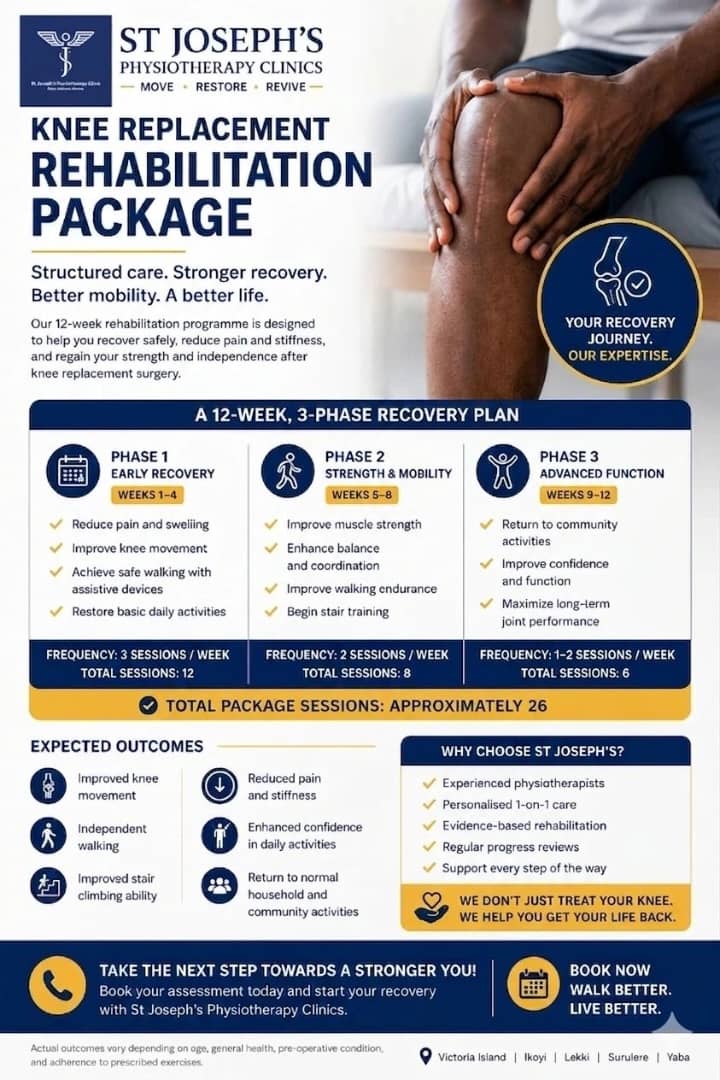
Complete Knee Replacement Rehabilitation Package in Lagos
Knee replacement surgery is a major step toward pain relief and improved mo…

NAMDA threatens strike over unpaid medical lecturers’ allowances
The Nigerian Association of Medical and Dental Academics (NAMDA) has warned…

Resident Doctors Signal End to Strike Threat After High-Level Talks with Gbajabiamila
The threat of a nationwide indefinite strike by the Nigerian Association of…