Many Nigerians, especially civil servants, would have preferred to travel abroad to have the kind of surgery John Idrisu had in a clinic located in Abuja.
In less than 24 hours after having his entire hip replaced through a modern surgical operation, Idrisu lay on the bed staring into this reporter’s face, smiling and speaking coherently. His father sat by his side as Dr. Sule Ahmed announced that he would be able to start walking the next day. Stunned, Idrisu’s father inquired from the doctor, who is the medical director of Supreme Clinic, Wuse, Abuja how that would be possible and the doctor explained that the procedure had been modernised to allow less of cutting and minimal blood transfusion.
Of course Daily Trust sought to know why Nigerians still go abroad for complex surgeries as Idrisu’s with the attendant capital flight and side effect on the economy.
The Nigerian Medical Association (NMA) estimated that annually Nigerians spend above N120 billion on junketing the world for medical reasons. In 2013 alone, medical tourism to India gulped close to N40 billion that would have been sunk into developing the health sector in the country. It is also estimated that about 5,000 patients travel abroad monthly to seek medical help, most of which are available in the country.
Dr. Ahmed explained that the craze for medical tourism abroad is being perpetuated by some corrupt tendencies of some medical doctors in Nigeria in connivance with doctors abroad.
He revealed that most of the cases referred abroad, such as deformity correction, hip and joint replacement, urological problems, spine surgery, plastic surgery, open heart surgery and kidney transplant can be done in the country but for the corruption inherent in the referral system and lack of political will to sanitise it. “The thing is that, especially from the Asian countries, they come in here to bribe our doctors to refer patients to them. So, when the patient gets there, the doctor who referred the patient there gets a percentage of what the patient pays as hospital bills,” Dr. Ahmed revealed.
Available statistics from the Research and Information System for Developing Countries (RIS) indicated that in 2013, out of 275,271 tourists that arrived India, Nigeria accounted for 34,522 out of which 42.4 per cent were there for medical purposes.
In order to reap from this corrupt mess crippling the Nigerian medical sector, some general medical practitioners venture into special medical fields that they are not qualified to practise and make referrals abroad.
“You now see a general practitioner referring an orthopaedic case, a general practitioner referring a cardiothoracic case, a general practitioner referring a plastic surgery case and so on. Meanwhile, there are specialists in these areas in this country that know what to do. Even if there is need for referral, they know where to refer the patients to as they know their colleagues both in and out of the country,” he said. He said a medical practitioner has to be an orthopaedic surgeon to know what orthopaedic surgeons in Nigeria can do but sadly the reverse is the case at the moment. Meanwhile, Nigerians also share the blame for medical tourism abroad as the thinking in the country that everything “white” is the best.
 Many Nigerians will rather have a white nurse or a white doctor attend to their health challenges than a black nurse or a black doctor.
In addition, the corruption in the nation’s civil service is also fuelling the problem as many civil servants see it as a way of making money. “If you are travelling to India or Germany, apart from the medical fees, you are paid estacode, accommodation and maybe one or two of your family members are permitted to accompany you and get paid,” Dr. Ahmed told Daily Trust. The emphasis is not whether this is in line with public service rules but rather the capital flight every year and the effect on the country’s health sector. The doctor lamented: “With the kind of hospitals we have now, the money at our disposal and the economic situation of the country, there is no need for close to 95 per cent of patients being referred abroad.”
He said Nigeria has gone beyond the issue of the right competence to handle complex surgeries as the problems now are the equipment and political will. He advised government to identify the competences of doctors in the country, the available manpower and the hospitals involved in various surgeries so that it will spend less on medical tourism. “Government should promote indigenous medical technology and resourcefulness so that those other countries will be coming to Nigeria instead of Nigerians going to far away Asia and UK, where they spend so much money at a distress to the family,” he advised.
There is also need for a system to audit the quality of practice among medical practitioners in the country to avoid making unnecessary experiments on patients without being properly trained to handle cases.
Government can also encourage collaboration among Nigerians and non-Nigerians, whether resident in the country or not, to improve the health sector as nothing stops a surgeon based in the UK from collaborating with a surgeon based in Nigeria to carry out a complex procedure in the country.
By Francis Arinze Iloani dailytrust.com.ng
You may also like
Comrade Lemii Christian Emerges Chairman of NANNM Rivers State Branch in Historic Victory
PORT HARCOURT, NIGERIA Following the long awaited National Association of N…

FG Supports Robotic Surgery Expansion to Reduce Medical Tourism
Nigeria is taking another step toward strengthening specialised healthcare …
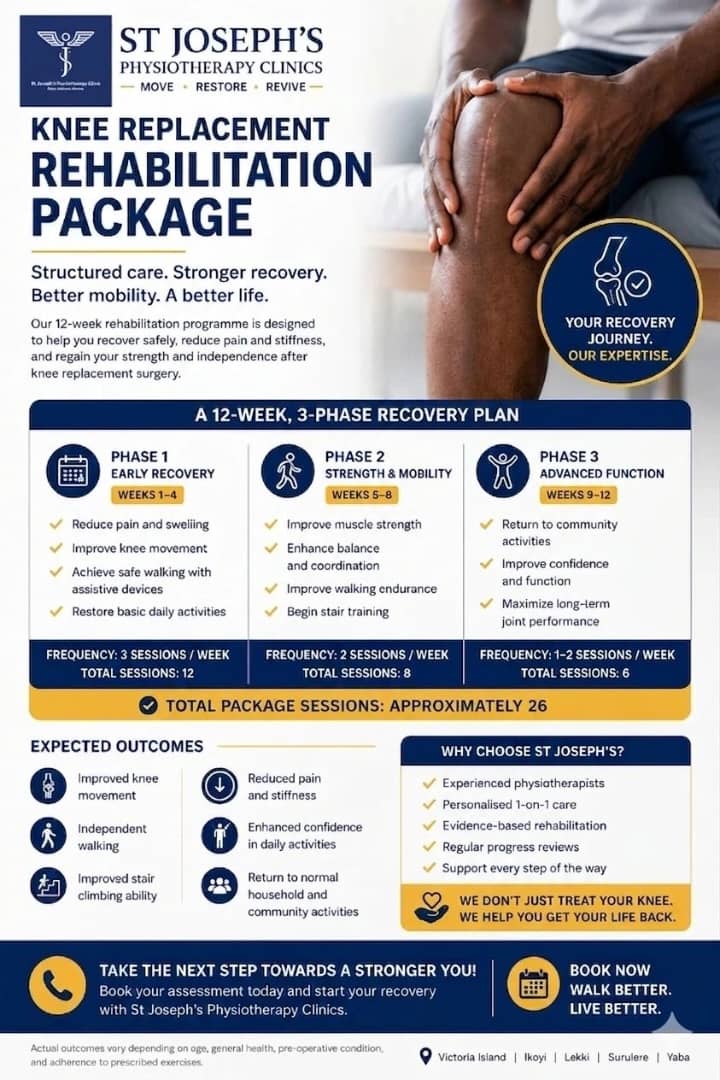
Complete Knee Replacement Rehabilitation Package in Lagos
Knee replacement surgery is a major step toward pain relief and improved mo…

NAMDA threatens strike over unpaid medical lecturers’ allowances
The Nigerian Association of Medical and Dental Academics (NAMDA) has warned…

Resident Doctors Signal End to Strike Threat After High-Level Talks with Gbajabiamila
The threat of a nationwide indefinite strike by the Nigerian Association of…
