The Nigeria health financing indices are a far cry from internationally recommended benchmarks of 15 per cent of the government health expenditure, and a minimum of 90 per cent coverage by financial protection mechanisms such as health insurance schemes.
This, however, is an indication that the health financing landscape in the country is characterised by sub-optimal government health investment, high outof- pocket expenditure and low level of citizen coverage by financial protection mechanisms.
According to the Chief of Party, Health Finance and Governance Project, Nigeria, Dr. Gafar Alawode, without changing the above landscape, it would be practically impossible to expand access to health care delivery with equity and shared financial risk protection, which are the hallmarks of the Universal Health Coverage (UHC) goals.
Worried by the development, he further argued that comparing Nigeria health financing indices with that of other lower middle-income countries and international benchmarks required to make significant progress towards UHC, portrayed a picture of an underperforming health financing system.
Alawode pointed out that the suboptimal government health investment and high out of pocket expenditure, no doubt, contributed significantly to poor health indices in the country. Alluding to UN Inter-Agency Group for Child Mortality report, he said Nigeria ranked as one of the five countries that accounted for 50 per cent of global child deaths in 2016, while the country was ranked among 10 worst countries in terms of well-being of mothers, going by the 2013 report of the Save the Children.
“The abysmal statistics of health outcome mirror the poor coverage of essential health services and the socioeconomic inequity in accessing basic care in the country,” he said, stressing that an access inequality chart by WHO indicated that women from high income group in the country were ten times more likely to access skilled health delivery service than women in the lowest income group, while children from the lowest income group are three times more likely to die before their fifth birthday than children from the highest income group.
To this end, he noted that the aforementioned scenario reflects dysfunctional state of health system governance and financing in the country.
Despite the numerous health challenges in the country, Alawode said policy makers are responding to the sub-optimal health financing indices by introducing a number of legal, institutional and policy frameworks aimed at improving government health spending, expanding coverage of financial protection mechanisms and ensuring efficient PHC service delivery.
Recalling that in 2014, a comprehensive health legal framework, tagged National Health Act (NHA) was signed into law by the Federal Government, he said among other things, the NHA makes provision for Basic Health Care Provision Fund (BHCPF), which is a fund aimed at improved government financing of both supply side and demand side of basic health services.
By: Kayode Olanrewaju
New Telegraph News
ABUJA: Training Schedule for Basic Life Support BLS, Pediatric Advanced Life Support (PALS), Advanced Cardiovascular Life Support ACLS, First Aid, CPR, AED
PORTHARCOURT: Training Schedule for Basic Life Support BLS, Pediatric Advanced Life Support (PALS), Advanced Cardiovascular Life Support ACLS, First Aid, CPR, AED
LAGOS: Training Schedule for Basic Life Support BLS, Pediatric Advanced Life Support (PALS), Advanced Cardiovascular Life Support ACLS, First Aid, CPR, AED
STOP paying for airtime and electricity, Let your phone pay its bills with ScreenT
You may also like

FG Supports Robotic Surgery Expansion to Reduce Medical Tourism
Nigeria is taking another step toward strengthening specialised healthcare …
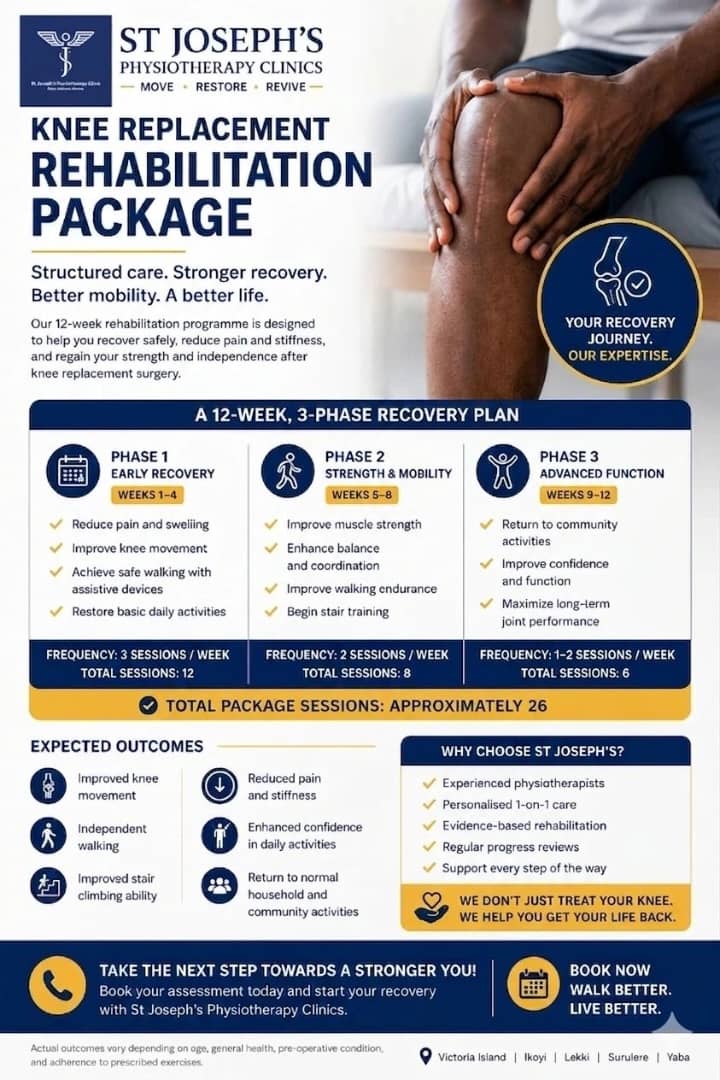
Complete Knee Replacement Rehabilitation Package in Lagos
Knee replacement surgery is a major step toward pain relief and improved mo…

NAMDA threatens strike over unpaid medical lecturers’ allowances
The Nigerian Association of Medical and Dental Academics (NAMDA) has warned…

Resident Doctors Signal End to Strike Threat After High-Level Talks with Gbajabiamila
The threat of a nationwide indefinite strike by the Nigerian Association of…
AMLSN Issues Strong Rejoinder to NAMDA on Public Service Establishment Matters
The Association of Medical Laboratory Scientists of Nigeria (AMLSN) has rel…