The Association of Nigerian Representatives of Overseas Pharmaceutical Manufacturers has called on the Federal Government to maintain zero tariffs on imported life-saving medicines.
The President of the association, Mr. Lekan Asuni, who spoke at a briefing in Lagos on Thursday, also faulted the Pharmaceutical Manufacturing Group of the Manufacturers Association of Nigeria’s recent calls for the adjustment of imported finished pharmaceutical products of HS Code 3003 and 3004 tax to 20 per cent.
Asuni warned that should the Federal Government act on PMGMAN’s call, Nigerians would have to pay more for asthma, cancer and diabetic drugs.
According to him, PMGMAN’s demand could backfire when applied to life-saving drugs not manufactured in the country.
He said, “The Federal Government must remember that HS code 3003 and 3004 include medicines used to treat chronic diseases, such as cancer, asthma, heart and kidney diseases as well as drugs required to treat ailments, which drugs are not produced locally. The effect of increasing the taxes is that over six million Nigerians that are on these drugs would pay more for medications.

“For instance, insulin and vaccines have to be imported as no local manufacturer has the requisite technology to produce them as of now. The present removal of the taxes under the ECOWAS Common External Tariff, which the Nigerian government signed to, has helped patients to access these drugs at a lesser cost. This a welcome relief for Nigerians in these challenging times.”
Asuni raised the alarm that the implementation of the new tariff regime could increase the number of Nigerians dying of heart diseases, cancer, asthma, stroke and hypertension.
He urged the Federal Government to adhere to the CET policy and to enforce a zero per cent tariff on imported raw materials and packaging to boost local production of essential drugs.
He added, “Prior to the adoption of the CET, medicines were more expensive in Nigeria compared to ECOWAS countries, such as Ghana, Togo and Benin Republic.
The level of smuggling of medicines then was so high. But with CET, the illicit act has reduced because drugs in Nigeria became cheaper since people didn’t have to smuggle it.
“Under the CET, Nigerian pharmaceutical manufacturers can now export their products to more than 300 million people in the ECOWAS market.”
BY BUKOLA ADEBAYO
THE PUNCH
ABUJA: Training Schedule for Basic Life Support BLS, Pediatric Advanced Life Support (PALS), Advanced Cardiovascular Life Support ACLS, First Aid, CPR, AED
PORTHARCOURT: Training Schedule for Basic Life Support BLS, Pediatric Advanced Life Support (PALS), Advanced Cardiovascular Life Support ACLS, First Aid, CPR, AED
LAGOS: Training Schedule for Basic Life Support BLS, Pediatric Advanced Life Support (PALS), Advanced Cardiovascular Life Support ACLS, First Aid, CPR, AED
STOP paying for airtime and electricity, Let your phone pay its bills with ScreenT
You may also like
Comrade Lemii Christian Emerges Chairman of NANNM Rivers State Branch in Historic Victory
PORT HARCOURT, NIGERIA Following the long awaited National Association of N…

FG Supports Robotic Surgery Expansion to Reduce Medical Tourism
Nigeria is taking another step toward strengthening specialised healthcare …
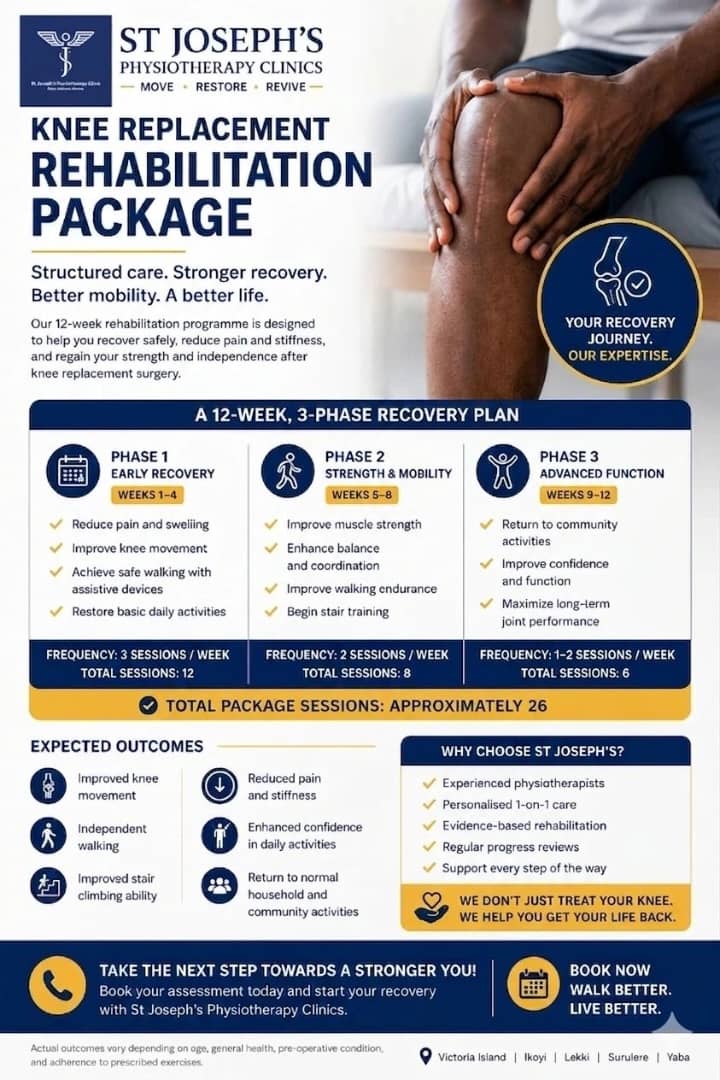
Complete Knee Replacement Rehabilitation Package in Lagos
Knee replacement surgery is a major step toward pain relief and improved mo…

NAMDA threatens strike over unpaid medical lecturers’ allowances
The Nigerian Association of Medical and Dental Academics (NAMDA) has warned…

Resident Doctors Signal End to Strike Threat After High-Level Talks with Gbajabiamila
The threat of a nationwide indefinite strike by the Nigerian Association of…