Worried by the infiltration of quacks into the Science Laboratory Technology (SLT) profession in Nigeria and the attendant decline in the quality of practical performed in schools, the Director General of the Nigerian Institute of Science Laboratory Technology (NISLT), Dr. Ighodalo Ijagbone shared with journalists some of the measures employed by the institute to reverse the trend, among other issues. Funmi Ogundare reports
Science Laboratory Technology (SLT) is said to have immense benefit to the economy, as it brings about rapid technological development, sustenance of its delivery through efficient, productive and ethical science laboratory practice in institutional research and private laboratories across the country.
However, the profession seems to have been taken over by charlatans, as according to the Director General of the Nigerian Institute of Science Laboratory Technology (NISLT), Dr. Ighodalo Ijagbone, those who are not supposed to practice as laboratory technologists are being employed to man laboratories in the country thereby denying certified professionals the job.
“The people we certify as professionals in our own field are the ones who studied SLT with other options. These are the people we now certify as technologists that work in laboratories. They are quite different from those who have gone to do BSc in Microbiology in the university. The person that studied SLT is more practical-oriented and the other one is more of theory.
“Those that have gone to university to study Microbiology now come into the laboratory and with the support of the powers that be, and are employed as technologists. These are quacks; they are not professionals and are not supposed to go into the laboratory as technologists.”
He said the institute is having challenges with the crop of graduates who studied just Microbiology with no option of SLT, adding, “our members who studied Microbiology SLT don’t have jobs, but people who go to the university to study just Microbiology are employed as technologists so there is conflict here. We have been trying to correct that but the CEOs who employed them said they should come to us to get certification. Without our certification, you cannot work in the laboratory whether it is attached to a university, polytechnic or industry. That is how it should be.”
The director general said the institute would work on its existing law and amend it in the area of enforcement so that there would be sanctions against such people.
“We are still working on that; we are going to the University of Port Harcourt to induct over 700 fresh graduates of SLT with various options with emphasis on technology. It is the one that will translate from science to technology.
“We have component of science and technology. Science without technology is not useful to man, you just have the theory and that is why you find out in schools nowadays, because there are no laboratories, they only do theory without practical which cannot carry them far.
“When you hear of alternative to practical, this is an aberration in the system. You cannot have alternatives because it is secondary, it is not the real. You cannot have theory of practical, if the laboratory is there and functional, you don’t talk of that. That is technology.
“Technology is applied science and to apply science, you need a laboratory. When you talk about practical, it is the technology of science, so that is the emphasis. That is where we are and that is the difference between a graduate of science Microbiology and a graduate of SLT Microbiology. If we have to bring them in, they can come in but we have to train and certify them.”
Emphasising on research and development, which his institute usually embarks on, he said once an idea has turned to products, rather than keeping such products in the laboratory shelf, the institute partners with industries to ensure that the products are commercialised.
 “We found out that in the past, most of these things are kept within the laboratory shelf and we are talking of commercialisation, which means that whatever you make in the laboratory can be sold in the market. For instance if we have ideas, we can go and test them in the laboratory and from there it becomes products. At our level, we are not supposed to produce them for the market, that is another ball game entirely and that is why we talk of partnership. It is a holistic approach and that is why we have to partner with industries.
 “It is very important and from there they commercialise these products and that is why under the ministry of science and technology, we have various agencies that do different things but for the same goal to produce products for the Nigerian society. All of us have contributions to make in terms of value chain.”
Ijagbone, whose tenure will expire next month, said the institute had once organised an 18-month professional mandatory training programme for such graduates, but had to stop as a results of series of complaints from its members.
“The emphasis is on practical and training on the bench in the place of work. We had done the 18-month programme once; we wanted to continue but they said we should not. At the last AGM in Warri, Delta State, it was debated and they said we should never do it again because it is a disservice to them for those who had gone to university to study SLT compared with people who were not even interested from the beginning because they have no jobs, that they are gate crashing.”
He expressed concern about the poor funding of the institute despite the fact that it organises training programmes for skills and knowledge acquisition, saying that science and technology has not been prioritised in the country.
“We are talking of the main products of science and technology. It is information and knowledge; and you talk of information power. If you have the requisite knowledge and skills for your finished products on science and technology, you can make it available. You cannot deliver what you don’t have. You can also deliver if you have the knowledge. It is very important, that is why we are where we are because science and technology has not been given the pride of place in the scheme of things in the country.
“If you look at our national budget, before this time, science and technology was the best so I think if science and technology and by extension those of us under the ministry can be accorded the foundation and is properly funded, I can say we will deliver and help the economy.”
Reacting to the plans by the federal government to employ 5,000 teachers, Ijagbone said the government should consider employing three laboratory technologists that would teach Biology, Chemistry and Physics in each public secondary school and ensure that their laboratories are functional.
“Right now, there are no standard laboratories in government schools; most of them are broken down. If there are no standard laboratories, you will want to ask why. There are two issues involved; science laboratories structure and facilities are expensive and capital intensive. You must also have the personnel to drive the system but if the personnel are not there nothing will happen.
“If you go to schools these days, they don’t even have laboratories. In those days, we used to have lab technicians, when you bring one teacher that will teach Chemistry, Biology and Physics, it does not make any sense. We sent a memo to the National Council on Science and Technology that it should employ three lab technologists in each secondary school. You will have for Physics, for Chemistry and another for Biology, and they will ensure that these laboratories are functional because that is their job description.
“If they are there, they will ensure that these laboratories are on ground and materials for practical are always there to teach the students. It is not just science teachers handling them. So if the federal government is employing 5,000 teachers it should also consider that Biology, Physics and Chemistry are part of the curriculum.
“You need the laboratory and these people to build them. Also, maintenance is very important such that if they don’t know how it works, it will not last. The problem we are having is just bringing anybody to come and organise practical for students. The government should not leave us out in their scheme of things,” he stressed.
The director general, who said he would go back to his job of lecturing in the Department of Veterinary Medicine, University of Ibadan at the expiration of his tenure, thanked God for using him to develop the institute since he came on board. “When I came here, there was no NISLT, what we had then was just an association that was not accredited by law. When I came on board, we asked for recognition from the government and we were able to achieve this by getting the enabling law from the national assembly in 2003.
“As the pioneer DG and executive, I had to put in place structures and facilities to fulfill our mandate and work with personnel to drive the system. I came into this institute and I am leaving it better than I met it and the structures are there. “I have been able consolidate on the structures and capacity building. The world is moving and the institute is set up to help the government; we have our staff who are specialists and trained. When you are focused, there are distractions which weaken the structures but we thank God.”
Source: This Day Live News
ABUJA: Training Schedule for Basic Life Support BLS, Pediatric Advanced Life Support (PALS), Advanced Cardiovascular Life Support ACLS, First Aid, CPR, AED
PORTHARCOURT: Training Schedule for Basic Life Support BLS, Pediatric Advanced Life Support (PALS), Advanced Cardiovascular Life Support ACLS, First Aid, CPR, AED
LAGOS: Training Schedule for Basic Life Support BLS, Pediatric Advanced Life Support (PALS), Advanced Cardiovascular Life Support ACLS, First Aid, CPR, AED
STOP paying for airtime and electricity, Let your phone pay its bills with ScreenT
You may also like
Comrade Lemii Christian Emerges Chairman of NANNM Rivers State Branch in Historic Victory
PORT HARCOURT, NIGERIA Following the long awaited National Association of N…

FG Supports Robotic Surgery Expansion to Reduce Medical Tourism
Nigeria is taking another step toward strengthening specialised healthcare …
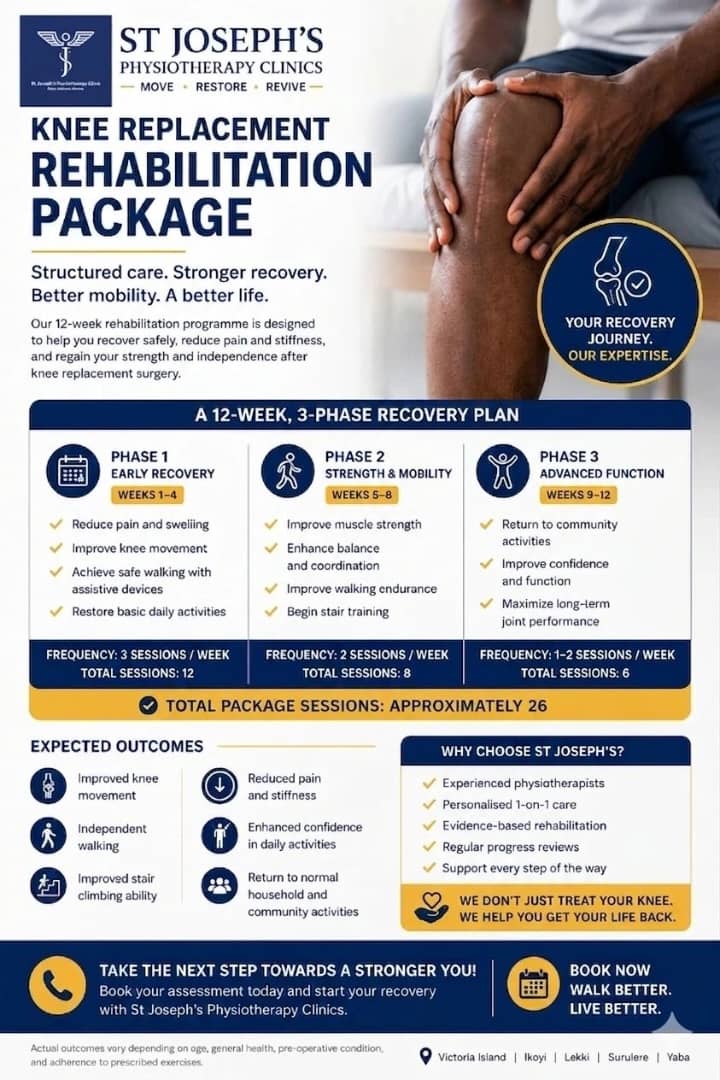
Complete Knee Replacement Rehabilitation Package in Lagos
Knee replacement surgery is a major step toward pain relief and improved mo…

NAMDA threatens strike over unpaid medical lecturers’ allowances
The Nigerian Association of Medical and Dental Academics (NAMDA) has warned…

Resident Doctors Signal End to Strike Threat After High-Level Talks with Gbajabiamila
The threat of a nationwide indefinite strike by the Nigerian Association of…