Continued For Thursday.....
The proposals of the examining boards in various specialties were approved by the NMC and given legal backing by Decree No . 44 of 1969. In 1970, the NMC (postgraduate examinations) published its syllabuses and regulations in various disciplines. In February 1970, the NMC informed all state Ministries of Health in the country about these postgraduate training programmes and advocated their uptake throughout the country. Some of the advantages of the training programme advanced by the NMC at the time included: 1) reduction in cost of training; 2) training in local environment would enable trainees provided much needed clinical services at the same time; and 3) reduction in level of brain drain of essential professionals. The template for the training then consisted of Primary Examinations, Part 1 Examination and the Part II Final Examinations.
The first Primary Examination (then called Basic Science Examination) took place in May 1972. Of the 29 candidates presented, 15 passed; while in November 1973, of the 12 candidates who attended, three passed. External examiners were invited from Oxford, Dundee and Makerere to take part in these examinations at the time.
 As for the Part 1 examination, the first examination in internal medicine was held in November 1973, with one candidate being successful out of five. One external examiner came from the Royal College of Physicians (UK), while another was invited from the University of Ghana Medical School. The external examiners reported that the standards were fair and that the successful candidate would most likely have passed the UK MRCP examination. In the first Part I FMCOG examination, one candidate was successful out of four, and the external examiners also wrote favourable reports about the high standards of the examination.
 Later, PartI examinations followed in Surgery and Paediatrics in January 1974. Of three candidates that took the examination in Surgery, two passed, while the only candidate in Paediatrics was successful.
Thus, it can be said that postgraduate medical education in Nigeria started under the tutelage of the NMC, but a more formal setting was needed to firmly entrench its practice. At its Annual General Meeting of the Nigerian Medical Association in 1971, a motion to set up a separate body to conduct postgraduate training and examinations in Nigeria was moved by Prof. Adeyemo Elebute. This led to the formation of the National Medical College as the first medical postgraduate education nomenclature in Nigeria.
The first office of the National Medical College was within the office of the Nigerian Medical Council inAIaka, Lagos, but this was later moved to the College of Medicine of the University of Lagos in Idi-Araba, Lagos. The Registrar of the Nigerian Medical Council continued to be the Secretary and Chief Administrative Officer of the National Medical College. The first person to hold the position of Secretary of the National Medical College after its separation from the Nigerian Medical Council was Prof. N.E. Henshaw.
The Decree establishing the National Postgraduate Medical College was signed into law by Gen. Olusegun Obasanjo on September 24, 1979· The Decree provided for the stablishment of 1) 13 faculties, each with a Faculty Board and Faculty Board of Examiners; 20 A Senate that supervises academic programmes; and 3) a Governing Board that oversees the financial, administrative and management policies of the College. President Shehu Shagari formally inaugurated the college on February 19, 1984.
The mandate of the NPMC is "to plan, implement, monitor and evaluate postgraduate programmes required to produce medical and dental specialists of the highest quality, competence and dedication, who will provide teaohing and optimal health care for the people.
Lifelong learning is expected to be maintained by continuing professional development programmes of the College".
The vision of the College is "to produce medical and dental specialists of the highest standards Who will provide world class services in teaching, research and healthcare".
The Association of Surgeons of West Africa was formed in 1960, with the objective to Promote postgraduate education and research in surgery and related disciplines throughout West Africa. The Association of Physicians of West Africa comprising Gambia, Sierra Leone, Ghana and Nigeria was formed in 1963 with similar objectives to promote learning and research among physicians in the specialties of internal medicine, paediatrics, psychiatry, pathology and community health. A Committee was later constituted under the aegis of the Commonwealth Seretariat to harmonize the two Associations, a move that later gave birth to the West African Postgraduate Medical College (W APMC) in 1976. Till date, the WAPMC comprises two composite Colleges - the "West African College of Surgeons and the West African College of Physicians.
The WAPMC has designed its academic and examination programs based largely on the Programme of the Nigerian Postgraduate Medical College, but influenced heavily by the Uk programmes in related disciplines. The Colleges commenced their examinations in 1979, with the specific objectives "to:
1) advance professional education and training in all medical, Phamaceutical and Nursing disciplines; and
2) promote and achieve a high standard of Professional practice and competence among Practitioners",
However, most of the infrastructure, including trainees and training Faculties of the WAPMC have resided and have emanated from Nigeria.
This has from time to time led to the argument That this is a duplication of effort to have two Medical post-graduate training institutions running parallel programmes in the country.
However, the regional focus of the WAPMC has tended to give it more international recognition and acceptability, especially as it allows for crosscountry exchange of medical specialists across West Africa.
Thus, a major strength of the postgraduate medical training in Nigeria is its correction of the human resource deficiency that the country suffered in the 19706 and 1980s. Before then, many Nigerian pecialists who trained abroad never returned home, leaving huge gaps in key specialist areas. Specialists such as anaesthetists, radiologists, ophthalmologists and pathologists were in very short supply, and among the few that existed they preferred to remain in big hospitals in urban cities while rural and sub-urban areas remained largely under-served. Now all that is fast disappearing. With the reasonably high supply of all categories of specialists, even district hospitals in most remote areas are benefitting from this largesse of specialists .
With in-country training, the cost of postgraduate medical education declined, with resulting salutary effects on the national economy. Indeed, the nature of the costeffectiveness of the training programme to the national economy needs to be systematically investigated to provide greater impetus for the promotion of postgraduate training within the country. Also, local training enabled trainees to study the nature and pattern of highly prevalent disease conditions, such that diseases that were previously poorly investigated now feature regularly in research results and interventions in the country.
Concluded ......
Excerpt ofa lecture delivered by Prof. Okonofua, Vice-Chancellor, University of Medical Sciences, Ondo, at the International Conference of the Society of Gynaecology and Obstetrics recently
By: Friday E. Okonofua
Punch News
ABUJA: Training Schedule for Basic Life Support BLS, Pediatric Advanced Life Support (PALS), Advanced Cardiovascular Life Support ACLS, First Aid, CPR, AED
PORTHARCOURT: Training Schedule for Basic Life Support BLS, Pediatric Advanced Life Support (PALS), Advanced Cardiovascular Life Support ACLS, First Aid, CPR, AED
LAGOS: Training Schedule for Basic Life Support BLS, Pediatric Advanced Life Support (PALS), Advanced Cardiovascular Life Support ACLS, First Aid, CPR, AED
STOP paying for airtime and electricity, Let your phone pay its bills with ScreenT
You may also like
Comrade Lemii Christian Emerges Chairman of NANNM Rivers State Branch in Historic Victory
PORT HARCOURT, NIGERIA Following the long awaited National Association of N…

FG Supports Robotic Surgery Expansion to Reduce Medical Tourism
Nigeria is taking another step toward strengthening specialised healthcare …
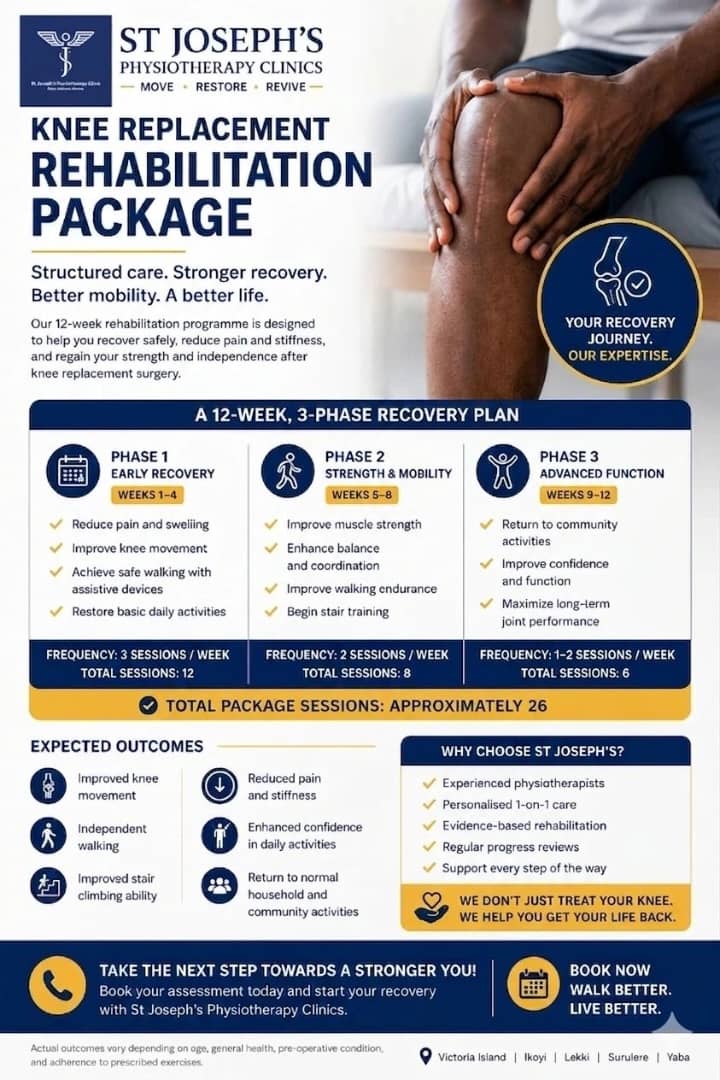
Complete Knee Replacement Rehabilitation Package in Lagos
Knee replacement surgery is a major step toward pain relief and improved mo…

NAMDA threatens strike over unpaid medical lecturers’ allowances
The Nigerian Association of Medical and Dental Academics (NAMDA) has warned…

Resident Doctors Signal End to Strike Threat After High-Level Talks with Gbajabiamila
The threat of a nationwide indefinite strike by the Nigerian Association of…