The local councils should be empowered to perform their constitutional responsibilities
Under a plan by the current administration to bring healthcare to about 60 million vulnerable Nigerians within two years, the federal government proposes to build 10,000 health centres in the 774 local government areas in the country. According to the Minister of Health, Professor Isaac Adewole, the initiative aims at reducing referrals of primary diseases to tertiary health institutions by 70 per cent. While ordinarily this may look like a laudable idea, we worry about its implication for our federal structure and whether the end would justify the means in the light of our most recent experiences.
Launched in 1988 by the military regime of President Ibrahim Babangida to develop local capabilities, initiatives and self-reliance in the provision of primary health care to local populations, the idea has always been to provide preventive and curative services to majority of Nigerians where they live and work. The centres are to provide services, including prevention and treatment of communicable diseases, immunisation, maternal and child health services, family planning, public health education, environmental health and the collection of statistical data on health and heath-related events. The strategy is to manage preventable and communicable diseases at that level in order to free the secondary and tertiary health institutions to manage more complicated health challenges.
 However, the failure of the primary health care system is manifested by the high number of citizens consulting the general and teaching hospitals for primary health challenges, as well as the gloomy health indicators which reveal that Nigeria’s health system is in a parlous state. For instance, recent UNICEF reports indicate that Nigeria is the second largest contributor to the world’s maternal and child mortality rate. With 840 maternal deaths in 100,000 and 143 deaths in 1,000 under-five year-children, Nigeria loses 2,300 under-five children and 140 women every day. Most of these deaths occur at the local levels where the local governments are charged with the responsibility of providing primary health intervention.
 Against this background, the federal government’s proposed intervention would seem justified. But is it the sustainable solution to the challenge? We do not think so.
As part of its efforts to improve health facilities at the local level, the federal government established the Primary Health Care Development Agency in 1992. In 2013, it proposed the take-over of primary health care by state governments because local governments had been unable to sustain the critical facilities needed to provide primary health services. The state of the primary health system today, in spite of these interventions, gives very little hope that the newly proposed idea will achieve the desired purpose of providing quality primary health services to the people at the local level.
For us, the issue is not the failure of the primary health care system but the general failure of the local government system. The pertinent question remains: are there any of the responsibilities assigned to the local government areas by the 1999 Constitution of the Federal Republic of Nigeria, as amended, that are being successfully implemented by this tier of government? The answer is definitely No. There are several reasons for such a state of affairs, the principal being the defective nature of the country’s federation. The situation is so bad that virtually all the functions allocated to the local government in the Fourth Schedule of the 1999 Constitution, as amended, have been annexed by the state. Yet there is a reason why the framers of our constitution established the local government. It is to bring governance closer to the mass of our people and give them a sense of responsibility and ownership.
We therefore believe that the sustainable solution to the instant failure of healthcare delivery at the local level is to reform local government administration by freeing it from the stranglehold of the state and federal governments. After all, the local government is a creation of the constitution with definite mandates and guaranteed funding to discharge its responsibilities. Freed to perform its functions and given adequate funding, the chances are greater that the local government would over time develop the capacity to deliver on its constitutional responsibilities to the people.
QUOTE: We believe that the sustainable solution to the instant failure of healthcare delivery at the local level is to reform local government administration by freeing it from the stranglehold of the state and federal governments. After all, the local government is a creation of the constitution with definite mandates and guaranteed funding to discharge its responsibilities
Source: This Day News
ABUJA: Training Schedule for Basic Life Support BLS, Pediatric Advanced Life Support (PALS), Advanced Cardiovascular Life Support ACLS, First Aid, CPR, AED
PORTHARCOURT: Training Schedule for Basic Life Support BLS, Pediatric Advanced Life Support (PALS), Advanced Cardiovascular Life Support ACLS, First Aid, CPR, AED
LAGOS: Training Schedule for Basic Life Support BLS, Pediatric Advanced Life Support (PALS), Advanced Cardiovascular Life Support ACLS, First Aid, CPR, AED
STOP paying for airtime and electricity, Let your phone pay its bills with ScreenT
You may also like
Comrade Lemii Christian Emerges Chairman of NANNM Rivers State Branch in Historic Victory
PORT HARCOURT, NIGERIA Following the long awaited National Association of N…

FG Supports Robotic Surgery Expansion to Reduce Medical Tourism
Nigeria is taking another step toward strengthening specialised healthcare …
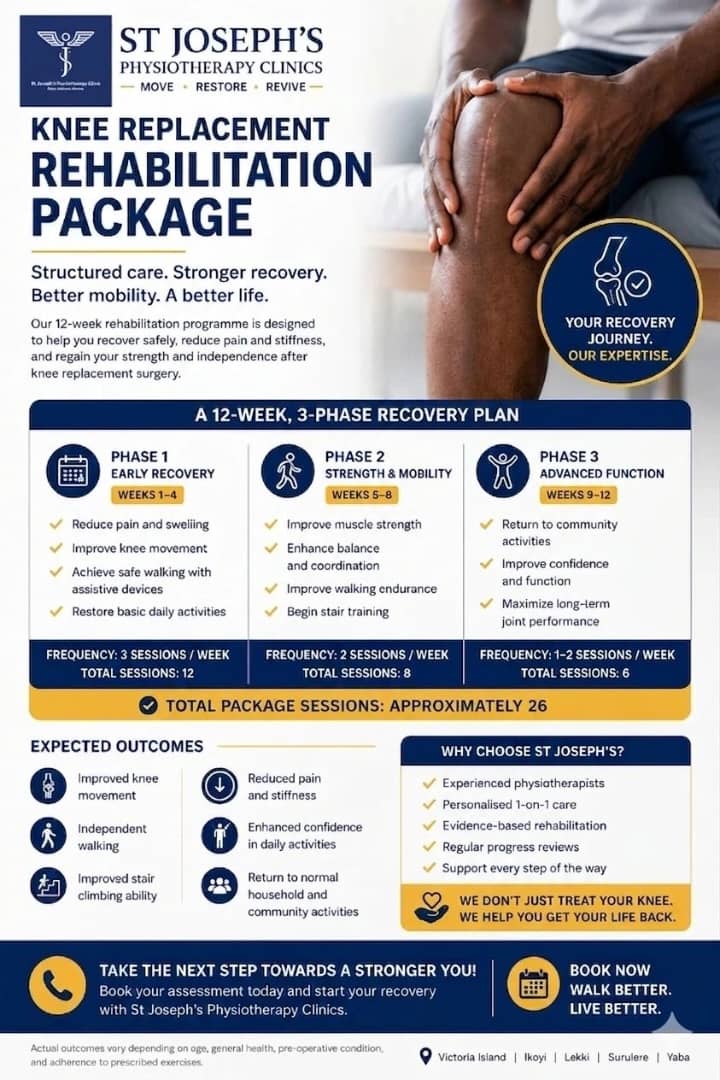
Complete Knee Replacement Rehabilitation Package in Lagos
Knee replacement surgery is a major step toward pain relief and improved mo…

NAMDA threatens strike over unpaid medical lecturers’ allowances
The Nigerian Association of Medical and Dental Academics (NAMDA) has warned…

Resident Doctors Signal End to Strike Threat After High-Level Talks with Gbajabiamila
The threat of a nationwide indefinite strike by the Nigerian Association of…
